
Poznání a Porozumění - Neznalost
Ponořte se do anglických idiomů týkajících se ignorance, jako "padat na hluché uši" a "zavírat oči".
Revize
Kartičky
Kvíz

![to [bury|have] {one's} head in the sand](https://cdn.langeek.co/photo/44824/thumb/350?type=jpeg "to [bury|have] {one's} head in the sand")
to intentionally ignore unpleasant facts about a situation and hope that the situation improves by doing so

strkat hlavu do písku, zavírat oči před realitou
Přestaň strkat hlavu do písku a podívej se na fakta.
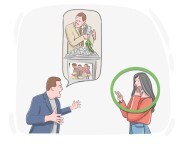
in a state in which one is not informed about important things
být v nevědomosti, nemít žádné informace
Pokud necháš investory v nevědomosti, rychle ztratí důvěru.
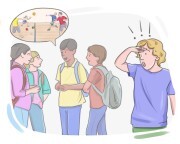
not being aware of recent information about something
mimo dění, nemít aktuální informace
Asi jsem mimo dění, protože jsem o nové politice neslyšel.
![to [turn] a deaf ear](https://cdn.langeek.co/photo/42268/thumb/350?type=jpeg "to [turn] a deaf ear")
to pretend as if one cannot hear someone complaining or asking one something
dělat hluchého, ignorovat prosby
Vláda dělala hluchého k opakovaným výzvám k reformě.
![to [fall] on deaf ears](https://cdn.langeek.co/photo/44828/thumb/350?type=jpeg "to [fall] on deaf ears")
(of statements, warnings, requests, etc.) to be completely ignored
padnout na hluché uši, být úplně ignorován
Jeho obavy padaly na hluché uši, dokud se problém nezhoršil.
![to [go] in one ear and out the other](https://cdn.langeek.co/photo/44870/thumb/350?type=jpeg "to [go] in one ear and out the other")
(of information, advice, etc.) to not be taken seriously and hence immediately forgotten
jedním uchem dovnitř a druhým ven, nevzít si nic k srdci
U něj důležité rady často jdou jedním uchem dovnitř a druhým ven.
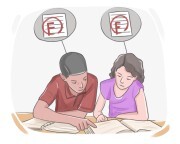
used to describe a situation in which an incompetent or inexperienced person is advising others who have no knowledge or experience at all
slepý vede slepého, nezkušený radí nezkušeným
Když student prvního ročníku učil další začátečníky, působilo to jako slepý vede slepého.
![to [fall|slip] (through|between) the cracks](https://cdn.langeek.co/photo/44864/thumb/350?type=jpeg "to [fall|slip] (through|between) the cracks")
(of a person) to be completely ignored, usually in a system or process
zůstat úplně přehlédnutý, nikdo si ho nevšimne
Ve třídě byl tichý a postupně si ho nikdo nevšímal.
![to [fall|slip] (through|between) the cracks](https://cdn.langeek.co/photo/44840/thumb/350?type=jpeg "to [fall|slip] (through|between) the cracks")
(of something, particularly issues) to be completely forgotten, missed, or neglected
uniknout pozornosti, zůstat opomenutý
![to [sweep] {sth} under the rug](https://cdn.langeek.co/photo/44854/thumb/350?type=jpeg "to [sweep] {sth} under the rug")
to pretend that something is not happening or is not the case
zamést něco pod koberec, předstírat, že problém neexistuje
Místo aby chybu napravili, zametli ji pod koberec.
![to [turn] a blind eye](https://cdn.langeek.co/photo/44522/thumb/350?type=jpeg "to [turn] a blind eye")
to pretend as if one cannot see or notice something
přimhouřit oči, dělat, že nic nevidí
Když nad tím teď přimhouříme oči, problém se jen zhorší.

a strategy in which a person chooses to ignore or evades the truth or potential problems about a particular situation
strkat hlavu do písku, zavírat oči před problémem
Vláda strkala hlavu do písku, a tím odkládala kroky, dokud krize nevybuchla.
![to [slip|fall] through the net](https://cdn.langeek.co/photo/43672/thumb/350?type=jpeg "to [slip|fall] through the net")
(of a person) to be neglected or go unnoticed, particularly by a social or political system that should have been more responsible
propadnout sítem pomoci, zůstat bez pomoci
Charita vznikla, aby pomáhala rodinám, které po povodni propadly sítem pomoci.
(of something particularly an issue) to go unnoticed or to be overlooked within a system, plan, or organization, etc.
zapadnout, uniknout pozornosti
Riziko pro soukromí při plánování málem zapadlo.
![to [fly] blind](/assets/img/no-pic-700w.png "to [fly] blind")
to act without enough information, guidance, or preparation
