
Vocabulary for IELTS (Academic) - History
Here you will learn some English words about history, such as "explorer", "civilization", "monument", etc. that are needed for the IELTS exam.
Review
Flashcards
Spelling
Quiz


clothing characteristic of a particular country, social class, or historical period
a person who visits unknown places to find out more about them
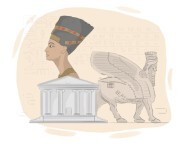
related to the study or depiction of events, people, or objects from the past
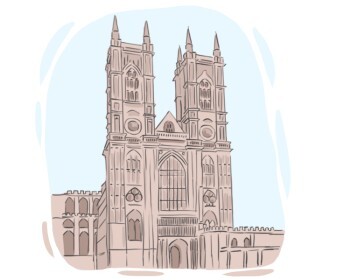
a church with buildings connected to it in which a group of monks or nuns live or used to live

a period of history identified with a particular event
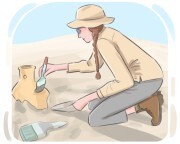
a person whose job is to study ancient societies using facts, objects, buildings, etc. remaining in excavation sites
a society that has developed its own culture and institutions in a particular period of time or place
a formal subdivision of geological time, typically spanning several periods

a territory governed by an emperor or empress, under imperial authority

in an earlier period
someone who studies or records historical events
the point or place where something has its foundation or beginning

a story involving the ancient history of a people, usually about heroes and supernatural events that could be unreal
a place or building that is historically important

the fundamental change of power, government, etc. in a country by people, particularly involving violence
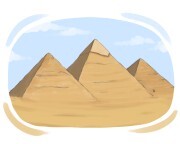
a stone monument built in ancient Egypt usually as a tomb for the pharaohs, which has a triangular or square base that slopes up to the top
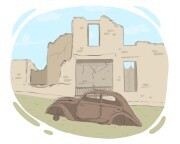
(plural) the remains of something such as a building after it has been seriously damaged or destroyed
the people from whom a person is descended

people in the highest class of society who have a lot of power and wealth and usually high ranks and titles
the study of past events for the purpose of determining the order by which they occurred

a structure or town that has been designed for military defense against enemy attacks
a person or thing that is next in line to someone or something else
referring to the previous state or condition of an object, organization, or place, which has since changed

used to refer to a date that is after the birth of Jesus Christ

marking the years before Christ's supposed birth
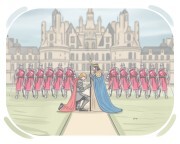
an era in European history, between about AD 1000 and AD 1500, when the authority of kings, people of high rank, and the Christian Church was unquestionable
