
Nödvändigt Ordförråd för TOEFL - Språk och Grammatik
Här kommer du att lära dig några engelska ord om språk och grammatik, såsom "förkortning", "röst", "stavelse" etc. som behövs för TOEFL-provet.
Recension
Flashcards
Stavning
Quiz

the shortened form of a word, etc.

förkortning, abbreviatur
När du skriver en rapport, se till att definiera alla förkortningar första gången du använder dem.

a short form of a word or a group of words used instead of the full form
kontraktion, förkortad form
I vardagligt tal används förkortningar som "inte" och "gjorde inte" ofta.

the spoken form of a language specific to a certain region or people which is slightly different from the standard form in words and grammar
dialekt, mål
Afroamerikansk vardagsengelsk (AAVE) är en dialekt som huvudsakligen talas av afroamerikanska samhällen i USA, kännetecknad av särskild grammatik, ordförråd och intonationsmönster.
a distinctive way of pronouncing a language associated with a particular region, country, or social group
brytning, accent

the symbol ' used in writing to show possession or omission of letters or numbers
apostrof, apostrof symbol
Ordet "klassen '99" använder en apostrof för att indikera utelämnandet av "19".

(grammar) any type of determiner that shows whether we are referring to a particular thing or a general example of something
artikel
(grammar) the situation where words in a phrase have the same gender, person, or number
överensstämmelse, avtal
(grammar) the form of a word that indicates whether one, two, or more things or people are being referred to
tal, grammatiskt tal
a word or part of a word, which contains a vowel sound and usually one or more consonants
stavelse, ljud
Läraren bad eleverna att räkna stavelserna i varje rad av dikten.

(phonetics) a speech sound produced without interfering with the flow of air coming through the mouth or nose
vokal, vokalljud
Hon var tvungen att memorera vokal-ljuden för sin fonetiklektion.

(phonetics) a speech sound produced by interfering with or stopping the flow of air through the mouth or nose
konsonant, konsonantljud
Dikten hade en behaglig rytm på grund av de upprepade konsonant-ljuden.
(grammar) the form of a verb that indicates whether the subject does something or something is done to it
röst, verbets röst
a verb that supports or helps another verb to form different tenses, moods, or voices
hjälpverb
För att bilda frågor i dåtid används "did" som hjälpverb, som i "Did you see that movie?"
a word, phrase, or clause that completes the meaning or grammatical structure of an expression
komplement, predikatsfyllnad
formed from two or more words or meaningful word elements
sammansatt, komposit

a word or expression that connects words, phrases, or clauses
konjunktion, bindeord
(grammar) formed with or connected to a preposition
prepositionell, relaterad till en preposition
(grammar) a word coming before a noun or noun phrase to specify its denotation
determinativ, artikel
the quality of being able to speak or write very well and easily in a foreign language
flyt, behärskning
Appen är utformad för att bygga flyt genom interaktiva övningar.
(grammar) a form of a verb that functions as a noun and is formed by adding the suffix -ing to the base form of the verb
gerundium, verbform som fungerar som substantiv
I meningen "Spring är min favorithobby," fungerar "spring" som subjekt och är en gerundium.

a particular combination of words that are used together very often
kollokation, ordkombination
Att använda felaktiga kollokationer kan få en mening att låta klumpig eller onaturlig.
a group of words or a phrase that has a meaning different from the literal interpretation of its individual words, often specific to a particular language or culture
idiom, idiomatiskt uttryck
På engelska används idiomet 'break the ice' för att beskriva att starta en konversation i en social miljö för att minska spänning, inte för att faktiskt bryta is.
words or expressions that are very informal and more common in spoken form, used especially by a particular group of people, such as criminals, children, etc.
slang, vardagsspråk
Skatare har sitt eget slang, med termer som 'gnarly' för att beskriva något imponerande eller 'shredding' för att hänvisa till skicklig skateboardåkning.
a well-known statement or phrase that expresses a general truth or gives advice
ordspråk, talesätt
Ordspråket 'När du är i Rom, gör som romarna gör' föreslår att man bör anpassa sig till platsens sedvänjor som man besöker.
(of grammar) asserting a command or order
imperativ, befallande
Imperativa verb används ofta i reklam för att uppmuntra handling.
(grammar) a phrase or word used suddenly to express a particular emotion
interjektion, utrop
Eleverna ombads identifiera exempel på interjektion i stycket de läste.
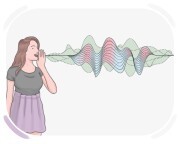
(phonetics) the rising and falling of the voice when speaking
intonation
(grammar) describing a verb that needs a direct object
transitiv, transitivt verb
(grammar) describing a verb that does not take a direct object
intransitiv, icke-transitiv

related to the science of language, including its structure, usage, and evolution
lingvistisk, språklig
Läraren betonade de språkliga skillnaderna mellan engelska och tyska.

a figure of speech in which a word or expression is used to describe something by implying a comparison with something else
metafor, bild

(grammar) describing a verb form or aspect that presents an action or situation as continuing
progressiv, pågående

the use of marks such as a period, comma, etc. in writing to divide sentences and phrases to better convey meaning
interpunktion
Han var förvirrad av bristen på interpunktion i e-postmeddelandet, vilket gjorde det svårt att följa.
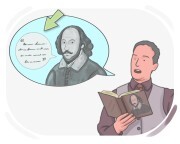
a sentence from a speech, book, etc. that is repeated somewhere else because it is wise or interesting
citat, utdrag

a grammatical construction in which two negative elements are used within the same sentence, often resulting in a positive meaning
dubbel negation, negation dubbel
Läraren förklarade att en dubbel negation på engelska vanligtvis tar ut varandra, vilket leder till ett positivt påstående.
