
Essential Vocabulary for the GRE - Paranoid Android
Here you will learn some English words about computer and internet, such as "trojan horse", "corrupt", "router", etc. that are needed for the GRE exam.
Review
Flashcards
Forms
Spelling
Quiz

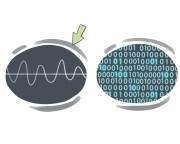
relating to or using signals in which information is represented through constant changing of physical quantities

a harmful program that pretends to be legitimate and can give unauthorized access to a device
a text containing instructions in a specific order that supports a programming language which human can read and it specifies the behaviors of a computer system
to verify a device, user, or process before an access to the computer's resources is allowed
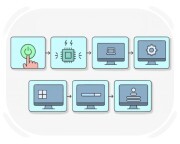
to start a computer, typically involves setting up hardware elements to prepare the computer for use
a test version of software released to users to find and fix bugs before the final release
a program that automatically loads and initializes the operating system on a computer
(computing) a type of computer memory in which information that is often in use can be stored temporarily, a cache can be accessed quickly and is needed while a program is running
(computing) a temporary storage area for data that has been copied or cut
the ability of a computer, software, or equipment to work with another device or software
the hardware and software that make up a computer system and the way they are set up to operate
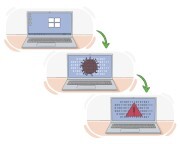
to cause errors or damage to a digital file, program, or system, either intentionally or unintentionally, due to a malfunction or interference

the non-physical space in which communication over computer networks takes place
a tool that analyzes and identifies issues, errors, or problems within the software or system
to convert machine code back into human-readable assembly language or source code for analysis or modification
a small hardware device that connects to a computer, smartphone, or other electronic device to provide additional functionality
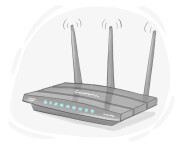
an electronic device that connects computer networks and sends data between networks
a type of non-volatile memory in a computer or electronic device where data is permanently stored
a server that acts as an intermediary between a user's device and the internet, forwarding requests and responses to enhance security, privacy, or performance
unauthorized reproduction, distribution, or use of copyrighted materials, such as software, music, movies, or books
a small piece of software added to an existing program to fix a problem, improve it, or address a security weakness
(computing) describing a computer program whose source code is available to everyone
a condition where an electrical system or device receives more current than it can safely handle
(of software or a code) intentionally designed to harm, damage, or disrupt computer systems, networks, or data
a private network within an organization for internal communication, collaboration, and resource sharing among members

the part of a computer program or system through which a user views information and gives commands
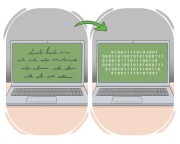
to convert data or information into a coded form, mainly to prevent unauthorized access
a technology that compresses and decompresses audio or video data; facilitating efficient storage, transmission, and playback of multimedia content
(computing) a type of software stored in a way that it cannot be modified or erased
to create a new set of data by using a mathematical or logical process to transform an existing set of data
the speed at which a computer can process information, expressed in (MHz)

a unit for measuring the size of computer data that equals 8 bits
a numerical system that uses only two digits, 0 and 1, as its base
characterized by a mode in which data or a file is accessible for viewing but cannot be modified or altered
to copy audio or video data from a disc or other source into a digital file, often converting its format
a computing structure in which the most recently added item is the first one removed
a network for communication between computers, usually within a building
to identify, analyze, and resolve problems or malfunctions in a system, device, or process to restore it to proper functioning
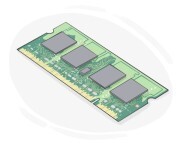
a type of computer memory tasked with temporarily storing data for a quicker access
the visual interaction that users have with the computer through icons, menus, etc.
