pattern

Law and Regulation - Court Procedures & Litigation

Review

Flashcards

Forms

Spelling

Quiz

Start learning
Words Related to Law and Regulation
to sue
to sue
[Verb]

to bring a charge against an individual or organization in a law court

Ex: Last year , the author successfully sued the competitor for plagiarism .
Close
Sign in
lawsuit
lawsuit
[noun]

a complaint or claim that someone brings to a law court for settlement

Ex: The lawsuit dragged on for years , causing financial strain on both parties involved .
Close
Sign in
case
case
[noun]

a matter that is to be dealt with in a court of law
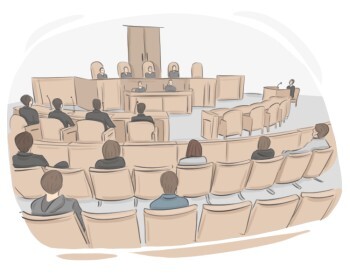
Ex: The jury deliberated for hours before reaching a verdict in the complex fraud case.
Close
Sign in
court
court
[noun]

the place in which legal proceedings are conducted

Ex: The Supreme Court's decision set a legal precedent.
Close
Sign in
family court

a court that decides on family matters such as divorce

Ex: The family court mediator helped them reach an agreement on child custody without a lengthy trial .
Close
Sign in
court of appeals

a higher court that reviews decisions made by lower courts to determine if there were errors
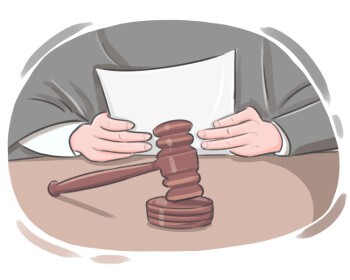
Ex: The court of appeals schedules hearings for contested cases .
Close
Sign in
court order

an order given by a judge or court regarding a case

Ex: The court order provided clear instructions on the division of property following the divorce proceedings .
Close
Sign in
contempt of court

disrespect or disobedience toward a court and its rules

Ex: Contempt of court can lead to fines or jail time .
Close
Sign in
to hear
to hear
[Verb]

(of a court case) to listen, examine, and judge based on the evidence presented, statements given, etc.

Ex: The judge will hear the appeal and consider the new evidence .
Close
Sign in
hearing
hearing
[noun]

(law) an official gathering in a court of law, especially without the presence of the jury, to find out information about a case and listen to evidence

Ex: The judge called for a competency hearing to determine if the defendant was fit to stand trial .
Close
Sign in
legal proceeding

an official process in a court of law to settle a legal matter

Ex: The court delayed the legal proceedings due to new evidence .
Close
Sign in
to represent

to serve as a legal or business representative

Ex: The legal team was tasked with representing the organization during regulatory audits .
Close
Sign in
dock
dock
[noun]

an enclosed area in a courtroom where the defendant sits during trial

Ex: The lawyer approached the dock to speak with the client .
Close
Sign in
witness stand

the place in a courtroom where a witness sits to give evidence
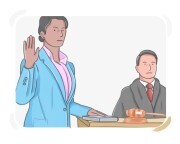
Ex: The judge reminded everyone to respect the witness on the witness stand.
Close
Sign in
to testify

to make a statement as a witness in court saying something is true
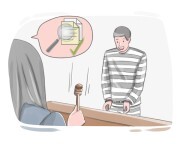
Ex: The court relies on witnesses who are willing to testify truthfully for a fair trial .
Close
Sign in
to acquit
to acquit
[Verb]

to officially decide and declare in a law court that someone is not guilty of a crime

Ex: The exoneration process ultimately led to the court 's decision to acquit the defendant of all charges .
Close
Sign in
appeal
appeal
[noun]

a legal procedure in which a higher court is asked to review and overturn a lower court's decision

Ex: The Supreme Court agreed to hear the appeal.
Close
Sign in
appellant
appellant
[noun]

a person who appeals in a higher court against a decision made in a lower court

Ex: The appellant's lawyer presented new evidence to the higher court .
Close
Sign in
dissent
dissent
[noun]

a formal statement in which a judge disagrees with the opinion or decision of the majority
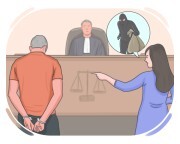
Ex: The dissent became a reference point in later judicial debates .
Close
Sign in
to litigate

to initiate legal action against another party or person

Ex: She had to litigate to protect her intellectual property .
Close
Sign in
litigation

the formal procedure of resolving disputes through the court system

Ex: The threat of litigation forced the firm to reconsider its policy .
Close
Sign in
plea
plea
[noun]

(law) a formal statement made by someone confirming or denying their accusation
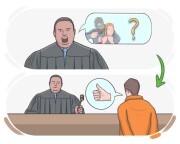
Ex: The defense attorney argued for a reduction in charges based on the plea bargain negotiated with the prosecution.
Close
Sign in
to plead
to plead
[Verb]

to state in a court of law, in front of the judge and the jury, whether someone is guilty or not guilty of a crime

Ex: Despite the evidence against him , the defendant chose to plead not guilty by reason of insanity .
Close
Sign in
trial
trial
[noun]

a legal process where a judge and jury examine evidence in court to decide if the accused is guilty

Ex: The lawyer prepared extensively for the trial, gathering all necessary documents and witness statements .
Close
Sign in
pretrial
pretrial
[noun]

a meeting or process before a trial to plan the case and decide what will be discussed in court

Ex: Pretrial motions can affect how the trial proceeds.
Close
Sign in
recess
recess
[noun]

a short break during a court trial

Ex: The court took a recess before hearing the next witness .
Close
Sign in
to remand
to remand
[Verb]

to send a case back to a court of lower authority for additional reconsideration or review

Ex: The judge 's decision to remand the juvenile offender to a rehabilitation facility was aimed at providing appropriate intervention and support .
Close
Sign in
jury duty
jury duty
[noun]

a civic obligation requiring individuals to serve as members of a jury in a court of law

Ex: Jury duty can be an inconvenience for some individuals , but it is an essential part of our justice system .
Close
Sign in
litigant
litigant
[noun]

(law) a person or party involved in a legal case
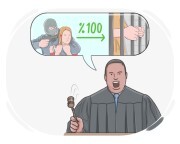
Ex: The small business owner found himself as a litigant in a contract dispute with a former partner over the terms of their dissolved agreement .
Close
Sign in
to affirm
to affirm
[Verb]

to confirm a legal decision or judgment

Ex: Lawyers waited to see if the court would affirm the verdict .
Close
Sign in
count
count
[noun]

a specific crime someone is accused of

Ex: The defendant pleaded not guilty to the first count.
Close
Sign in
to impeach

to formally charge or accuse someone of a crime or misdemeanor
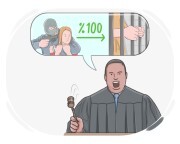
Ex: They were about to impeach the manager for his role in the workplace harassment case .
Close
Sign in
to issue
to issue
[Verb]

to officially start a legal process against someone, often with a document

Ex: Police issued charges after the investigation .
Close
Sign in
LanGeek
Download LanGeek app