
Linguistics - Language Learning and Proficiency
Here you will learn some English words related to language learning and proficiency such as "fluency", "bilingual", and "drill".
Review
Flashcards
Spelling
Quiz

a method of teaching or training through repeated practice, or an exercise used for this purpose
the quality of being able to speak or write very well and easily in a foreign language
someone who has learned a language as their first language, and not as a foreign language

a spoken examination in which questions are answered verbally

the act or process of looking at a written or printed piece and comprehending its meaning

the activity or skill of making words on paper or a screen to express ideas or information

the quality or degree of being correct, exact, or free from errors
a test that must be passed in the US by students who want to continue their education after their first degree
an internationally recognized standardized test that measures the English language proficiency of non-native speakers who wish to study or work in English-speaking countries
an internationally recognized English language proficiency test that assesses the English skills of non-native speakers
a language teaching approach that emphasizes the development of listening and speaking skills through repetitive drills and pattern practice, with a focus on accurate pronunciation and grammatical structures
the information, understanding, and experiences that an individual possesses prior to encountering a specific topic or situation
a beginner level of skill or understanding in a subject or activity that is introductory or rudimentary
the act of understanding something without actively doing anything or making an effort
a mistake, inaccuracy, or deviation from correctness in language production or comprehension
an instructional approach that emphasizes meaningful and authentic tasks to develop language skills in real-world contexts
the interactive process between a language learner and interlocutor, where modifications and clarifications are made in the language input to ensure better comprehension and learning
the language production of a learner that is collaboratively constructed and modified through interaction with others, allowing for feedback, clarification, and refinement of language skills
the desire to learn a language in order to integrate into the target language community, understand its culture, establish social connections, or develop a sense of belonging and identity within that community
the desire to learn a language for practical purposes, such as advancing career prospects, obtaining a job, or achieving specific goals, rather than for intrinsic or personal reasons
the process in second language acquisition where errors or non-native features become permanently ingrained and resistant to correction, even after prolonged exposure to the target language
the linguistic system that emerges during second language acquisition, characterized by a combination of the learner's native language and the target language, incorporating both correct and incorrect features as the learner progresses towards proficiency
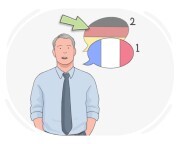
a language that a person learns after their first language, often through formal education or exposure to a different culture or community
the ability to produce language, either through speaking or writing, in order to convey meaning and communicate with others
the ability to understand and comprehend language, either through listening or reading, in order to extract meaning and comprehend the message being conveyed
an individual who has acquired a high level of proficiency in a second or additional language, demonstrating a command of the language that is very close to that of a native speaker in terms of fluency, accuracy, and cultural competence
a widely recognized framework used to describe language proficiency levels in various languages
(linguistics) the process of using the knowledge of a known language while learning a new one by a bilingual or multilingual individual
a person who speaks or is fluent in only one language

a person who can speak and understand two different languages with ease and fluency
the ability to speak and understand multiple languages, which allows individuals to communicate effectively and engage with diverse cultures and communities
| Linguistics | |||
|---|---|---|---|
| Neurolinguistics | Sign Language | Language Learning and Proficiency | Words Related to Linguistics |
