Cambridge IELTS 18 - Academic - Test 1 - Reading - Passage 2 (2)

Here you can find the vocabulary from Test 1 - Reading - Passage 2 (2) in the Cambridge IELTS 18 - Academic coursebook, to help you prepare for your IELTS exam.

review-disable

review

flashcard-disable

flashcard

spelling-disable

spelling

quiz-disable

quiz

start-learning
Cambridge IELTS 18 - Academic
primary [adjective]

having the most importance or influence

Ex: Her primary responsibility as a teacher is to nurture and educate her students .
foliage [noun]

a plant or tree's branches and leaves collectively

Ex: She admired the intricate patterns of the foliage in the forest .
crown [noun]

the top part of a tree or other plant

Ex: From the ground , they could see the crown of the palm tree swaying gently in the breeze .
coverage [noun]

the extent or degree to which something is covered or included
Ex: The new health plan provides better coverage for preventive care and chronic conditions .
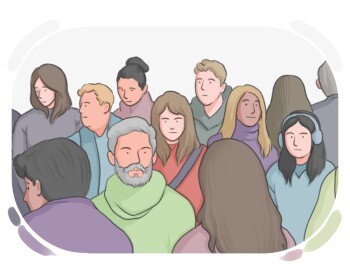
crowded [adjective]

(of a space) filled with things or people

Ex: She felt claustrophobic in the crowded elevator .

to customize or modify something to fit an individual or market's specific preferences
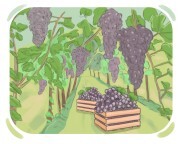
Ex: As a personal touch , the chef can tailor the menu for special dietary requirements .
to yield [verb]

(of a farm or an industry) to grow or produce a crop or product

Ex: The fertile soil in this region yields abundant crops of wheat and corn .
pest [noun]

an insect or small animal that destroys or damages crops, food, etc.
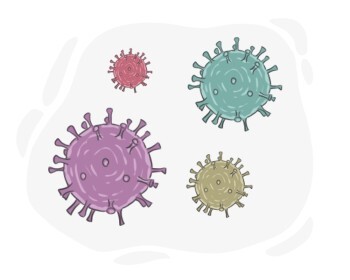
pathogen [noun]

any organism that can cause diseases

Ex: The researchers identified a new viral pathogen that was causing the outbreak of respiratory illness in the community .
to ease [verb]

to reduce the severity or seriousness of something unpleasant

Ex: He tried to ease tensions between the two rival factions by facilitating peace talks .

a particular set of actions conducted in a certain way

Ex: He learned the procedure for conducting the financial audit according to company guidelines .
to seek [verb]

to make an effort to achieve or obtain something

Ex: They sought to solve the problem by brainstorming solutions .
spread [noun]

a haphazard distribution in all directions

vigorous [adjective]

having strength and good mental or physical health

Ex: The vigorous student approached each assignment with enthusiasm and energy .
outbreak [noun]

the unexpected start of something terrible, such as a disease
Ex: Health officials were concerned about the outbreak of measles in the neighborhood .
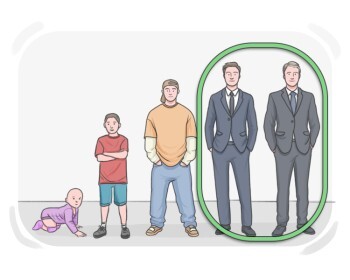
mature [adjective]

fully-grown and physically developed

Ex: Her mature figure was accentuated by the elegant dress she wore , highlighting her curves and sophistication .
to thin [verb]

to reduce the density of something

Ex: The forest ranger thinned the trees in the forest to reduce the risk of wildfires and promote biodiversity .
seedling [noun]

a young plant that develops from a seed, typically in the early stages of growth after germination

Ex: The forest regeneration project involves planting thousands of tree seedlings each year .

to make something stable, secure, or permanent in a specific place or position

Ex: They established the new clinic as a trusted healthcare provider in the area .
to leave [verb]

to cause something to remain as a result

Ex: The muddy shoes left tracks on the freshly cleaned carpet .
young [adjective]

in the initial phase of existence or development

Ex: The scientist presented research on the young solar system and its formation .
point [noun]

a specific identifiable position in a continuum or series or especially in a process

Ex: She paused at the midpoint of her speech to emphasize a key point .
two-tier [adjective]

(of systems, structures, or arrangements) divided into two distinct parts or groups

Ex: The hotel offers two-tier service : standard and premium .
harvest [noun]

the season or period during which crops are collected from the fields

Ex: Farmers prepare for harvest months in advance .

to arrive at a certain stage or point in a process

Ex: The results of the experiment have started to come in , and they look promising .

to distribute something among different time periods or individuals

Ex: In order to manage expenses , the couple decided to spread out their vacation budget over the course of several months .
deadwood [noun]

a branch or a part of a tree that is dead

the act of keeping something that one already has

to categorize or group something based on shared characteristics or qualities

Ex: This software is classified as a productivity tool , designed for business use .
nutrient [noun]

a chemical element or inorganic compound that green plants absorb and incorporate into their organic molecules to support growth and metabolism

Ex: After soil analysis indicated low phosphorus availability , the farmer applied a phosphate-rich nutrient amendment before planting corn .
to cycle [verb]

to go through a complete series of events or stages in a cyclical or repetitive manner
Ex:
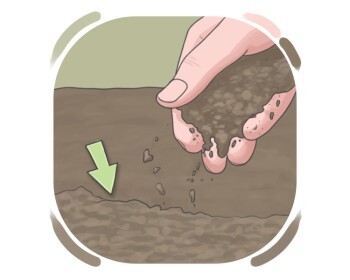
soil [noun]

the black or brownish substance consisted of organic remains, rock particles, and clay that forms the upper layer of earth where trees or other plants grow

Ex: Heavy rains can cause the soil to erode , affecting crop yields .
cavity [noun]

a natural empty space or hollow area inside the body
Ex: Sound echoes in the vocal cavity .
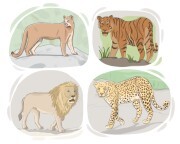
predator [noun]

any animal that lives by hunting and eating other animals
Ex: Tigers , as solitary predators , stalk their prey silently through the dense forests of Asia .

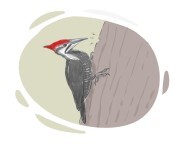
a bird with a drill-like beak that makes holes in trees in search of insects to feed on
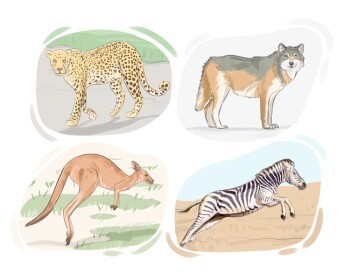
mammal [noun]

a class of animals to which humans, cows, lions, etc. belong, have warm blood, fur or hair and typically produce milk to feed their young

Ex: Elephants , with their distinctive trunks and large ears , are among the most iconic mammals found in Africa and Asia .

the ability to recover from difficult situations
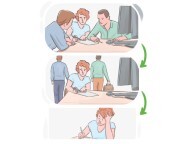
Ex: Mental resilience is crucial for athletes , helping them cope with losses and remain focused on future competitions .
hawthorn [noun]

a shrub or small tree of the family of rose with small red fruits

to remain in a location while others depart

Ex: The soldier stayed behind to provide cover fire while the rest of the squad retreated .
structural [adjective]

relating to or concerned with the morphology of plants and animals

the presence of a variety of distinct characteristics within a group

Ex: In our garden , the diversity of flowers creates a vibrant tapestry of colors and scents .

a mention or citation of something, often to provide context or support for an idea

Ex: The report contained a reference to the latest research in the field .
aspect [noun]

a defining or distinctive feature of something

Ex: He explained every aspect of the plan in detail .

to be one of the causes or reasons that helps something happen

Ex: Volunteer efforts significantly contribute to the charity 's growth .
worth [noun]

the assigned or estimated value of something, without necessarily specifying a particular quantity or amount

Ex: The collector 's items were of significant worth , attracting buyers from all over .

to say something about someone or something, without giving much detail
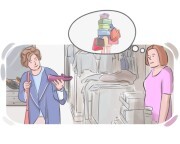
Ex: Can you mention where you found that interesting article ?
potential [adjective]

having the possibility to develop or be developed into something particular in the future

Ex: The potential risks of the new investment strategy were carefully analyzed .
to run [verb]

to cause engines or machines to operate, function, or perform their designated tasks
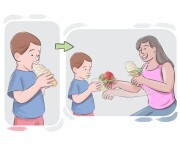
Ex: She ran the engine to warm up the car on a cold morning .
alternative [adjective]

available as an option for something else

Ex: We need to find an alternative route to avoid the traffic .

to cause or give rise to something

Ex: Last year , the new initiative generated a substantial increase in revenue .
across [preposition]

during a period of time

Ex: Her work resonates across the ages .
range [noun]

a variety of things that are different but are of the same general type
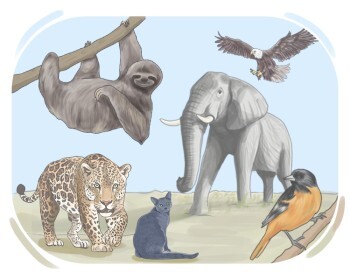
Ex: The restaurant 's menu features a range of dishes from different cuisines around the world .
creature [noun]

any living thing that is able to move on its own, such as an animal, fish, etc.

Ex: Conservationists work tirelessly to protect endangered creatures like the black rhinoceros and the Bengal tiger from extinction .
to name [verb]

to specify or list something by giving its name

Ex: The therapist named the emotions the patient was experiencing : sadness , anger , and anxiety .

a Latin phrase (or its abbreviation) used to indicate that special attention should be paid to something

Cambridge IELTS 18 - Academic
Test 1 - Listening - Part 1 Test 1 - Listening - Part 2 (1) Test 1 - Listening - Part 2 (2) Test 1 - Listening - Part 3 (1)
Test 1 - Listening - Part 3 (2) Test 1 - Listening - Part 4 (1) Test 1 - Listening - Part 4 (2) Test 1 - Reading - Passage 1 (1)
Test 1 - Reading - Passage 1 (2) Test 1 - Reading - Passage 2 (1) Test 1 - Reading - Passage 2 (2) Test 1 - Reading - Passage 3 (1)
Test 1 - Reading - Passage 3 (2) Test 2 - Listening - Part 1 Test 2 - Listening - Part 2 (1) Test 2 - Listening - Part 2 (2)
Test 2 - Listening - Part 3 (1) Test 2 - Listening - Part 3 (2) Test 2 - Listening - Part 4 Test 2 - Reading - Passage 1 (1)
Test 2 - Reading - Passage 1 (2) Test 2 - Reading - Passage 1 (3) Test 2 - Reading - Passage 2 (1) Test 2 - Reading - Passage 2 (2)
Test 2 - Reading - Passage 2 (3) Test 2 - Reading - Passage 3 (1) Test 2 - Reading - Passage 3 (2) Test 2 - Reading - Passage 3 (3)
Test 3 - Listening - Part 1 Test 3 - Listening - Part 2 Test 3 - Listening - Part 3 Test 3 - Listening - Part 4
Test 3 - Reading - Passage 1 (1) Test 3 - Reading - Passage 1 (2) Test 3 - Reading - Passage 2 (1) Test 3 - Reading - Passage 2 (2)
Test 3 - Reading - Passage 3 (1) Test 3 - Reading - Passage 3 (2) Test 4 - Listening - Part 1 Test 4 - Listening - Part 2
Test 4 - Listening - Part 3 Test 4 - Listening - Part 4 Test 4 - Reading - Passage 1 (1) Test 4 - Reading - Passage 1 (2)
Test 4 - Reading - Passage 2 (1) Test 4 - Reading - Passage 2 (2) Test 4 - Reading - Passage 3 (1) Test 4 - Reading - Passage 3 (2)