
Araw-araw na Buhay - Pakikisalamuha
Sumisid sa mga English idioms na may kaugnayan sa pakikisalamuha, tulad ng "break the ice" at "chew the fat".
Repasuhin
Flashcards
Pagsusulit


to slap one's palm against the palm of another person as a way of greeting or congratulating them

makipag-high five, makipag-apir
Nang maka-score ang team, nakipag-high five sa akin si Jake at sumigaw, "Ganda ng pasa!"
to have the opportunity to spend time with a famous person, whether professionally or socially
makihalubilo sa mga sikat, makasama ang mga kilalang tao
Sa film festival, nagkaroon siya ng pagkakataong makihalubilo sa mga artistang matagal na niyang hinahangaan.

to enjoy a friendly talk with a person for a long period of time
makipagkuwentuhan nang matagal, magkuwentuhan nang masinsinan
Umupo kami sa beranda at nagkuwentuhan nang ilang oras.
to keep talking with a person about no particular subject
magkuwentuhan lang, mag-usap-usap nang kung ano-ano
Umupo kami sa labas ng café at nagkuwentuhan lang nang isang oras.
to make two or more strangers get comfortable with each other and engage in a conversation
basagin ang hiya, paluwagin ang usapan
Nagkuwento siya ng nakakatawa para mawala ang hiya bago magsimula ang meeting.
used for greeting a person whom one has not seen for a significant period of time
Uy ngayon ka lang ulit!, Uy, saan ka na napunta?
Uy, ngayon ka lang ulit! Hindi na kita nakita mula noong graduation.
brief and polite conversation about random subjects, often in a social setting
magaan na kuwentuhan, kuwentuhang pang-social
Hindi ako masyadong magaling sa magaan na kuwentuhan sa mga party.
someone or something that when seen makes one very pleased
nakakatuwang makita, sarap makita
Pagkatapos ng tatlong araw na ulan, ang sarap makita ng bughaw na langit.
used as a question when one wants to know what another person has in mind at the moment
Ano'ng iniisip mo?, Ano'ng nasa isip mo?
Tahimik ka buong gabi. Ano'ng iniisip mo?
said when one is in the middle of a conversation about a particular person and that person suddenly shows up
Uy, Ikaw pala ang pinag-uusapan namin!
Uy, binabanggit ka lang — ikaw ang pinag-uusapan namin.
used to ask a departing person to keep visiting or communicating with one
Huwag kang mawawala, Dumaan ka ulit
Ang saya kang makita. Huwag kang mawawala!
(particularly of a guest) to stay in someone's house longer than is considered appropriate, often to the point where one is not welcomed anymore
sumobra sa tagal ng pananatili, abusuhin ang pagtanggap
Umalis na tayo pagkatapos ng hapunan; ayokong sumobra tayo sa tagal ng pananatili.
to completely end one's relationship with someone
putulin ang ugnayan sa isang tao, talikuran ang isang tao
Matapos ang maraming taong sirang pangako, tuluyan na niyang tinalikuran siya.
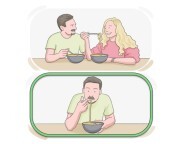
to choose not to communicate or interact with other people
mapag-isa, hindi masyadong nakikihalubilo
Mapag-isa siya sa trabaho at bihira siyang sumama sa iba sa tanghalian.
