
Linguistik - Morfologi och lexikologi
Här kommer du att lära dig några engelska ord relaterade till morfologi och lexikologi som "affix", "stam" och "lexem".
Recension
Flashcards
Stavning
Quiz

the shortened form of a word, etc.

förkortning, abbreviatur
När du skriver en rapport, se till att definiera alla förkortningar första gången du använder dem.

a process in morphology where affixes, which are bound morphemes, are attached to a base or root morpheme to create new words or modify the meaning or grammatical function of existing words
affigering, affigeringsprocess
(grammar) a letter or group of letters added to the end or beginning of a word to change its meaning
affix, suffix/prefix
Läraren förklarade funktionen av affix i olika språk.
a short form of a word or a group of words used instead of the full form
kontraktion, förkortad form
I vardagligt tal används förkortningar som "inte" och "gjorde inte" ofta.

(grammar) a letter or a set of letters that are added to the beginning of a word to alter its meaning and make a new word
prefix
Ordboken gav en lista över prefix och deras betydelser för att hjälpa till med ordbildning och förståelse.

(grammar) a letter or a set of letters that are added to the end of a word to alter its meaning and make a new word
suffix, ändelse
Eleverna övade på att lägga till olika suffix till rotord för att se hur deras betydelser förändrades.
a word formed from the initial letters of a phrase, pronounced as a single word
akronym, förkortning
AIDS är en akronym för förvärvat immunbristsyndrom.
a process in language where two or more words are combined to create a new word that retains elements or sounds from the original words
blandning, fusion
a type of abbreviation in which a word or phrase is represented by a series of numbers, with the numbers typically corresponding to the number of letters omitted between the first and last letter of the word or phrase
numeronym, numerisk förkortning
a morpheme that cannot stand alone as an independent word and must be attached to other morphemes to convey meaning
bundet morfem, beroende morfem
a type of affix that consists of two parts, one attached to the beginning of a word and the other attached to the end
cirkumfix, affix cirkumfix
a morphological process in which a segment or a group of segments is inserted within a word, typically resulting in a change of the word's meaning or grammatical category
transfixation, morfologisk infogning
(linguistics) a process by which a new word or inflection is formed according to existing rules and regulations
analogi, parallell
Studiet av analogi visar hur språket anpassar sig till dess talares behov.
(in linguistics) the base form of a word after removing affixes
stam, rot
Prefixet lades till den ursprungliga stammen för att bilda ett nytt ord.
(in linguistics) the base form of a word, remaining after removing all prefixes and suffixes
rot, stam
Många rötter delas mellan besläktade språk.
a morpheme that can function as an independent word in a language
fritt morfem, oberoende ord
a linguistic element that functions as a word but behaves phonologically or syntactically as a bound morpheme, often attaching to other words and lacking independent stress or full syntactic independence
klitikon, klitiskt element
the process of creating new words or modifying existing ones through morphological and lexical mechanisms in a language
ordbildning, lexikal härledning
(linguistics) a basic linguistic unit that is meaningful and underlies a set of words which are related through inflection
lexem, grundläggande språkenhet
Lexemet "gå" omfattar olika former som "gick", "gående" och "går", var och en förmedlar olika aspekter av verbets betydelse.
a morphological process in language where new words are formed by adding affixes or making internal modifications to a base or root word, resulting in a change in meaning, part of speech, or both
derivering, ordbildningsprocess
(grammar) a change in the structure of a word, usually adding a suffix, according to its grammatical function
böjning, ändelse
Böjning kan ändra betydelsen av ett ord avsevärt.
a word-formation process in which a new word is created by removing what is mistakenly perceived as a derivative affix from an existing word, often resulting in a shorter word with a different part of speech
bakbildning, regressiv avledning
a word-formation process in which two or more individual words are combined to create a new word, typically resulting in a compound with a meaning that is related to or derived from the meanings of the individual words
sammansättning, ordbildningsprocess
a word-formation process in which a word changes its grammatical category or part of speech without any accompanying morphological changes, such as when a noun becomes a verb or a verb becomes a noun
konversion, oegentlig avledning
a structured set showing how a word changes to express different grammatical categories such as tense, mood, voice, aspect, person, number, gender, or case
paradigm, böjningstabell
På grekiska har varje verb ett paradigm som eleverna måste memorera för att bemästra böjningen.
the complete set of meaningful units in a language or a branch of knowledge, or words or phrases that a speaker uses
lexikon, ordförråd
Ordförrådet av slang och vardagliga uttryck utvecklas ständigt för att spegla förändringar i samhället och kulturen.
the process of shortening a word by dropping one or more syllables
klippning, förkortning
Clipping är vanligt i informellt tal och kan leda till att de förkortade formerna blir allmänt accepterade som standardordförråd.
a word-formation process in which a word or name is modified to create a shorter, affectionate, or informal version, often used to express familiarity, endearment, or intimacy
hypokorism, smeknamn
På många språk används hypokoristika för att uttrycka intimitet, familiaritet eller tillgivenhet inom familjer och nära relationer.
the process of creating or treating a group of phonological segments as a distinct morpheme, which carries meaning and can be combined with other morphemes to form words
morfemisering, processen av morfemisering
a linguistic process where affixes attach to a root word, each keeping a distinct meaning and form
agglutination, agglutinationsprocess
a type of morpheme that carries the core lexical or semantic meaning of a word
lexikalt morfem, lexem

all the words used in a particular language or subject
ordförråd, vokabulär
Hon bär på en fickordbok för att öka sitt ordförråd varje dag.
(in linguistics) a word that is developed from another word or base
derivat, avlett ord
Den deriverade "barnslig" förändrar betydelsen av "barn".
(linguistics) the form to which affixes or other morphological operations are added to create a new word
bas, rot
Engelska sammansatta ord som "sunflower" kombinerar två baser ("sun" + "flower").
a process in language where a word or phrase, typically a verb or an adjective, is transformed into a noun, either by adding a suffix or by changing its syntactic function, allowing the expression of concepts or actions as nominal entities
nominalisering, substantivering
a process in which a word or phrase evolves from being a combination of grammatical elements or a non-lexicalized expression to becoming an established lexical unit with its own meaning and usage
lexikalisering, processen av lexikalisering
a word form or affix that is added to a base word to express smallness, endearment, or a sense of familiarity
diminutiv, smeknamn
I många språk används diminutiv för att bilda kärleksfulla eller mindre formella termer.
a newly created word or expression that has not yet gained widespread acceptance or recognition within a language community
protologism, nybildat ord
a non-existent or erroneous word that has been mistakenly created and entered into a dictionary or other linguistic sources
spökord, felaktigt ord
a string of letters or sounds that resemble real words but do not have any actual meaning or lexical representation in a particular language
pseudoord, påhittat ord
a term or expression created and used for a specific occasion or context, typically with a limited or one-time purpose, and not intended for long-term or widespread usage
tillfälligt ord, flyktig neologism
a word or form that appears only once within a specific corpus or body of text
hapax legomenon, ett ord eller en form som endast förekommer en gång i en specifik text
the smallest unit of a word's sound or written form that conveys a distinct grammatical or lexical meaning
morfem, morph
Verbets tempus markeras av ett morfem som är fäst vid stammen.
(linguistics) the smallest meaningful unit of a language that does not necessarily stand alone and cannot be divided
morfem, minsta meningsbärande enhet
Morfem kan vara fria, som "bok", eller bundna, som suffixet "-ed" som indikerar förfluten tid.
a type of morpheme that conveys grammatical information and serves a functional role in a sentence, rather than carrying lexical or content-related meaning
funktionell morfem, grammatisk morfem
(linguistics) a word, a group of words or a part of word that has a meaning and forms the basic element of any language
lexikalisk enhet, lexikalt element
a new word that is formed by the combination of two other words blending their meaning and sounds
portmanteauord, kofferordsord
Populariteten av portmanteauord i det moderna språket är tydlig i termer som "motell", som kombinerar "motor" och "hotell".
(linguistics) all the words and phrases of a language, including the function words
lexikon, ordförråd
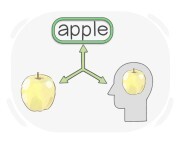
(grammar) a unit of language that has a specific meaning
ord, term

a particular combination of words that are used together very often
kollokation, ordkombination
Att använda felaktiga kollokationer kan få en mening att låta klumpig eller onaturlig.
a group of words or a phrase that has a meaning different from the literal interpretation of its individual words, often specific to a particular language or culture
idiom, idiomatiskt uttryck
På engelska används idiomet 'break the ice' för att beskriva att starta en konversation i en social miljö för att minska spänning, inte för att faktiskt bryta is.
a situation in which a word or phrase has multiple meanings or interpretations, often leading to confusion or uncertainty in understanding the intended message or context
lexikalisk tvetydighet, polysemi
the process of duplicating all or part of a word or morpheme to create a new form, often with a change in meaning or grammatical function
reduplikation, fördubbling
I vissa språk används reduplikation för att bilda plural, som i indonesiska där "orang" betyder "person" och "orang-orang" betyder "människor".
a phenomenon where the presence of one linguistic form prevents the occurrence or acceptance of another form with a similar meaning or function
blockering, hinder
a set of principles or patterns that govern the formation or derivation of words and their meanings within a particular language or lexical system
lexikalisk regel, lexikalt princip
a playful, made-up word used to describe something for which there is no existing term, often adding humor and creativity to language
sniglet, lekfullt påhittat ord
the process in which a new word or morpheme is created by combining a sound component that resembles an existing word with a semantic component that reflects its meaning
fonosemantisk matchning, ljud-betydelseöverensstämmelse
