
Мовознавство - Морфологія та лексикологія
Тут ви дізнаєтеся деякі англійські слова, пов’язані з морфологією та лексикологією, такі як "афікс", "основа" та "лексема".
Огляд
Картки
Правопис
Вікторина

the shortened form of a word, etc.
скорочення
Підручник надав ключ для всіх скорочень, використаних у розділах.

a process in morphology where affixes, which are bound morphemes, are attached to a base or root morpheme to create new words or modify the meaning or grammatical function of existing words
афіксація, процес афіксації
(grammar) a letter or group of letters added to the end or beginning of a word to change its meaning
афікс, суфікс/префікс
Афікс "un-" змінює значення прикметників на протилежне.
a short form of a word or a group of words used instead of the full form
скорочення, скорочена форма
При неформальному написанні скорочення роблять мову більш розслабленою.

(grammar) a letter or a set of letters that are added to the beginning of a word to alter its meaning and make a new word
префікс
Розуміння загальних префіксів, таких як 'pre-' та 'dis-', може допомогти учням розшифровувати незнайомі слова.

(grammar) a letter or a set of letters that are added to the end of a word to alter its meaning and make a new word
суфікс
Додавання суфікса '-ly' до слова 'quick' змінює його на 'quickly', перетворюючи його на прислівник.
a word formed from the initial letters of a phrase, pronounced as a single word
акронім, абревіатура
Вчитель пояснив, що scuba — це акронім для self-contained underwater breathing apparatus.
a process in language where two or more words are combined to create a new word that retains elements or sounds from the original words
змішування, злиття
a type of abbreviation in which a word or phrase is represented by a series of numbers, with the numbers typically corresponding to the number of letters omitted between the first and last letter of the word or phrase
нумеронім, цифрове скорочення
a morpheme that cannot stand alone as an independent word and must be attached to other morphemes to convey meaning
зв’язана морфема, залежна морфема
a type of affix that consists of two parts, one attached to the beginning of a word and the other attached to the end
циркумфікс, афікс циркумфікс
a morphological process in which a segment or a group of segments is inserted within a word, typically resulting in a change of the word's meaning or grammatical category
трансфіксація, морфологічна вставка
(linguistics) a process by which a new word or inflection is formed according to existing rules and regulations
аналогія, паралелізм
Багато дітей використовують аналогію для утворення нових слів, наслідуючи звуки існуючих.
the form of a word to which inflectional affixes are added
основа, корінь
(in linguistics) the base form of a word, remaining after removing all prefixes and suffixes
корінь, основа
a morpheme that can function as an independent word in a language
вільна морфема, незалежне слово
a linguistic element that functions as a word but behaves phonologically or syntactically as a bound morpheme, often attaching to other words and lacking independent stress or full syntactic independence
клітика, клітичний елемент
the process of creating new words or modifying existing ones through morphological and lexical mechanisms in a language
словотвір, лексична деривація
(linguistics) a basic linguistic unit that is meaningful and underlies a set of words which are related through inflection
лексема, базова лінгвістична одиниця
Наприклад, лексема "run" включає базову форму "run", а також її форми, такі як "ran", "running" та "runs".
a morphological process in language where new words are formed by adding affixes or making internal modifications to a base or root word, resulting in a change in meaning, part of speech, or both
деривація, словотвір
(grammar) a change in the structure of a word, usually adding a suffix, according to its grammatical function
флексія, закінчення
Латина значною мірою покладається на відміну для передачі граматичних відносин.
a word-formation process in which a new word is created by removing what is mistakenly perceived as a derivative affix from an existing word, often resulting in a shorter word with a different part of speech
ретроутворення, регресивна деривація
a word-formation process in which two or more individual words are combined to create a new word, typically resulting in a compound with a meaning that is related to or derived from the meanings of the individual words
складання слів, утворення складних слів
a word-formation process in which a word changes grammatical category without any change in its form
конверсія, безафіксне словотворення
a structured set showing how a word changes to express different grammatical categories such as tense, mood, voice, aspect, person, number, gender, or case
парадигма, таблиця відмінювання
Дієслово 'run' має парадигму: run, runs, ran, running.
the complete set of meaningful units in a language or a branch of knowledge, or words or phrases that a speaker uses
лексикон, словниковий запас
Лінгвісти аналізують лексикон мови, щоб зрозуміти її словниковий запас і зв'язки між словами.
the process of shortening a word by dropping one or more syllables
усічення, скорочення
Приклади усічення включають "ad" від "advertisement", "lab" від "laboratory" та "bike" від "bicycle".
a word-formation process in which a word or name is modified to create a shorter, affectionate, or informal version, often used to express familiarity, endearment, or intimacy
гіпокористика, пестливе ім'я
Поширені приклади гіпокоризму включають "Біллі" для "Вільяма", "Кейті" для "Кетрін" та "Ліззі" для "Елізабет".
the process of creating or treating a group of phonological segments as a distinct morpheme, which carries meaning and can be combined with other morphemes to form words
морфемізація, процес морфемізації
a linguistic process where affixes attach to a root word, each keeping a distinct meaning and form
аглютинація, процес аглютинації
a type of morpheme that carries the core lexical or semantic meaning of a word
лексична морфема, лексема

all the words used in a particular language, field, or subject
лексикон, словниковий запас
(in linguistics) a word that is developed from another word or base
похідне слово, дериват
Багато англійських слів є похідними від латинських термінів.
(linguistics) the form to which affixes or other morphological operations are added to create a new word
основа, корінь
a process in language where a word or phrase, typically a verb or an adjective, is transformed into a noun, either by adding a suffix or by changing its syntactic function, allowing the expression of concepts or actions as nominal entities
номіналізація, субстантивування
a process in which a word or phrase evolves from being a combination of grammatical elements or a non-lexicalized expression to becoming an established lexical unit with its own meaning and usage
лексикалізація, процес лексикалізації
a word form or affix that is added to a base word to express smallness, endearment, or a sense of familiarity
зменшувально-пестливе слово, димінутив
Суфікс "-ette" у слові "kitchenette" є зменшувальним суфіксом, що позначає невелику кухонну зону.
a newly created word or expression that has not yet gained widespread acceptance or recognition within a language community
протологізм, новоутворене слово
a non-existent or erroneous word that has been mistakenly created and entered into a dictionary or other linguistic sources
примарне слово, помилкове слово
a string of letters or sounds that resemble real words but do not have any actual meaning or lexical representation in a particular language
псевдослово, вигадане слово
a term or expression created and used for a specific occasion or context, typically with a limited or one-time purpose, and not intended for long-term or widespread usage
разове слово, ефемерний неологізм
a word or form that appears only once within a specific corpus or body of text
гапакс легоменон, слово або форма
the smallest unit of a word's sound or written form that conveys a distinct grammatical or lexical meaning
морфема, морф
Лінгвісти аналізують морфи, щоб зрозуміти утворення слів.
(linguistics) the smallest meaningful unit of a language that does not necessarily stand alone and cannot be divided
морфема, найменша значуща одиниця
Слово "unhappiness" містить три морфеми: "un-", "happy" та "-ness".
a type of morpheme that conveys grammatical information and serves a functional role in a sentence, rather than carrying lexical or content-related meaning
функціональний морфема, граматичний морфема
(linguistics) a word, a group of words or a part of word that has a meaning and forms the basic element of any language
лексична одиниця, лексичний елемент
a new word that is formed by the combination of two other words blending their meaning and sounds
слово-портмоне, слово-гібрид
Слова-портмоне, такі як "smog" від "smoke" і "fog", часто виникають у відповідь на нові культурні явища.
(linguistics) all the words and phrases of a language, including the function words
лексика, словниковий запас
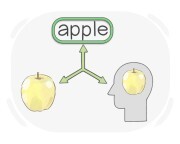
(grammar) a unit of language that has a specific meaning
слово

a particular combination of words that are used together very often
сполучення слів
Вона вивчала колокації, щоб покращити свою плавність і звучати більш як носій мови.
a group of words or a phrase that has a meaning different from the literal interpretation of its individual words, often specific to a particular language or culture
ідіома, ідіоматичний вираз
Коли хтось каже 'льє як з відра,' він використовує ідіому, щоб описати дуже сильний дощ, а не справжній злив тварин.
a situation in which a word or phrase has multiple meanings or interpretations, often leading to confusion or uncertainty in understanding the intended message or context
лексична неоднозначність, багатозначність
the process of duplicating all or part of a word or morpheme to create a new form, often with a change in meaning or grammatical function
редупликація, подвоєння
Прикладом редуплікації в англійській мові є слово "bye-bye", яке є дитячим способом сказати "до побачення".
a phenomenon where the presence of one linguistic form prevents the occurrence or acceptance of another form with a similar meaning or function
блокування, перешкоджання
a set of principles or patterns that govern the formation or derivation of words and their meanings within a particular language or lexical system
лексичне правило, принцип лексики
a playful, made-up word used to describe something for which there is no existing term, often adding humor and creativity to language
сніглет, грайливе вигадане слово
the process in which a new word or morpheme is created by combining a sound component that resembles an existing word with a semantic component that reflects its meaning
фоно-семантичне відповідність, фоно-семантичне співставлення
