Cambridge English: FCE (B2 First) - Interpersonal Communication

review-disable

review

flashcard-disable

flashcard

spelling-disable

spelling

quiz-disable

quiz

start-learning
Cambridge English: FCE (B2 First)

to proceed with an action, event, or task

Ex: The construction of the new school building will go ahead after securing funding .
gossip [noun]

informal or idle talk about others, especially their personal lives, typically involving details that may not be confirmed or verified

Ex: He ’s always the first one to spread gossip , but it ’s not always reliable .
to cheer [verb]

to encourage or show support or praise for someone by shouting

Ex: The students cheer when the school mascot enters the auditorium .
critical [adjective]

noting or highlighting mistakes or imperfections

Ex: He was always critical of his own work , striving for perfection .
to admit [verb]

to agree with the truth of something, particularly in an unwilling manner
Ex: He often admits when he does n't know the answer .

to emphasize a particular point or aspect

Ex: The manager stressed the company 's commitment to customer satisfaction in the staff meeting .

to prevent or persuade someone from taking a particular action or pursuing a specific course of action

Ex: The coach discourages players from engaging in unsportsmanlike behavior .

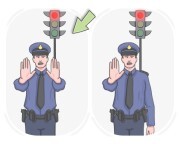
to convince someone to do something they do not want to do

Ex:

to tell a person that one is sorry for having done something wrong

Ex: In a professional setting , it is common to apologize for any errors and take responsibility .
to claim [verb]

to say that something is the case without providing proof for it
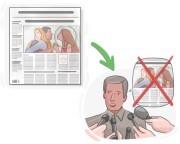
Ex: Yesterday , the politician confidently claimed that the opposition 's policies were harmful .
to deny [verb]

to refuse to admit the truth or existence of something

Ex: Despite the witness accounts , the defendant chose to deny any wrongdoing in court .

to assert or postulate something positively and confidently

Ex:

to say something about someone or something, without giving much detail

Ex: Can you mention where you found that interesting article ?

to tell someone that one will do something or that a particular event will happen

Ex: While on the campaign trail , the candidate was promising various improvements to the community .

to say or show one's unwillingness to do something that someone has asked

Ex: The employee had to refuse the assignment as it conflicted with their current workload .
to urge [verb]

to strongly recommend something

Ex: The therapist urged honesty in discussing emotions and feelings during therapy sessions .
to warn [verb]

to tell someone in advance about a possible danger, problem, or unfavorable situation

Ex: The detective warned the witness about the possible threats to their safety .

to send a letter, document, or package to its intended destination using postal services

Ex:

to express sharp disapproval or criticism of someone's behavior or actions

Ex: He was told off by his manager for missing the deadline .
apology [noun]

something that a person says or writes that shows they regret what they did to someone

Ex: The teacher accepted the student 's apology for not completing the assignment on time .

a statement that conveys one's dissatisfaction

Ex: He voiced his complaint about the noise levels in the apartment complex , which had been disturbing his peace at night .

to intentionally pay no or little attention to someone or something

Ex: It 's important not to ignore the early signs of a potential problem for timely resolution .

to formally present something, such as a proposal or document, to someone in authority for review or decision

Ex: She decided to submit her manuscript to the publisher .

to say that a person or group has done something wrong

Ex: She accused her colleague of stealing her ideas during the meeting .

to refuse to accept a proposal, idea, person, etc.

Ex: She rejected the dress because it did n't fit her well .
the former [pronoun]

the first of two people, things, or groups previously mentioned

Ex: He was offered two job opportunities , and he decided to take the former as it aligned better with his career goals .
the latter [pronoun]

used to refer to the second of two individuals or things mentioned in a preceding statement

Ex: Sarah and Emily were both qualified candidates , but the latter was chosen for the position .
on behalf of [preposition]

used to indicate that someone is acting or speaking for another person or group

Ex: He donated money to the charity on behalf of his family .

used to express a condition that must be met for a certain action or situation to happen

Ex: He agreed to go on the trip on the condition that they return by Sunday evening .