Essential Vocabulary for TOEFL - Physical Conditions and Injuries

Here you will learn some English words about physical conditions and injuries, such as "wound", "obesity", "dizzy", etc. that are needed for the TOEFL exam.

review-disable

review

flashcard-disable

flashcard

spelling-disable

spelling

quiz-disable

quiz

start-learning
Essential Vocabulary for TOEFL
allergy [noun]

a medical condition in which one's body severely reacts to a specific substance if it is inhaled, touched, or ingested

Ex: The doctor advised her to avoid dairy products because of her lactose allergy .
nausea [noun]

the feeling of discomfort in the stomach, often with the urge to vomit
Ex: She experienced nausea after eating too much at the fair .
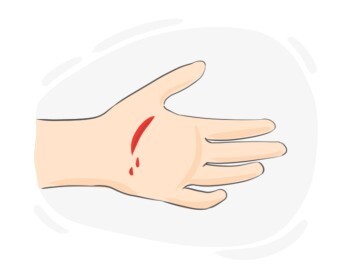
wound [noun]

an injury inflicted on the body especially one that seriously damages the skin or the flesh
Ex: The knife left a small but painful wound on his hand .
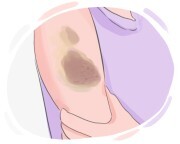
bruise [noun]

an injury on the skin that appears as a dark mark, caused by a blow involving the rupture of vessels underneath
Ex: She applied ice to the bruise on her leg to reduce swelling and alleviate some of the pain from the impact .
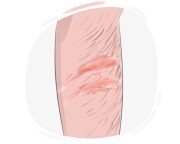
scar [noun]

a mark that is left on one's skin after a wound or cut has healed

Ex: Common causes of scars include cuts , burns , surgical incisions , acne , and injuries .
migraine [noun]

a severe recurring type of headache, particularly affecting one side of the head, and often causing visual disturbances and nausea
Ex: The bright lights triggered a migraine , so she decided to rest .
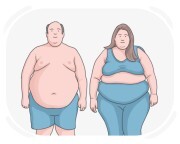
obesity [noun]

the condition of having such a high amount of body fat that it becomes very dangerous for one's health

Ex: Obesity increases the risk of developing chronic diseases such as diabetes , heart disease , and certain types of cancer .
dependent [adjective]

not able to stop taking or using something
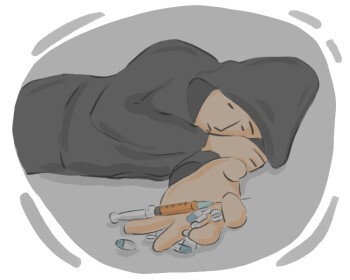
Ex:

to give or take an excessive amount of a drug at a given time, which could be fatal

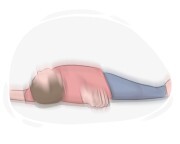
unconscious [adjective]

(of a person) unresponsive and unaware of the surroundings, usually due to an illness or injury

Ex: She spoke to him while he was unconscious in hopes that he could hear her voice .
to vomit [verb]

to eject what has been eaten or drunk through the mouth
Ex: Yesterday , he unexpectedly vomited after having dinner at the restaurant .
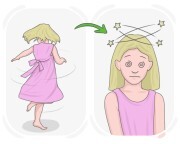
dizzy [adjective]

unable to keep one's balance and feeling as though everything is circling around one, caused by an illness or looking down from a high place

Ex: Low blood sugar levels can cause people with diabetes to feel dizzy and disoriented .
to faint [verb]

to suddenly lose consciousness from a lack of oxygen in the brain, which is caused by a shock, etc.

Ex: The sight of blood can be distressing for some people and may cause them to faint .
fit [noun]

a sudden episode in which the body shakes uncontrollably
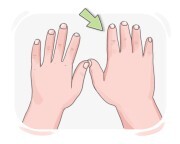
Ex:
to swell [verb]

to become rounder or larger, particularly due to an increase in the amount of fluid
Ex: When a joint is injured , it may swell as part of the body 's natural healing process .

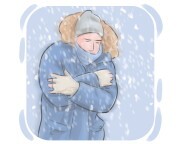
to shake slightly and repeatedly because of cold

Ex: She wrapped her coat tighter as she shivered .

to become sick again after an improvement in one's health

(of a person) to fall and become unconscious

Ex: A sudden drop in blood pressure caused her to collapse during the meeting .
coma [noun]

a state of deep unconsciousness, typically of a long duration and caused by a serious injury or severe illness

Ex: Doctors monitored her brain activity while she was in a coma .
outbreak [noun]

the unexpected start of something terrible, such as a disease

Ex: Health officials were concerned about the outbreak of measles in the neighborhood .

to transmit a disease to a person, animal, or plant
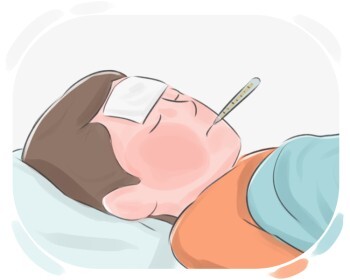
Ex: Healthcare workers take precautions to avoid infecting patients while providing medical care .
feverish [adjective]

having or caused by a fever

Ex: Taking over-the-counter medication helped alleviate her feverish symptoms temporarily .

a harmful state in which the body has lost a lot of water

a secondary health condition that makes the treatment of the existing condition harder

to start to have a particular disease or problem
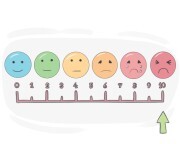
Ex: As she aged , she developed arthritis , experiencing pain and stiffness in her joints .
severe [adjective]

very harsh or intense

Ex: The country is facing severe economic problems .
acute [adjective]

(of an illness) suddenly becoming severe but for a short time

Ex: Tom 's acute migraine headache was so intense that he had to lie down in a dark room until it subsided .
scratch [noun]

a small cut on the skin caused by something sharp, like a fingernail, thorn, or rough surface
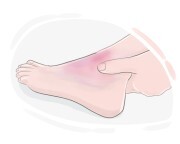
(of a ligament) to be suddenly twisted, which results in much pain
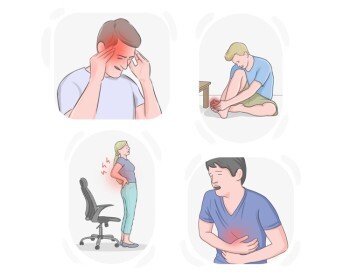
Ex: He accidentally sprained his knee while running .
burn [noun]

a mark or injury that is caused by exposure to fire, acid, heat, etc.

agony [noun]

severe physical or mental pain

Ex: The agony of arthritis can make simple movements excruciating .
epidemic [noun]

the rapid spread of an infectious disease within a specific population, community, or region, affecting a significant number of individuals at the same time

Ex: The flu epidemic affected thousands of people last winter .
pandemic [noun]

a disease that spreads across a large region or even across the world

Ex: