
Książka Street Talk 3 - Lekcja 9
Poznaj słownictwo, nieformalne wyrażenia i konwersacyjny angielski przedstawione w Street Talk 3 Lekcja 9.
Przegląd
Fiszki
Pisownia
Test

![to [have] another thing coming](/assets/img/no-pic-700w.png "to [have] another thing coming")
to say that someone's opinion or judgment is completely wrong

grubo się mylić, czeka go niemiłe zaskoczenie
Myśli, że rynek wybaczy kolejne opóźnienie, ale grubo się myli.
to repeatedly try to do or achieve something without success
walić głową w mur, bezskutecznie się starać
Przez miesiące walił głową w mur, próbując uzyskać zgodę.
used to introduce a thought or realization that occurred to one during a conversation
jakby się nad tym zastanowić, teraz
Jak tak myślę, przypominam sobie, że widziałem brakujący dokument na moim biurku wcześniej dziś.
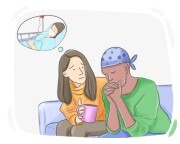
in a similar or identical situation to someone else, particularly a difficult or unpleasant one
być na jego miejscu, w jego sytuacji
Gdybym był na twoim miejscu, przyjąłbym ofertę.
to violently criticize or punish a person over what they did or said
ostro kogoś zrugać, dać komuś burę
Redaktor ostro zrugał reportera za wymyślenie cytatu.
to directly tell a person a fact, usually one that is unpleasant
powiedzieć komuś prosto z mostu, powiedzieć bez ogródek
Jeśli liczby są złe, powiedz nam prosto z mostu.
![to [nip] {sth} in the bud](https://cdn.langeek.co/photo/21278/thumb/350?type=jpeg "to [nip] {sth} in the bud")
to immediately prevent something, particularly something problematic, before it has time to develop
zdusić w zarodku, uciąć na samym początku
Menedżer zmienił zasady, żeby zdusić powtarzające się opóźnienia w zarodku.
![to [take] {sth} in stride](https://cdn.langeek.co/photo/43202/thumb/350?type=jpeg "to [take] {sth} in stride")
to calmly cope with something that is difficult or disturbing
przyjąć to ze spokojem, poradzić sobie bez paniki
Większość ludzi wpadłaby w panikę, ale ona radzi sobie z presją spokojnie.
to intentionally not take action or not address an issue or problem, especially when one should have, often resulting in a negative consequence
to suffer or endure something unfair without ever complaining or protesting

not allowed or possible
wykluczone, nie wchodzi w grę
Poprosiłem o jeszcze tydzień, ale kierownik powiedział, że przedłużenie terminu nie wchodzi w grę.
to make changes to one's behavior or mindset in order to become a better and more responsible person
zmienić się na lepsze, zacząć od nowa
Po przeprowadzce do nowego miasta Maya próbowała zmienić się na lepsze.
