pattern

Advanced Vocabulary for TOEFL - News and Journalism

Here you will learn some English words about news and journalism, such as "blaze", "carry", "organ", etc. that are needed for the TOEFL exam.

Review

Flashcards

Spelling

Quiz

Start learning
Advanced Words Needed for TOEFL
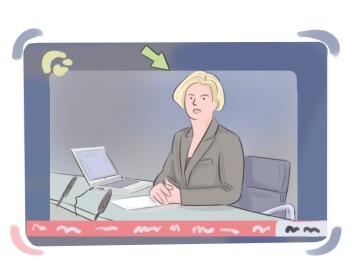
anchorman
anchorman
[noun]

a television reporter who coordinates and performs a live broadcast to which several correspondents contribute

Close
Sign in
teleprompter

an electronic device that displays the script for people who are speaking in public, or on television
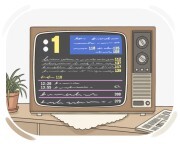
Ex: The news anchor read the script smoothly from the teleprompter, delivering the evening news with confidence. 
Close
Sign in
teletext
teletext
[noun]

a service delivering written news and information through television, currently replaced by other information services provided on a television network

Ex: Teletext was widely used in the 20th century to broadcast news, weather updates, and sports scores on television screens. 
Close
Sign in
tell-all
tell-all
[Adjective]

(of a book, an interview, etc.) including shocking information, revealed by an individual, usually a celebrity

Ex: The celebrity's tell-all autobiography revealed shocking details about their personal life and career. 
Close
Sign in
to blaze
to blaze
[Verb]

to announce news, in a way and manner that it gets a lot of attention

Ex: The newspaper blazed the breaking news story across its front page, capturing the attention of readers. 
Close
Sign in
to carry
to carry
[Verb]

(of a television, radio network, or newspaper) to broadcast or publish something, or to include specific information in a report

Ex: The national news channel will carry a special report tonight. 
Close
Sign in
back issue

an earlier copy of a magazine or a newspaper

Ex: The library has a vast collection of back issues of popular magazines for patrons to borrow. 
Close
Sign in
backstory
backstory
[noun]

background information that explains the circumstances of a news story or event

Ex: The article included a backstory of the economic crisis. 
Close
Sign in
lead story

an item of news that is given the most prominence in a news broadcast, magazine, or newspaper
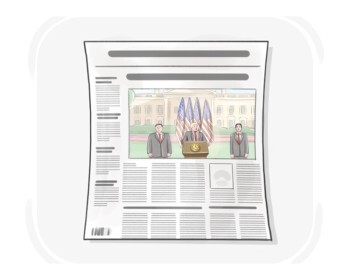
Ex: The scandal involving the politician was the lead story on every major news outlet. 
Close
Sign in
broadsheet

a newspaper that is published on a large piece of paper regarded as more serious

Ex: The broadsheet featured a detailed analysis of the economic implications of the new policy. 
Close
Sign in
gazette
gazette
[noun]

an official journal or newspaper that contains serious information about decision making and policies, published by an organization

Ex: The local gazette publishes articles on community events, local news, and editorials. 
Close
Sign in
organ
organ
[noun]

a newspaper, periodical, or magazine published by a particular group or organization to promote their views

Ex: The party's official organ serves as a platform for disseminating its political agenda and promoting party policies. 
Close
Sign in
biweekly
biweekly
[noun]

something that occurs or is published every two weeks, typically referring to a publication, such as a newspaper or magazine, that is issued or updated once every two weeks

Close
Sign in
advertorial

a piece of advertisement in a newspaper or magazine, designed to seem like an objective article and not an advertisement

Ex: The magazine published an advertorial about the latest skincare products, blending informative content with promotional messaging. 
Close
Sign in
byline
byline
[noun]

a line that gives the writer's name, usually at the beginning or end of a column

Ex: The journalist was proud to see her byline on the front page of the newspaper, crediting her for the investigative report. 
Close
Sign in
canard
canard
[noun]

a baseless and made-up story or news report created to mislead people

Ex: The tabloid newspaper published a canard claiming that aliens had been sighted in the local park. 
Close
Sign in
censorship

the act or policy of eliminating or prohibiting any part of a movie, book, etc.

Ex: The author's novel faced censorship due to its controversial themes. 
Close
Sign in
write-up
write-up
[noun]

a written account in a newspaper to review a book, performance, or event

Ex: The employee received a glowing write-up from their supervisor for their exceptional performance on the project. 
Close
Sign in
yellow journalism

a style of reporting that prioritizes sensationalism, exaggeration, and misleading tactics to attract readership

Ex: The tabloid was criticized for its reliance on yellow journalism to boost circulation. 
Close
Sign in
supplement

a separate section, usually in the form of a colored magazine, sold with a newspaper

Ex: The Sunday edition of the newspaper includes a lifestyle supplement featuring articles on fashion, food, and travel. 
Close
Sign in
stringer
stringer
[noun]

a journalist who is not an employee of a newspaper, but who supplies stories for that newspaper from time to time

Ex: The newspaper relies on a network of stringers to cover local events and breaking news stories. 
Close
Sign in
stop press

the most recent and important news that is added to a newspaper at the last moment before printing or after the start of the printing process, especially as a heading

Ex: The breaking news was so significant that the editor ordered a stop press to update the front page of the newspaper. 
Close
Sign in
sidebar
sidebar
[noun]

a brief piece in a newspaper printed next to the main article, providing additional information

Ex: The sidebar accompanying the main article provided additional context and background information on the topic. 
Close
Sign in
scoop
scoop
[noun]

a piece of news reported by a news agency sooner than other media channels or newspapers

Ex: The journalist's investigative work led to a major scoop, uncovering corruption at the highest levels of government. 
Close
Sign in
roundup
roundup
[noun]

a summary of the most significant news

Ex: The morning news program featured a roundup of the day's top stories from around the world. 
Close
Sign in
rave
rave
[noun]

an enthusiastic article published in a magazine or newspaper about a particular film, book, etc.

Ex: The magazine published a rave about the groundbreaking research being conducted in renewable energy. 
Close
Sign in
lede
lede
[noun]

the first sentence or paragraph of a news story, presenting the most significant aspects of the story

Ex: The journalist crafted a compelling lede that drew readers into the story from the very first sentence. 
Close
Sign in
op-ed
op-ed
[noun]

a section in the newspaper that contains personal opinions about the news and feature articles, opposite the editorial page

Ex: The newspaper's op-ed section features contributions from a diverse range of voices, offering readers varying perspectives on current events. 
Close
Sign in
offprint
offprint
[noun]

an article that has been separately published as a piece in a magazine or newspaper

Ex: The author received offprints of the article from the publisher to distribute to colleagues and peers. 
Close
Sign in
obituary
obituary
[noun]

an article or report, especially in a newspaper, published soon after the death of a person, typically containing details about their life

Ex: The newspaper published an obituary honoring the life and legacy of the community leader who passed away. 
Close
Sign in
hit piece
hit piece
[noun]

a report, article, etc. that aims to bring down someone by presenting forged facts

Ex: The article was nothing more than a hit piece, filled with unfounded accusations and personal attacks against the politician. 
Close
Sign in
mouthpiece

a person, newspaper, or organization that represents the views of another person, a government, etc.

Ex: The press secretary serves as the mouthpiece of the administration, conveying the president's policies and positions to the public. 
Close
Sign in
masthead
masthead
[noun]

the title of a magazine or newspaper at the top of the first page

Ex: The masthead of the newspaper displayed the publication's name in bold letters at the top of the front page. 
Close
Sign in
LanGeek
Download LanGeek app