
Advanced Vocabulary for TOEFL - Mathematics and Measurement
Here you will learn some English words about mathematics and measurement, such as "amp", "hertz", "horsepower", etc. that are needed for the TOEFL exam.
Review
Flashcards
Spelling
Quiz


(physics) the unit used to measure power, equal to one joule of energy used per second
(physics) the unit used to measure electrical potential difference, or the force that pushes electric current through a circuit
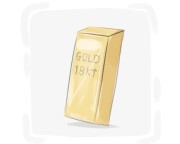
a unit to measure the purity of gold, the purest gold being 24 karats

a unit of volume used in the United States to measure liquids, equal to approximately 29.5735 milliliters
(physics) the unit used to measure frequency, equal to one cycle per second
a unit for measuring an engine's power

a United States unit of liquid volume equal to 16 fluid ounces or about 473 milliliters
(mathematics) the product of a number multiplied by itself
(mathematics) a quantity that is capable of assuming different values in a calculation
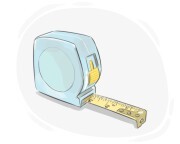
a flexible measuring tool consisting of a long strip of metal, cloth, or plastic with measurement markings, used to measure lengths and distances accurately
an arrangement of numbers, symbols, or values in rows, columns, or another systematic pattern
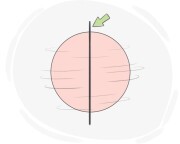
the central point or line around which an object turns
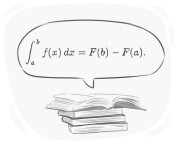
the branch of mathematics that comprises differentials and integrals
(mathematics) the bottom number of a fraction, which shows the total number of equal parts the whole is divided into
(mathematics) the top number of a fraction, which represents how many parts are being considered
(mathematics) a shared multiple of the bottom numbers of two or more fractions
(mathematics) an interdisciplinary theory about complex systems that obey particular laws but appear to have little or no order
a branch of mathematics that studies the strategies of dealing with competitive situations involving conflict of interests, especially in business, war, etc.
any set of numbers that represents an exact position on a map or graph
the rate at which a quantity or dimension changes over a given distance or interval
a number greater than 1 with only two devisors which can be itself or 1
a number incapable of being expressed as a ratio of two integers
a number that can be written as a fraction, where both the top and bottom are whole numbers, and the bottom is not zero
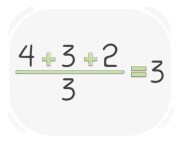
(mathematics) the average value of a set of quantities calculated by adding them, and dividing them by the total number of the quantities
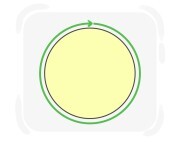
the total length of the external boundary of something
(mathematics) the ratio of the opposite to the adjacent side of a triangle that has one angle of 90°
(mathematics) the ratio of the length of the side opposite the given angle to the length of the hypotenuse
(mathematics) the ratio of the adjacent side to the hypotenuse
the ratio of the side adjacent to a particular acute angle to the side opposite the angle, in a right-angled triangle
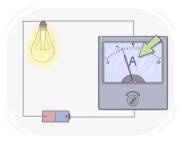
the unit of electric current, symbolized as "A" in the International System of Units
a unit of measurement used to express speed or velocity in the metric system, representing the distance traveled in kilometers over the course of one hour
a metric unit equal to 1/100th of a liter

a temperature scale where 0°C represents the freezing point and 100°C represents the boiling point of water at standard atmospheric pressure

