Advanced Vocabulary for TOEFL - Physics and Chemistry

Here you will learn some English words about physics and chemistry, such as "vacuum", "alkali", "ion", etc. that are needed for the TOEFL exam.

review-disable

review

flashcard-disable

flashcard

spelling-disable

spelling

quiz-disable

quiz

start-learning
Advanced Vocabulary for TOEFL
vacuum [noun]

a space that is utterly empty of all matter
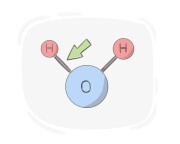
Ex: The vacuum inside a cathode-ray tube allows electrons to travel from the cathode to the anode without encountering air molecules , facilitating the display of images .
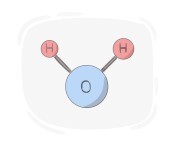
to bond [verb]

(chemistry) to merge or be merged by a chemical bond
Ex:

the different elements that form something or the arrangement of these elements
Ex: The composition of air includes nitrogen ( 78 % ) , oxygen ( 21 % ) , carbon dioxide , and trace amounts of other gases .

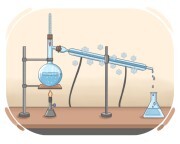
to heat a liquid and turn it into gas then cool it and make it liquid again in order to purify it

Ex:

to press two things together or be pressed together to become smaller

Ex: She compressed her fingers together to form a tight grip on the handle .

(physics) an invisible substance that makes up most of the universe's mass, detectable only through its gravitational effects

Ex: Despite extensive research efforts , the true nature of dark matter remains one of the biggest mysteries in astrophysics .

(physics) matter consisting of elementary particles that are the antiparticles of those of regular matter

Ex: Antimatter is rare in the universe , but small amounts of it can be produced in high-energy particle collisions .
catalyst [noun]

(chemistry) a substance that causes a chemical reaction to happen at a faster rate without undergoing any chemical change itself

Ex: In the Haber process , iron is used as a catalyst to promote the synthesis of ammonia from nitrogen and hydrogen gases .

to increase the velocity of something

Ex: The electric field between charged particles can accelerate electrons .
alkali [noun]

any water-soluble compound that can turn litmus blue and reacts with an acid to form a salt and water

Ex: The chemist carefully measured the alkali to avoid a violent reaction .
solvent [noun]

a liquid that is capable of dissolving another substance

Ex:
ammonia [noun]

a sharp-smelling gas made of nitrogen and hydrogen
Ex: The laboratory smelled of ammonia after the experiment .
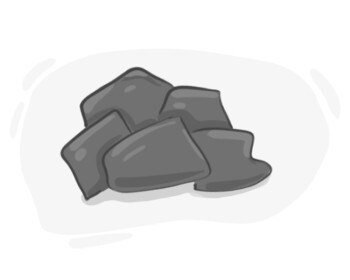
charcoal [noun]

a hard black substance consisting of an amorphous form of carbon which is made by slowly burning wood and is used as fuel or for drawing

charged [adjective]

having an electric charge

Ex:

a substance that permits electricity to pass through or along it

Ex: Graphite is a conductor commonly used in electrodes for batteries and in electronic devices .
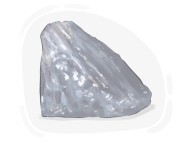
crystal [noun]

a solid substance formed when a chemical compound solidifies, with atoms arranged in a highly regular, repeating pattern

Ex: Sugar crystals sparkle when exposed to light .
ion [noun]

a particle with a net electric charge due to loss or gain of one or more electrons

Ex: Calcium ions ( Ca²⁺ ) are essential for muscle contraction .
electromagnetic [adjective]

referring to the combined interaction of electric and magnetic fields, often associated with waves or radiation

Ex: Electromagnetic fields are generated by electric currents and can exert forces on charged particles .

the process or action of splitting a nucleus into two or more parts resulting in the release of a significant amount of energy
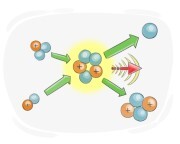
Ex: Uranium-235 and plutonium-239 are commonly used as fuel in nuclear fission reactors .

(physics) the reaction in which two nuclei join together and produce energy
Ex: Scientists are researching ways to achieve controlled nuclear fusion on Earth as a potentially limitless and clean source of energy .

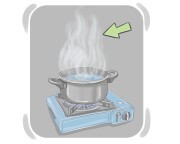
to become gas or vapor from liquid

Ex: The spilled coffee has evaporated , leaving a stain .
aluminum [noun]

a light silver-gray metal used primarily for making cooking equipment and aircraft parts

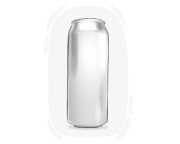
Ex: The soda cans are made from recycled aluminum , which helps reduce environmental waste .
alloy [noun]

a combination of two or more metals, creating a metal that is usually stronger or more resistant

Ex: Stainless steel , an alloy of iron , chromium , and other elements , is highly resistant to corrosion and is used in a wide range of applications .
copper [noun]

a metallic chemical element that has a red-brown color, primarily used as a conductor in wiring
Ex: Plumbing pipes made of copper are known for their durability and resistance to corrosion .
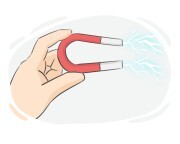
magnetic [adjective]

(physics) possessing the attribute of attracting metal objects such as iron or steel

Ex: Magnetic materials , like iron and nickel , can be magnetized by exposure to magnetic fields .
friction [noun]

the resistance or opposing force encountered when one object moves in contact with another

Ex: Brakes work by creating friction against the wheel .

the gradual destruction of materials by chemical reaction, usually of metals

Ex: Corrosion occurs when metal reacts with oxygen in the air .
mass [noun]

(physics) the property of matter that gives it weight in a gravitational field and is a measure of its inertia
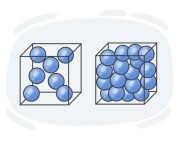
Ex: Mass is a scalar quantity , meaning it has magnitude but no direction .
density [noun]

(physics) the degree to which a substance is compacted, measured by dividing its mass by its volume

Ex: The density of a material can affect its physical properties , such as its strength and buoyancy .
velocity [noun]

the speed at which something moves in a specific direction
Ex: In physics , velocity is a vector quantity that includes both speed and direction .
lead [noun]

a heavy soft metal, used in making bullets, in plumbing and roofing, especially in the past

Ex: In ancient times , lead was often used to make coins and statues due to its ease of shaping and durability .
graphite [noun]

a soft, black, and highly conductive material made up of carbon atoms that is commonly used in pencils and as a lubricant

mercury [noun]

a dense, silvery, toxic metal that is liquid at room temperature and can form different chemical compounds

Ex:
nickel [noun]

a hard, silvery, malleable, and corrosion-resistant metallic element used in alloys and plating
Ex: The battery contains nickel as one of its key components .
plasma [noun]

a gas with nearly no electrical charge that exists in the sun and other stars

uranium [noun]

a heavy radioactive metallic element used in producing nuclear energy

radioactive [adjective]

containing or relating to a dangerous form of energy produced by nuclear reactions

Ex:
thermal [adjective]

related to heat or temperature, including how heat moves, how materials expand with temperature changes, and the energy stored in heat


Ex: During the hike , I felt the sun 's thermal rays warming my skin .
static [adjective]

remaining still, with no change in position

Ex: The static water in the pond mirrored the serene landscape perfectly .
synthetic [adjective]

produced artificially, typically based on its natural version

Ex: Synthetic diamonds are manufactured in laboratories using high-pressure , high - temperature processes .