Advanced Vocabulary for TOEFL - Natural Phenomena and Environment

Here you will learn some English words about natural phenomena and environment, such as "dew", "gust", "eye", etc. that are needed for the TOEFL exam.

review-disable

review

flashcard-disable

flashcard

spelling-disable

spelling

quiz-disable

quiz

start-learning
Advanced Vocabulary for TOEFL

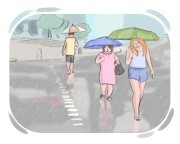
to rain lightly in fine, small drops
Ex: It began to drizzle just as we were leaving the house .

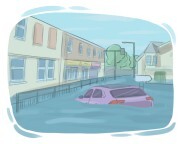
to cover a stretch of land with a lot of water
Ex: The river 's overflow had the potential to inundate several nearby neighborhoods .

a weather phenomenon with an extensive circulation of winds around a central region of high barometric pressure that is connected with calm and fine weather
Ex: Meteorologists forecasted the anticyclone to linger for several days , providing a welcome respite from the recent stormy weather .

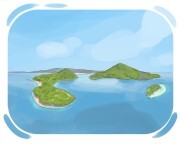
a large collection of islands or the sea surrounding them

Ex: An archipelago can offer diverse ecosystems and cultures .
aerosol [noun]

a suspension of fine solid or liquid particles dispersed in a gas
Ex: Pollution often contains harmful aerosols that affect air quality .
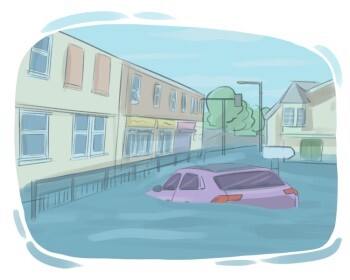
deluge [noun]

the overflow of normally dry land by rising water
Ex: The dam 's collapse unleashed a catastrophic deluge .
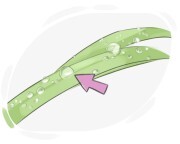
dew [noun]

the tiny water drops that form on cool surfaces during the night, caused by condensation
Ex: As the temperature dropped overnight , dew formed on the windows , obscuring the view with tiny water droplets .
flurry [noun]

a small amount of rain, snow, etc. that moves in a quick and stormy way and lasts only for a short period of time

Ex: The weather report predicted a flurry of sleet in the afternoon .
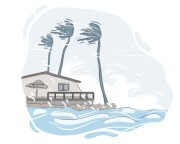
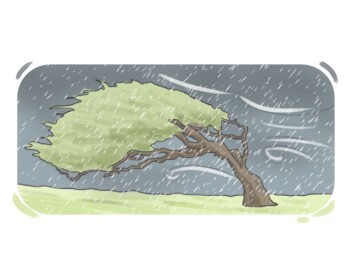
gust [noun]

a drastic and sudden rush of wind

Ex: Despite the gusts of wind , the determined kite flyer managed to keep their kite aloft , skillfully maneuvering it through the turbulent air .
icicle [noun]

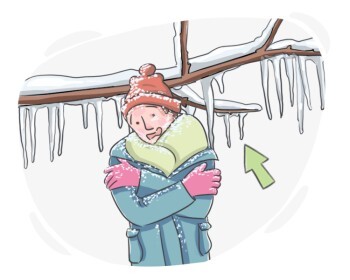
a long pointed piece of ice formed by the freezing of dripping water from a surface such as a roof
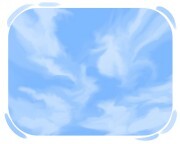
cirrus [noun]

a type of light cloud that looks wispy formed at high altitudes

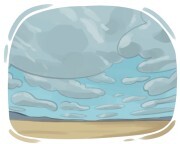
nimbus [noun]

a type of cloud that is dark, grey, and large, often producing rain or snow

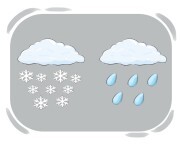
water in forms such as rain, snow, hail, or sleet that falls from the atmosphere to the Earth's surface
Ex: Rain gauges measure the amount of precipitation .
thaw [noun]

a period during which the weather becomes warmer causing snow and ice to melt

Ex: Farmers welcomed the thaw as it prepared the soil for planting .

a risk to human health or to the environment caused by a biological source, especially microorganisms
Ex: Scientists handling biohazards must follow strict safety protocols to prevent exposure to harmful microorganisms .

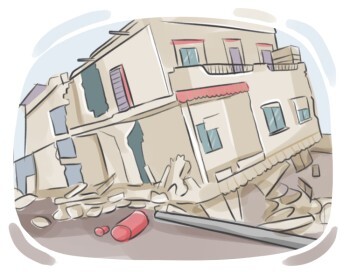
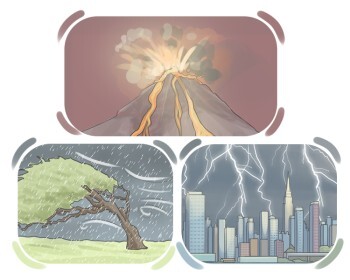
a sudden, violent natural disaster that drastically alters the earth's landscape
Ex: Landslides and rock avalanches are examples of relatively common terrestrial cataclysms that can develop with little warning .

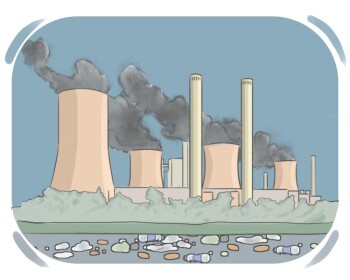
the act or process of making a substance or place dirty or polluted, especially by dangerous substances
Ex: Food contamination can cause illness .
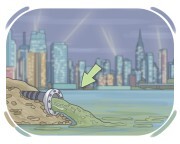
effluent [noun]

liquid waste or sewage discharged into rivers, lakes, or the sea
Ex: The wastewater treatment plant processes millions of gallons of effluent each day , ensuring it is safe to return to natural water bodies .

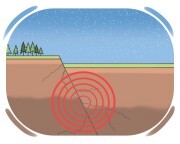
the point on the surface of the earth vertically above the focus of an earthquake where its effects are felt most strongly
Ex: Scientists determined the epicenter of the aftershock to be a few miles from the original quake , further complicating recovery efforts .
eye [noun]

the calm area at the center of a storm, hurricane, or tornado

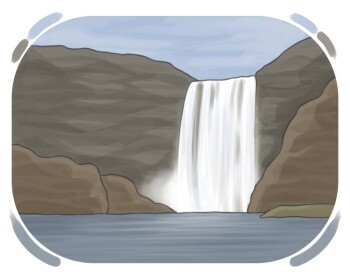
cascade [noun]

a small steep waterfall, usually one of several others
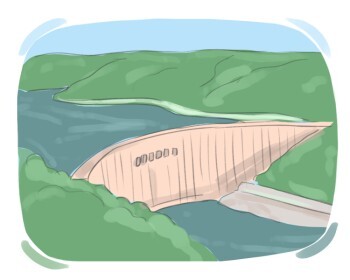
Ex: The tour guide pointed out several cascades along the river trail .
dike [noun]

a wall built in order to stop water, especially from the sea, from entering an area
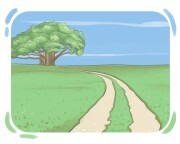
Ex: Tourists marveled at the massive dike , an impressive feat of engineering designed to keep the sea at bay .

a level path, typically beside the sea or a river, that is wide and open where people may walk by for pleasure
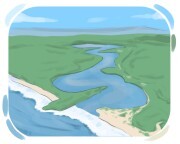
estuary [noun]

the part of a river that is wide and where it meets the sea
Ex:
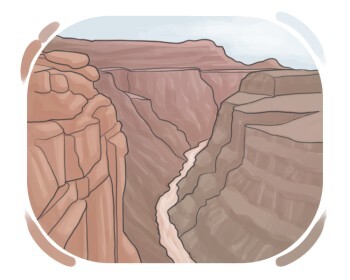
gorge [noun]

a steep-sided valley, often with a stream running through it
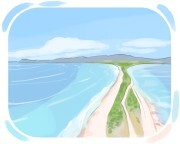
Ex: The trail ran along the edge of a deep gorge .
isthmus [noun]

a narrow piece of land with water on each side that connects two larger areas

Ex:
levee [noun]

a structure built along a riverbank to serve as a landing place for boats or ships
Ex: The levee was crowded with fishermen and tourists .
meridian [noun]

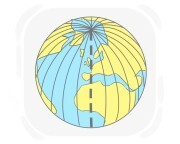
one of the imaginary lines between the North Pole and the South Pole, drawn on maps to help pinpoint a location
Ex: Cartographers meticulously charted meridians on maps to accurately depict the Earth 's surface and aid in geographic understanding .
morass [noun]

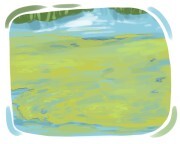
a muddy and wet piece of land in which it is possible to get stuck
Ex: Heavy rains turned the fields into a morass , making farming activities difficult .
plateau [noun]

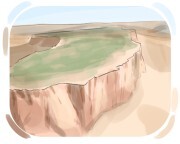
an area of land that is flat and higher than the land surrounding it
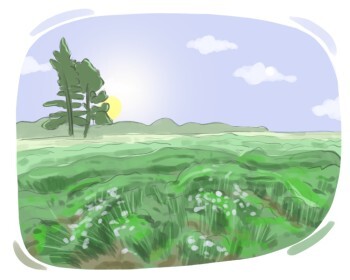
Ex: After a steep climb , the hikers reached the top of the plateau , where they were rewarded with panoramic views of the valley below .
prairie [noun]

a flat, wide area of land with no or very few trees in North America

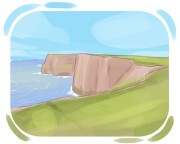
a raised narrow mass of land that sticks out into the sea

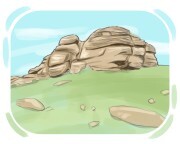
tor [noun]

a small rocky hill

zenith [noun]

the highest point that a certain celestial body reaches, directly above an observer
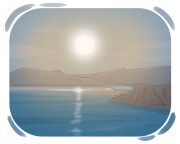
Ex: Observing the stars , he noted how their zenith differed based on their location .
crepuscular [adjective]

relating to or resembling twilight

Ex: The crepuscular glow of the street lamps cast long shadows on the deserted road .
geothermal [adjective]

connected with or produced by the heat inside the earth

Ex: Geothermal heating systems use the natural warmth of the Earth to heat buildings in colder climates .
seismic [adjective]

related to or caused by an earthquake

Ex: The seismic waves generated by an earthquake can cause buildings to shake and collapse .
tectonic [adjective]

relating to the movement and arrangement of the Earth's crust

Ex: Tectonic forces cause the Earth 's crust to uplift , creating mountain ranges .