
pattern

Advanced Vocabulary for the GRE - Make Up Your Mind!

Here you will learn some English words about decision, such as "brook", "divine", "skirt", etc. that are needed for the GRE exam.

Review

Flashcards

Forms

Spelling

Quiz

Start learning
Advanced Words Needed for the GRE
to aver
to aver
[Verb]

to confidently state or declare something as true

Ex: The company's spokesperson averred that the product was safe for consumer use. 
Close
Sign in
to brook
to brook
[Verb]

to allow and not oppose to something that one usually finds to be unpleasant

Ex: He will not brook any delays in the project. 
Close
Sign in
to countenance

to agree and not oppose to something that one generally finds unacceptable or unpleasant

Ex: Despite his personal reservations, he decided to countenance the new policy to maintain harmony within the team. 
Close
Sign in
to delineate

to give an explanation in detail and with precision

Ex: The teacher will delineate the rules of the experiment for the students. 
Close
Sign in
to disabuse

to help a person rid themselves of their misconceptions

Ex: The professor disabused the students of the myth about ancient civilizations. 
Close
Sign in
to divine
to divine
[Verb]

to either predict the future or uncover hidden truths with the use of supernatural forces

Ex: She claimed to divine the future through the ancient art of rune reading. 
Close
Sign in
to equivocate

to purposely speak in a way that is confusing and open to different interpretations, aiming to deceive others

Ex: The politician equivocated when asked about his stance on the new policy. 
Close
Sign in
to excoriate

to severely condemn through a harsh verbal criticism or attack
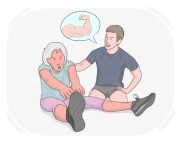
Ex: In his blistering monologue, the pundit excoriated the politicians for their hypocrisy and lies. 
Close
Sign in
to exhort
to exhort
[Verb]

to strongly and enthusiastically encourage someone who is doing something

Ex: The teacher exhorted the students to embrace challenges as opportunities for growth and learning. 
Close
Sign in
to harangue

to give a speech that is lengthy, loud, and angry intending to either persuade or criticize

Ex: The politician harangued the crowd about the need for reform during the rally. 
Close
Sign in
to impugn
to impugn
[Verb]

to question someone's honesty, quality, motive, etc.
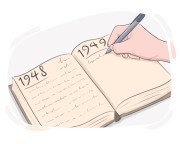
Ex: The article impugns the motives behind the mayor's new policy, suggesting it serves his own interests more than the public's. 
Close
Sign in
to log
to log
[Verb]

to officially document all the information or events that have taken place, particularly on a plane or ship

Ex: The captain logged the course changes and weather conditions during the transatlantic voyage. 
Close
Sign in
to maunder

to talk continuously and aimlessly

Ex: The politician maundered through his speech, failing to address any of the pressing issues facing the community. 
Close
Sign in
to palaver

to aimlessly talk a lot

Ex: Instead of getting straight to the point, he tends to palaver endlessly, causing meetings to drag on. 
Close
Sign in
to quibble

to argue over unimportant things or to complain about them

Ex: Instead of focusing on the main issue, he chose to quibble over minor details. 
Close
Sign in
to reproach

to blame someone for a mistake they made
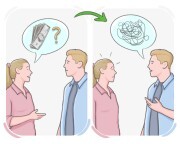
Ex: Disappointed by his actions, she couldn't help but reproach her brother for neglecting his responsibilities. 
Close
Sign in
to skirt
to skirt
[Verb]

to avoid or ignore doing something that one finds to be difficult or controversial

Ex: He tried to skirt the issue by changing the subject during the meeting. 
Close
Sign in
apposite
apposite
[Adjective]

having the quality of being appropriate or closely connected to the subject or situation at hand

Ex: Her apposite comment perfectly captured the mood of the meeting. 
Close
Sign in
conciliatory
conciliatory
[Adjective]

meaning to end a dispute or to stop or lessen someone's anger

Ex: The manager made a conciliatory gesture to ease the tension between the teams. 
Close
Sign in
contentious
contentious
[Adjective]

causing disagreement or controversy among people

Ex: The contentious issue of gun control sparked heated debates among lawmakers. 
Close
Sign in
disingenuous
disingenuous
[Adjective]

lacking sincerity and honesty, particularly by not revealing as much as one knows
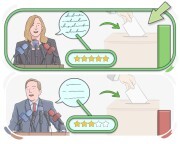
Ex: Her disingenuous response made it clear she wasn’t telling the whole truth. 
Close
Sign in
eloquent
eloquent
[Adjective]

able to utilize language to convey something well, especially in a persuasive manner

Ex: The eloquent activist rallies support for social causes through impassioned and persuasive speeches. 
Close
Sign in
extenuating
extenuating
[Adjective]

providing reasons that justify or reduce the seriousness of something bad, such as an offense

Ex: The judge considered the extenuating circumstances before passing the sentence. 
Close
Sign in
glib
glib
[Adjective]

persuasive in a way that is deceitful

Ex: The politician was glib, promising reforms she had no intention of delivering. 
Close
Sign in
laudable
laudable
[Adjective]

(of an idea, intention, or act) deserving of admiration and praise, regardless of success

Ex: His teachers always said he had a laudable passion for learning. 
Close
Sign in
parochial
parochial
[Adjective]

possessing a limited understanding or point of view, and not open to broadening it

Ex: His parochial views on cultural issues made it difficult for him to relate to people from different backgrounds. 
Close
Sign in
syncretic
syncretic
[Adjective]

creating a combination of different beliefs, ideas, traditions, etc.

Ex: The festival is a syncretic celebration that blends local customs with religious traditions. 
Close
Sign in
tendentious
tendentious
[Adjective]

stating a cause or opinion that one strongly believes in, particularly one that causes a lot of controversy

Ex: The journalist’s tendentious article sparked heated debates online. 
Close
Sign in
moreover
moreover
[Adverb]

used to introduce additional information or to emphasize a point

Ex: The new policy aims to reduce carbon emissions, and moreover, it aligns with the company's commitment to environmental sustainability. 
Close
Sign in
diatribe
diatribe
[noun]

a harsh and severe criticism or verbal attack that is aimed toward a person or thing

Ex: The article was a diatribe against the new government policy. 
Close
Sign in
imbroglio
imbroglio
[noun]

a complicated situation involving political or interpersonal conflict

Ex: The diplomatic imbroglio between the two nations lasted for months. 
Close
Sign in
finesse
finesse
[noun]

the act of dealing with a situation in a subtle and skillful way

Ex: She handled the negotiation with great finesse, ensuring both sides were satisfied. 
Close
Sign in
nuance
nuance
[noun]

a very small and barely noticeable difference in tone, appearance, manner, meaning, etc.

Ex: The actor captured every nuance of the character’s emotions. 
Close
Sign in
LanGeek
Download LanGeek app
