pattern

Advanced Vocabulary for the GRE - Experiment, Learn, and Repeat!

Here you will learn some English words about science, such as "distill", "eclipse", "jargon", etc. that are needed for the GRE exam.

Review

Flashcards

Forms

Spelling

Quiz

Start learning
Advanced Words Needed for the GRE
cartography

a branch of science and art that consists of creating maps

Ex: Cartography blends science and art in map-making .
Close
Sign in
to contextualize

to think about something with regard to its condition and relating information so as to understand it better
Ex: The research team worked to contextualize the findings within the broader scientific debate .
Close
Sign in
to corroborate

to provide supporting evidence for a theory, statement, etc.
Ex: DNA evidence corroborated the suspect 's involvement in the burglary .
Close
Sign in
counterintuitive
counterintuitive
[Adjective]

contradictory to the expectations that are formed on common sense or intuition

Ex: The research findings were counterintuitive, challenging common beliefs .
Close
Sign in
credibility

a quality that renders a thing or person as trustworthy or believable

Ex: The organization ’s credibility was damaged by the scandal , leading to a loss of public trust .
Close
Sign in
derivative
derivative
[Adjective]

resembling or imitating a previous work, often in a way that lacks originality

Ex: The music felt derivative, mimicking the style of earlier pop songs .
Close
Sign in
to discredit

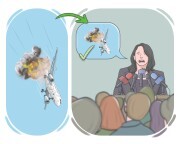
to raise doubt about someone or something and make people stop believing in them
Ex: Critics attempted to discredit the historical account , calling it inaccurate .
Close
Sign in
to distill

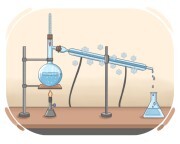
to heat a liquid and turn it into gas then cool it and make it liquid again in order to purify it

Ex: The plan is to distill rainwater for a clean water source .
Close
Sign in
to eclipse

to overshadow another astrological body

Ex: The moon ’s passing in front of the sun caused it to eclipse the sun ’s light completely for a few minutes .
Close
Sign in
embryonic
embryonic
[Adjective]

belonging to the earlier stages of growth and development

Ex: Embryonic development is carefully regulated by genetic and environmental factors .
Close
Sign in
empirical
empirical
[Adjective]

based upon observations or experiments instead of theories or ideas

Ex: The decision was based on empirical observations rather than speculation or opinion .
Close
Sign in
empiricism

(in philosophy) the doctrine that knowledge is derived from sensory experience rather than theory or intuition
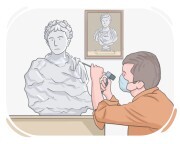
Ex: She studied empiricism to understand the roots of modern science .
Close
Sign in
to emulate

to make an attempt at matching or surpassing someone or something, particularly by the means of imitation

Ex: The team emulated the winning strategies of their competitors in the tournament .
Close
Sign in
erudite
erudite
[Adjective]

displaying or possessing extensive knowledge that is acquired by studying and reading

Ex: The erudite diplomat is skilled in navigating complex international relations with finesse and diplomacy .
Close
Sign in
exhaustive
exhaustive
[Adjective]

complete with regard to every single detail or element
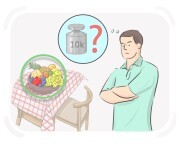
Ex: He gave an exhaustive explanation of the theory , leaving no questions unanswered .
Close
Sign in
to extrapolate

to estimate something using past experiences or known data

Ex: The economist extrapolated the impact of the policy on the nation ’s economy .
Close
Sign in
incontrovertible
incontrovertible
[Adjective]

true in a way that leaves no room for denial or disagreement
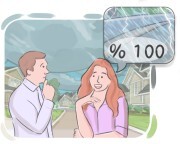
Ex: The scientist presented incontrovertible data that confirmed the experiment 's results .
Close
Sign in
irrefutable
irrefutable
[Adjective]

so clear or convincing that it cannot be reasonably disputed or denied

Ex: The data collected was irrefutable, confirming the conclusion beyond doubt .
Close
Sign in
jargon
jargon
[noun]

words, phrases, and expressions used by a specific group or profession, which are incomprehensible to others

Ex: Military jargon includes phrases like 'AWOL,' 'RECON,' and 'FOB,' which are part of the everyday language for service members but might be puzzling to civilians.
Close
Sign in
layperson
layperson
[noun]

someone who lacks professional knowledge regarding a specific subject

Ex: The software ’s user interface was designed with the layperson in mind .
Close
Sign in
meticulous
meticulous
[Adjective]

extremely careful and attentive to details

Ex: Her meticulous notes helped the team understand the complex issue .
Close
Sign in
paradigm
paradigm
[noun]

a selection of theories and ideas that explain how a particular school, subject, or discipline is generally understood

Ex: The old paradigm was replaced by a more modern and effective model .
Close
Sign in
patent
patent
[noun]

a formal document that gives someone the right to be the only one who makes, uses, or sells an invention or product for a limited amount of time

Ex: Disputes over patent infringements often lead to lengthy legal battles between competing businesses.
Close
Sign in
peripatetic
peripatetic
[Adjective]

constantly traveling to different locations, particularly due to work

Ex: Despite the challenges , his peripatetic work allowed him to gain diverse experiences .
Close
Sign in
to peruse
to peruse
[Verb]

to consider or examine something while being very careful and attentive to detail

Ex: The lawyer perused the legal documents to ensure there were no discrepancies .
Close
Sign in
presumptive
presumptive
[Adjective]

probably true due to being reasonable and based on the available facts

Ex: Given the circumstantial evidence , the suspect ’s guilt was considered presumptive.
Close
Sign in
to saturate

to combine so much of a chemical compound with a chemical solution that the solution cannot retain, absorb, or dissolve anymore of that compound

Ex: The experiment aimed to saturate the solution with the organic compound to test its solubility under different conditions .
Close
Sign in
sentient
sentient
[Adjective]

possessing the ability to experience, feel, or perceive things through the senses
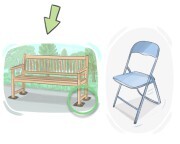
Ex: The ethical treatment of sentient creatures is a significant concern in animal welfare.
Close
Sign in
static
static
[Adjective]

remaining still, with no change in position

Ex: The static display at the museum showcased artifacts from ancient civilizations .
Close
Sign in
to substantiate

to prove something to be true by providing adequate evidence or facts

Ex: The documentation provided was enough to substantiate the insurance claim .
Close
Sign in
thoroughgoing
thoroughgoing
[Adjective]

very complete, careful, and attentive to detail

Ex: Her thoroughgoing preparation for the presentation impressed everyone .
Close
Sign in
to unearth

to find out about something, particularly by doing research

Ex: Lawyers unearthed new evidence that exonerated their client of the crime they were accused of .
Close
Sign in
untenable
untenable
[Adjective]

(of a position, argument, theory, etc.) not capable of being supported, defended, or justified when receiving criticism or objection

Ex: His claim was untenable once counterarguments were presented .
Close
Sign in
virtual
virtual
[Adjective]

very similar to the actual thing in almost every way

Ex: Her virtual experience of the concert felt almost as real as being there in person .
Close
Sign in
zeitgeist
zeitgeist
[noun]

the defining spirit or mood of a particular period in history, reflecting the ideas and beliefs of the time
Ex: The Industrial Revolution brought about a zeitgeist of urbanization and industrialization , as rural populations migrated to cities in search of work and new technologies transformed society and the economy .
Close
Sign in
to crystallize

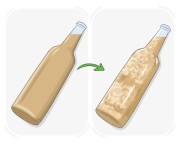
to turn into one or multiple crystals

Ex: The gel slowly crystallized, forming a solid structure .
Close
Sign in
LanGeek
Download LanGeek app