pattern

Vocabulary for IELTS (General) - Expressing an Opinion

Here you will learn some English words about expressing an opinion, such as "approve", "debate", "infer", etc. that are needed for the IELTS exam.

Review

Flashcards

Forms

Spelling

Quiz

Start learning
Words for General IELTS
to assess
to assess
[Verb]

to form a judgment on the quality, worth, nature, ability or importance of something, someone, or a situation

Ex: The manager assesses employees' performance during quarterly reviews. 
Close
Sign in
to approve

to officially agree to a plan, proposal, etc.

Ex: The board of directors approved the new budget for the upcoming fiscal year. 
Close
Sign in
basically
basically
[Adverb]

in a simple or fundamental manner, without concern for less important details
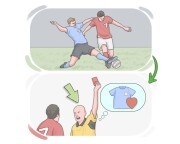
Ex: She explained the complex scientific concept in a way that anyone could understand, breaking it down to basically illustrate its core principles. 
Close
Sign in
biased
biased
[Adjective]

having a preference or unfair judgment toward one side or viewpoint over others
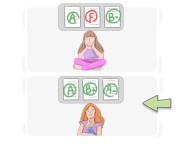
Ex: The journalist's article was criticized for being biased towards a particular political party. 
Close
Sign in
consistently
consistently
[Adverb]

in a way that is always the same

Ex: He consistently delivers high-quality work on every project. 
Close
Sign in
controversial
controversial
[Adjective]

causing a lot of strong public disagreement or discussion

Ex: The politician's controversial statements about immigration sparked heated discussions among voters. 
Close
Sign in
controversy

a strong disagreement or argument over something that involves many people

Ex: The new policy sparked a controversy among community members. 
Close
Sign in
criticism
criticism
[noun]

negative feedback that highlights mistakes or areas for improvement

Ex: His criticism helped me see flaws I hadn’t noticed before. 
Close
Sign in
to debate
to debate
[Verb]

to formally discuss a matter, usually in a structured setting

Ex: The candidates took the stage to debate their views on important issues in front of a live audience 
Close
Sign in
to differ
to differ
[Verb]

to disagree with someone or to hold different opinions, viewpoints, or beliefs

Ex: They differed on the best approach to solving the problem. 
Close
Sign in
disagreement

an argument or a situation in which people have different opinions about something
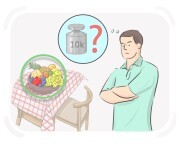
Ex: The meeting ended in disagreement as team members could not reach a consensus on the project's direction. 
Close
Sign in
to estimate

to guess the value, number, quantity, size, etc. of something without exact calculation

Ex: I estimate that there are about 100 people at the party. 
Close
Sign in
to evaluate

to calculate or judge the quality, value, significance, or effectiveness of something or someone

Ex: The teacher evaluates students' performance through tests and assignments. 
Close
Sign in
to infer
to infer
[Verb]

to reach an opinion or decision based on available evidence and one's understanding of the matter

Ex: After observing the pattern of behavior, the detective could infer that the suspect was familiar with the victim. 
Close
Sign in
to maintain

to firmly and persistently express an opinion, belief, or statement as true and valid
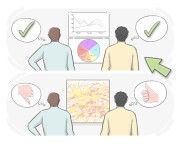
Ex: She maintains that her interpretation of the data is correct despite the opposition. 
Close
Sign in
objective
objective
[Adjective]

based only on facts and not influenced by personal feelings or judgments
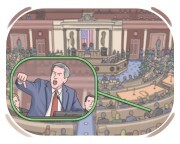
Ex: The journalist strived to provide an objective report, presenting the facts without bias. 
Close
Sign in
to oppose
to oppose
[Verb]

to strongly disagree with a policy, plan, idea, etc. and try to prevent or change it

Ex: The local residents opposed the construction of the new factory due to environmental concerns. 
Close
Sign in
precisely
precisely
[Adverb]

in an exact way, often emphasizing correctness or clarity
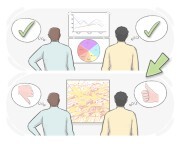
Ex: The coordinates were entered precisely to ensure accurate navigation. 
Close
Sign in
subjective
subjective
[Adjective]

based on or influenced by personal feelings or opinions rather than facts

Ex: The art critic's review was subjective, reflecting her personal taste rather than objective analysis. 
Close
Sign in
to advocate

to publicly support or recommend something

Ex: The environmentalist passionately advocates for sustainable living practices. 
Close
Sign in
affirmative
affirmative
[Adjective]

favorable or supportive in attitude or response

Ex: In her role as a mentor, Sarah consistently provides affirmative guidance, empowering her mentees to pursue their goals with confidence. 
Close
Sign in
arguably
arguably
[Adverb]

used to convey that a statement can be supported with reasons or evidence

Ex: He is arguably the best player in the league, consistently delivering outstanding performances. 
Close
Sign in
as a matter of fact

used to introduce a statement that presents a truth or reality, often to clarify or emphasize something

Ex: As a matter of fact, I did see him at the store earlier today. 
Close
Sign in
challenging
challenging
[Adjective]

difficult to accomplish, requiring skill or effort

Ex: Solving the puzzle proved to be challenging, requiring creative thinking and problem-solving skills. 
Close
Sign in
to confer
to confer
[Verb]

to exchange opinions and have discussions with others, often to come to an agreement or decision

Ex: The board members will confer next week to finalize the budget for the upcoming fiscal year. 
Close
Sign in
to contradict

(of pieces of evidence, facts, statements, etc.) to be opposite or very different in a way that it is impossible for all to be true at the same time

Ex: The witness's testimony contradicted the forensic evidence presented in court, leading to doubts about the accuracy of the case. 
Close
Sign in
to dispute

to doubt a fact or to call its truth into question

Ex: He disputed the accuracy of the witness's testimony, claiming it was unreliable. 
Close
Sign in
inclined
inclined
[Adjective]

having a tendency to do something

Ex: She is inclined to believe the best in people, even when others are skeptical. 
Close
Sign in
mistaken
mistaken
[Adjective]

(of a person) wrong in one's judgment, opinion, or belief

Ex: She was mistaken about the date of the event and missed it. 
Close
Sign in
moderate
moderate
[Adjective]

(of a person or ideology) not extreme or radical and considered reasonable by a majority of people

Ex: She holds moderate views on economic policy, advocating for balanced approaches. 
Close
Sign in
having said that

used to introduce an opposing statement after making a point

Ex: The weather forecast predicts rain for the weekend; having said that, I still think it's worth planning an outdoor activity just in case the weather clears up. 
Close
Sign in
on second thought

used to state that one has adopted a different opinion

Ex: I was going to order coffee, but on second thought, I'll have tea. 
Close
Sign in
LanGeek
Download LanGeek app