Vocabulary for IELTS (General) - Space

Here you will learn some English words about space, such as "atmosphere", "launch", "aerospace", etc. that are needed for the IELTS exam.

review-disable

review

flashcard-disable

flashcard

spelling-disable

spelling

quiz-disable

quiz

start-learning
Vocabulary for IELTS (General)

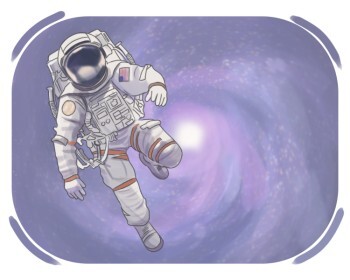
someone who is trained to travel and work in space
Ex: He underwent rigorous physical and mental training to qualify as an astronaut .

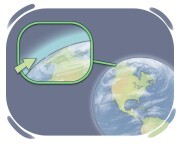
the layer of gases surrounding a planet, held in place by gravity
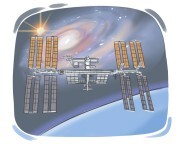
Ex: Pollution is damaging the atmosphere and increasing global temperatures .

a large structure used as a long-term base for people to stay in space and conduct research
Ex: Upcoming missions plan to expand the space station with additional modules and new scientific equipment .
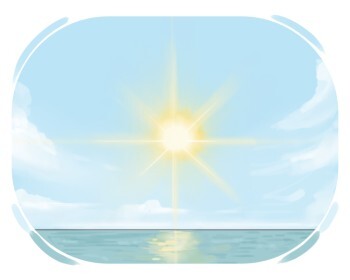
sunlight [noun]

the natural light coming from the sun
Ex: They enjoyed their breakfast on the patio , basking in the morning sunlight .

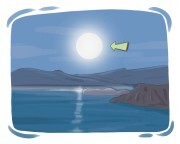
the light coming from the moon

Ex: Under the moonlight , the mountains appeared even more majestic and mysterious .
asteroid [noun]

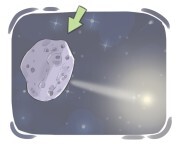
any of the rocky bodies orbiting the sun, ranging greatly in diameter, also found in large numbers between Jupiter and Mars
Ex: The asteroid impact that led to the extinction of the dinosaurs occurred approximately 66 million years ago .

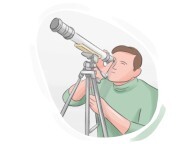
a scientist who studies or observes planets, stars, and other happenings in the universe
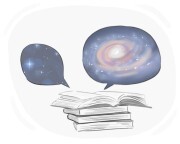
Ex: She became an astronomer because of her fascination with the mysteries of the cosmos .

a branch of science that studies space, planets, etc.

Ex: Historical records show how ancient civilizations used astronomy to develop calendars and navigate across oceans .
galaxy [noun]

a large number of star systems bound together by gravitational force
Ex: The Hubble Space Telescope has captured images of thousands of galaxies , providing insights into their formation and evolution .

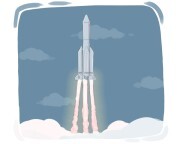
to send an object, such as a satellite, missile, etc., into space
Ex: The submarine successfully launched a torpedo during the naval exercise .
to orbit [verb]

to move around a star, planet, or a large object in space

Ex: Jupiter has the largest number of moons of any planet in our solar system , with 79 known moons orbiting around it .
rocket [noun]

a propulsion device with its own fuel that produces thrust through reaction forces

Ex: The model rocket used solid propellant .

a natural body in space that moves around the earth or other planets
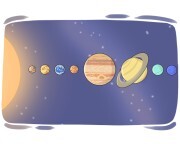
Ex: Jupiter 's satellites , such as Ganymede and Europa , orbit the giant planet and provide valuable data for astronomers .

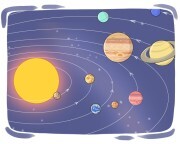
the sun and the group of planets orbiting around it, including the earth
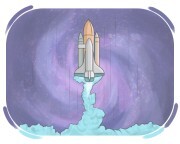
Ex: Some moons in the solar system may have conditions suitable for life .

a vehicle designed to travel in space
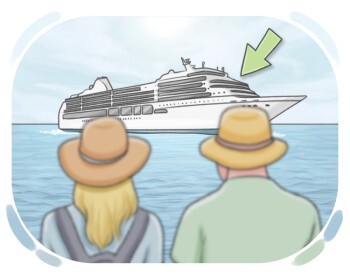
Ex: The documentary showcased the development and launch of a new spacecraft designed for deep-space exploration .

to travel over a long distance by sea or in space
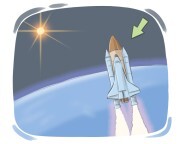
Ex: The novel 's protagonist decided to voyage to foreign lands , seeking adventure and new experiences .

the earth's atmosphere and the space beyond it
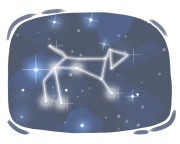
Ex: The company specializes in aerospace manufacturing , producing components for aircraft and spacecraft .

a specific group of stars that form a pattern and have a name related to their shape
Ex: The Big Dipper is a prominent constellation consisting of seven bright stars .
gravity [noun]

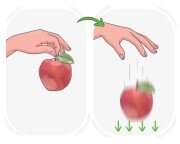
(physics) the universal force of attraction between any pair of objects with mass

Ex: Einstein 's theory of general relativity revolutionized our understanding of gravity by explaining it as the curvature of spacetime caused by mass .
lunar [adjective]

relating to the moon

Ex:
meteor [noun]

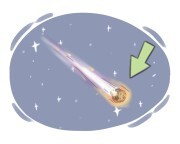
a piece of rock coming from outer space that passes through the Earth's atmosphere, producing light

Ex: The study of meteors helps astronomers understand the composition of objects from the early solar system .
rotation [noun]

a single complete circular movement around an axis or along an orbit
Ex: Each rotation of the hand wheel raises the platform slightly .
axis [noun]

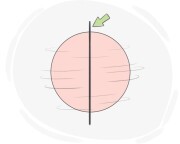
the central point or line around which an object turns
Ex: The planet 's tilt on its axis causes the seasons .
weightless [adjective]

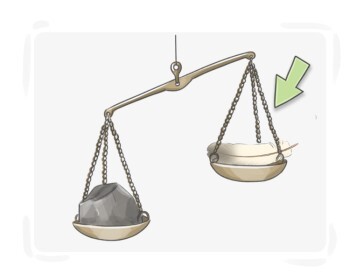
having or seeming to have no or little weight, caused by the absence of gravity

Ex:
mission [noun]

an operation carried out in space

Ex: The Hubble Space Telescope has completed numerous scientific missions to observe distant galaxies and nebulae .
booster [noun]

a rocket that gives a spacecraft or missile the extra power it needs to leave the Earth's atmosphere

the act of counting numbers backwards to zero before the launch of a missile or spacecraft

probe [noun]

an unmanned spacecraft or device sent to gather information from space and transmit it back

Ex: The probe collected data on the planet 's atmosphere .
to wane [verb]

(of the moon) to gradually decrease in its visible illuminated surface as it progresses from full to new moon

Ex: The light from the moon will wane until it 's barely visible .
to wax [verb]

(of the moon) to progressively display a larger illuminated section until it turns into a full moon

Ex: