pattern

Cambridge IELTS 17 - Academic - Test 4 - Reading - Passage 2 (2)

Learn vocabulary from the second part of Cambridge IELTS 17 Academic, Test 4 Reading Passage 2, with useful words and expressions from the text.

Review

Flashcards

Forms

Spelling

Quiz

Start learning
Cambridge IELTS 17 - Academic
straightforward
straightforward
[Adjective]

easy to comprehend or perform without any difficulties

Ex: His explanation of the problem was straightforward, making it easy for everyone to understand. 
Close
Sign in
laboratory

a region resembling a laboratory inasmuch as it offers opportunities for observation and practice and experimentation

Close
Sign in
to legislate

to create or bring laws into effect through a formal process
Ex: They are currently legislating new measures to address environmental concerns. 
Close
Sign in
to undermine

to gradually decrease the effectiveness, confidence, or power of something or someone

Ex: Skipping maintenance checks might undermine the long-term reliability of the equipment. 
Close
Sign in
monopoly
monopoly
[noun]

exclusive control or ownership of a particular commodity, service, or resource

Ex: The company maintained a monopoly over the regional water supply. 
Close
Sign in
finding
finding
[noun]

a piece of information discovered as a result of a research

Ex: The scientist's finding revealed a new way to treat the disease. 
Close
Sign in
barrier
barrier
[noun]

an obstacle that separates people or hinders any progress or communication

Ex: Language can be a barrier to effective communication. 
Close
Sign in
implication

a possible consequence that something can bring about

Ex: His decision to cut costs has serious implications for employee morale. 
Close
Sign in
to deliver

to provide or supply something that was expected or promised

Ex: They promise to deliver excellent customer service. 
Close
Sign in
restriction

a rule or law that limits what one can do or the thing that can happen

Ex: The new policy included a restriction on the amount of vacation time employees could take in a year. 
Close
Sign in
to set up
to set up
[Verb]

to establish a fresh entity, such as a company, system, or organization

Ex: She set up a charity to support underprivileged children in the community. 
Close
Sign in
consistent
consistent
[Adjective]

having the same quality, level, or effect throughout

Ex: The coffee has a consistent flavor in every cup. 
Close
Sign in
account
account
[noun]

a general description of an idea, a theory, or an event

Ex: Her account of the historical event provided a new perspective on the cause of the conflict. 
Close
Sign in
to [shed] light on {sth}

to provide clarification, understanding, or insight into a topic, situation, or problem

Ex: The new report sheds light on why the project failed. 
Close
Sign in
to illustrate

to serve as a clear instance or representation of a broader concept or situation

Ex: Her dedication to charity work illustrates the importance of community involvement. 
Close
Sign in
earnings
earnings
[noun]

(always plural) money received for work done or services provided

Ex: The company reported higher-than-expected earnings for the quarter, boosting investor confidence. 
Close
Sign in
to threaten

to indicate a potential danger or risk to someone or something

Ex: His aggressive behavior began to threaten the safety of those around him. 
Close
Sign in
predominantly

in a manner that consists mostly of a specific kind, quality, etc.
Ex: The region is predominantly agricultural, with vast expanses of farmland. 
Close
Sign in
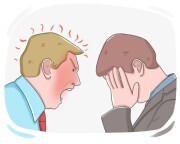
to reprimand

to severely criticize or scold someone for their actions or behaviors

Ex: The supervisor frequently reprimands team members for unprofessional conduct. 
Close
Sign in
to weave
to weave
[Verb]

to create fabric or material by interlacing threads, yarn, or other strands in a pattern using a loom or by hand

Ex: The artisan weaved a complex pattern into the rug. 
Close
Sign in
counter
counter
[Adjective]

expressing opposition or acting in resistance

Ex: The lawyer presented a counter argument to the motion. 
Close
Sign in
ordinance
ordinance
[noun]

an authoritative or established rule, often issued by a governing body

Ex: Residents were asked to comply with the water conservation ordinance during the drought. 
Close
Sign in
to reserve

to keep something for a specific purpose or use
Ex: The manager reserved some extra time for the meeting. 
Close
Sign in
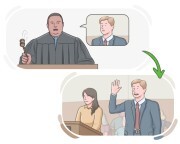
to summon
to summon
[Verb]

to officially call someone, typically to attend court or fulfill a legal obligation

Ex: The judge summoned the witness to testify during the trial. 
Close
Sign in
fine
fine
[noun]

an amount of money that must be paid as a legal punishment

Ex: He had to pay a hefty fine for speeding on the highway. 
Close
Sign in
equivalent
equivalent
[Adjective]

(of mathematical expressions or quantities) having the same value or function, even if they appear in different forms

Ex: The fractions 1/2 and 2/4 are equivalent because they represent the same value. 
Close
Sign in
annual
annual
[Adjective]

related to or calculated over the course of a year

Ex: She monitors her annual energy consumption to reduce her carbon footprint. 
Close
Sign in
wage
wage
[noun]

money that a person earns, daily or weekly, in exchange for their work

Ex: The company increased the minimum wage for its employees to attract and retain talent. 
Close
Sign in
defiance
defiance
[noun]

the act of opposing or fighting against someone or something that is in a position of power

Close
Sign in
to reflect

to show a particular quality, characteristic, or emotion
Ex: His speech reflected the concerns of the community. 
Close
Sign in
to regulate

to control or adjust something in a way that agrees with rules and regulations

Ex: The government agency works to regulate environmental policies to protect natural resources. 
Close
Sign in
labor
labor
[noun]

work, particularly difficult physical work

Ex: The construction workers performed hours of hard labor under the scorching sun. 
Close
Sign in
dominance
dominance
[noun]

the state of having superiority over another party in terms of power, knowledge, influence, etc.

Close
Sign in
to hold back

to prevent someone or something from advancing or crossing a particular point

Ex: The soldiers held back the advancing enemy forces with determination. 
Close
Sign in
innovation

a method, product, way of doing something, etc. that is newly introduced

Ex: Innovation drives progress in every industry. 
Close
Sign in
to gather
to gather
[Verb]

to bring things together in one place

Ex: She gathered all her books from around the house and placed them neatly on the shelf. 
Close
Sign in
phase
phase
[noun]

a distinct period or stage in a sequence of events or development
Ex: The project is currently in its planning phase. 
Close
Sign in
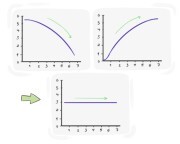
constant
constant
[Adjective]

remaining unchanged and stable in degree, amount, or condition

Ex: The air conditioner maintained a constant temperature throughout the night. 
Close
Sign in
to link
to link
[Verb]

to establish a relationship or association between two things

Ex: The researcher aims to link genetic factors with susceptibility to certain diseases. 
Close
Sign in
cultivation

the practice of preparing and using land for growing crops, especially on a large scale

Ex: The farmer practiced cultivation of wheat on his vast fields. 
Close
Sign in
adoption
adoption
[noun]

the action of starting to use a certain plan, name, method, or idea

Ex: The company's rapid adoption of new technology gave it a competitive edge in the market. 
Close
Sign in
aspect
aspect
[noun]

a defining or distinctive feature of something

Ex: One important aspect of the project is meeting the deadline. 
Close
Sign in
to engage
to engage
[Verb]

to take part in or become involved with something actively
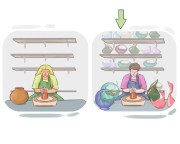
Ex: Students should engage in class discussions to enhance their learning. 
Close
Sign in
productive
productive
[Adjective]

producing desired results through effective and efficient use of time, resources, and effort
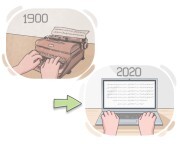
Ex: The productive meeting resulted in several innovative solutions to the problem. 
Close
Sign in
innovative
innovative
[Adjective]

(of ideas, products, etc.) creative and unlike anything else that exists

Ex: The company is known for developing innovative solutions to common environmental challenges. 
Close
Sign in
threshold
threshold
[noun]

the starting point for a new state or experience

Close
Sign in
notice
notice
[noun]

the attention or interest someone gives to a person, thing, or event

Ex: The new student quickly caught the teacher's notice. 
Close
Sign in
tipping point

the moment when a small or slow change becomes strong enough to cause a big, often fast change in a situation, condition, or trend

Ex: The protest reached a tipping point and quickly turned into a movement. 
Close
Sign in
LanGeek
Download LanGeek app