


![to [tighten] {one's} belt](https://cdn.langeek.co/photo/41974/thumb/180?type=jpeg "to [tighten] {one's} belt")
to [tighten] {one's} belt
[Phrase]

to lessen the amount of money or resources one uses compared to before, particularly due to having less available
Ex:
During
the
recession,
many
families
had
to
tighten
their
belts
and
cut
back
on
unnecessary
expenses.
![to [stretch] {one's} legs according to the coverlet](https://cdn.langeek.co/photo/41932/thumb/180?type=jpeg "to [stretch] {one's} legs according to the coverlet")
![to [stretch] {one's} arm no further than {one's} [sleeve] (will reach|)](https://cdn.langeek.co/photo/41930/thumb/180?type=jpeg "to [stretch] {one's} arm no further than {one's} [sleeve] (will reach|)")
![to [throw] good money after bad](https://cdn.langeek.co/photo/41934/thumb/180?type=jpeg "to [throw] good money after bad")
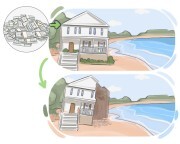
![to [have] more money than sense](https://cdn.langeek.co/photo/60616/thumb/wealthy/180?type=jpeg "to [have] more money than sense")
![to [live] beyond {one's} means](https://cdn.langeek.co/photo/41926/thumb/180?type=jpeg "to [live] beyond {one's} means")
![to [live] within {one's} means](https://cdn.langeek.co/photo/41928/thumb/180?type=jpeg "to [live] within {one's} means")
![to [burn] a hole in {one's} pocket](https://cdn.langeek.co/photo/41966/thumb/180?type=jpeg "to [burn] a hole in {one's} pocket")
![to [throw] money out (of|) the window](https://cdn.langeek.co/photo/42026/thumb/180?type=jpeg "to [throw] money out (of|) the window")
![to [spend] money like water](https://cdn.langeek.co/photo/42024/thumb/180?type=jpeg "to [spend] money like water")
![to [play] ducks and drakes with {sth}](https://cdn.langeek.co/photo/41838/thumb/180?type=jpeg "to [play] ducks and drakes with {sth}")
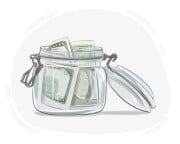

![to [cut] {one's} coat according to {one's} cloth](https://cdn.langeek.co/photo/41804/thumb/180?type=jpeg "to [cut] {one's} coat according to {one's} cloth")
![to [have] money to burn](https://cdn.langeek.co/photo/42022/thumb/180?type=jpeg "to [have] money to burn")
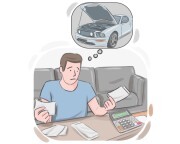
![to [scrimp] and [save|scrape]](https://cdn.langeek.co/photo/42090/thumb/180?type=jpeg "to [scrimp] and [save|scrape]")