
Land Transportation - Historical Vehicles and Carriages
Here you will learn some English words related to historical vehicles and carriages such as "dandy horse", "litter", and "phaeton."
Review
Flashcards
Spelling
Quiz

a vehicle powered by a steam engine, typically fueled by burning combustible material
a three-wheeled vehicle powered by a steam engine, typically used in the late 19th and early 20th centuries
an early two-wheeled, human-powered vehicle that is propelled by the rider pushing their feet against the ground
an early form of bicycle, typically with three wheels and pedals for moving
a type of early motorcycle with an additional passenger seat mounted in front of the rider
a type of monorail or two-wheeled vehicle that uses gyroscopes to maintain balance and stability
a human-powered vehicle, typically an enclosed chair or bed, carried on poles by people
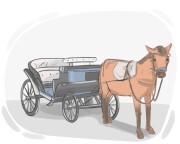
a type of carriage or vehicle used for transportation, typically pulled by horses or other animals
a light, open carriage with two wheels, often used in the 19th century
a lightweight, two-wheeled horse-drawn carriage, typically used for one person, often in horse racing
a type of horse-drawn carriage designed for two passengers, with the driver seated behind and above the cab, often used as a taxi in the 19th and early 20th centuries
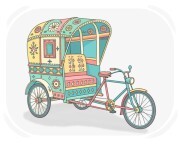
a doorless two-wheeled vehicle that holds one or two passengers and is drawn by a person walking or cycling, used in South East Asia
a vehicle on runners, typically horse-drawn, used for traveling over snow or ice
a light four-wheeled horse-drawn carriage with open sides and a folding fabric roof
a light, two-wheeled horse-drawn carriage designed for one or two people
a four-wheeled, horse-drawn carriage with a folding two-part roof that can be opened or closed, typically used for formal occasions
a four-wheeled, horse-drawn carriage with a roof, an enclosed cabin for passengers, and an outside seat for the driver
a light, open, two-wheeled carriage, usually for one or two people, often drawn by one horse
a large, horse-drawn carriage used to carry passengers over long distances, often between towns
a big, four-wheeled carriage pulled by horses. It has a foldable top over the back seat and seats for four people facing each other
a vehicle mounted on runners and pulled by dogs, traditionally used for travel over snow and ice
a light, elegant, two-wheeled carriage with a folding hood, originally designed for two passengers
a type of sled historically used by Native American tribes and early settlers to transport goods over land, consisting of two long poles attached at one end and dragged by a horse or dog
a simple wheeled vehicle, usually with two wheels, that is pulled by an animal and used to carry people or goods
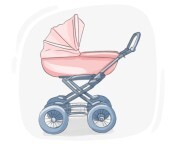
a wheeled vehicle used to carry a baby while walking
