
Land Transportation - Railroad Operations and Safety Control
Here you will learn some English words related to railroad operations and safety control such as "shunt", "pull in", and "derail."
Review
Flashcards
Forms
Spelling
Quiz

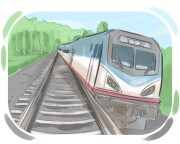
(of a train) to travel along a track on wheels, carrying passengers or goods
to move a train or part of a train from one track to another
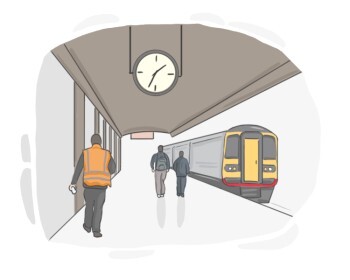
(of a train or bus) to leave a station with passengers on board
(of a train) to accidentally go off the tracks
to disconnect two railway cars or a car from the locomotive
a directive issued to reduce speed for safety reasons on a railway track
the practice of attaching two locomotives at the front of a train to provide additional power for hauling heavy loads or climbing steep gradients
a device or mechanism that operates without control or restraint, often resulting in dangerous situations
a safety device placed at the end of a railway track to prevent trains from moving beyond that point
a rotating platform used to redirect train engines or cars between different tracks
a braking system used on a rail yard track to slow down or stop rolling railroad cars with controlled friction or electromagnetic force
a safety device on machinery that stops it from operating if the operator becomes incapacitated or loses control
the pulling or hauling force exerted by a locomotive or vehicle
the event where two trains traveling on the same track come together
a system where locomotives and carriages are controlled simultaneously from a single point within the train
a system used in rail operations to authorize train movements along specific sections of track based on direct communication between train crews and dispatchers
a system that automatically regulates the speed and movement of trains to ensure safety and efficiency
a safety system installed on railways to prevent accidents caused by human error
a system that allows trains to operate without constant manual intervention from a driver
