pattern

Essential Vocabulary for TOEFL - Politics

Here you will learn some English words about politics, such as "summit", "wing", "senate", etc. that are needed for the TOEFL exam.

Review

Flashcards

Spelling

Quiz
Start learning
Essential Words Needed for TOEFL
regime
regime
[noun]

a system of governing that is authoritarian and usually not selected in a fair election
Ex: The previous regime was known for its human rights violations. 
Close
Sign in
ambassador

a senior diplomatic official who represents their country in another country or at an international organization

Ex: She served as ambassador to France for four years. 
Close
Sign in
embassy
embassy
[noun]

the ambassador and other officials who officially represent a country in another country

Ex: The embassy issued a statement about the new travel restrictions. 
Close
Sign in
summit
summit
[noun]

a formal meeting between leaders of governments or other high-ranking officials
Ex: Several world leaders attended the economic summit. 
Close
Sign in
wing
wing
[noun]

members of a political party or other organization who have a certain function or share certain views

Ex: The conservative wing of the party pushed for tax cuts and deregulation. 
Close
Sign in
spokesperson

a person who speaks formally for an organization, government, etc.

Ex: The spokesperson for the company issued a statement addressing the recent controversy. 
Close
Sign in
bureaucracy

a system of government in which administration is carried out by appointed officials

Ex: The country developed a centralized bureaucracy to administer its growing territory. 
Close
Sign in
democracy
democracy
[noun]

a form of government where the power is vested in the hands of the people, either directly or through elected representatives

Ex: In a democracy, all citizens have the right to express their opinions freely and participate in decision-making processes. 
Close
Sign in
democratic
democratic
[Adjective]

related to or characteristic of a system of government where power comes from the people through free elections and respects individual rights
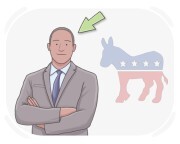
Ex: The democratic process allows citizens to participate in decision-making through voting. 
Close
Sign in
Democrat
Democrat
[noun]

a member or supporter of the Democratic Party in the United States
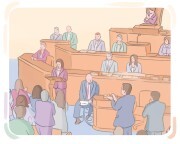
Ex: She has been a Democrat for most of her adult life. 
Close
Sign in
Congress
Congress
[noun]

the legislative body of the United States, consisting of the Senate and the House of Representatives
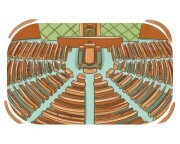
Ex: Congress passed a new healthcare bill. 
Close
Sign in
parliament

the group of elected representatives whose responsibility is to create, amend, and discuss laws or address political matters

Ex: The parliament convened to debate the proposed healthcare reform bill. 
Close
Sign in
Senate
Senate
[noun]

the upper chamber of the United States Congress

Ex: The Senate considered the bill after it passed the House. 
Close
Sign in
senator
senator
[noun]

a person elected to serve in a Senate, the upper house of a legislature

Ex: The senator spoke about new healthcare legislation. 
Close
Sign in
cabinet
cabinet
[noun]

senior members of a government who make decisions and control the policy of the government

Ex: The Prime Minister announced changes to the cabinet, appointing new ministers to key portfolios. 
Close
Sign in
slogan
slogan
[noun]

a short memorable phrase that is used in advertising to draw people's attention toward something

Ex: The company's slogan "Just Do It" became synonymous with their brand, inspiring millions of athletes worldwide. 
Close
Sign in
campaign
campaign
[noun]

a set of actions organized in order to serve a political purpose

Ex: The presidential campaign included speeches in all 50 states. 
Close
Sign in
conservative

a person who aligns with or supports the principles and policies traditionally associated with conservative political ideologies

Ex: The conservative candidate won the election by a narrow margin. 
Close
Sign in
dictatorship

a form of government where power is concentrated in the hands of a single individual or a small group, often with absolute authority, without the consent of the people
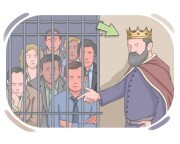
Ex: Under the dictatorship, citizens had no freedom of speech or assembly. 
Close
Sign in
dictator
dictator
[noun]

a ruler that has total power over a state, particularly a ruler who gained power through force

Ex: The dictator imposed strict censorship laws to suppress any opposition to his regime. 
Close
Sign in
council
council
[noun]

a group of elected people who govern a city, town, etc.

Ex: She was elected to serve on the local council. 
Close
Sign in
poll
poll
[noun]

the act of casting or counting votes, or the location where this occurs
Ex: Turnout at the polls was higher than expected. 
Close
Sign in
diplomacy
diplomacy
[noun]

the job, skill, or act of managing the relationships between different countries

Ex: Diplomacy helped prevent the two nations from going to war. 
Close
Sign in
diplomat
diplomat
[noun]

an official representing a country's government in foreign relations

Ex: The diplomat negotiated a trade agreement between two neighboring countries. 
Close
Sign in
federal
federal
[Adjective]

relating to the central government of a country rather than the local or regional governments

Ex: Federal laws apply uniformly across the entire country. 
Close
Sign in
republic
republic
[noun]

a governing system in which the supreme power is held by people and their chosen representatives
Ex: The nation declared itself a republic after overthrowing the monarchy. 
Close
Sign in
Republican

a member or supporter of the Republican Party in the United States

Ex: She has been a Republican for many years. 
Close
Sign in
extremism
extremism
[noun]

religious or political actions, beliefs, or ideas that most people find them extreme, unreasonable, and abnormal

Ex: The rise of political extremism in the region has led to increased tensions and conflicts among communities. 
Close
Sign in
radical
radical
[noun]

a person who holds extreme or unconventional ideas or opinions
Ex: The radical spoke passionately at the town hall. 
Close
Sign in
free trade

a system of international trading in which there are no restrictions or taxes on goods bought or sold

Ex: Many economists argue that free trade agreements promote economic growth by reducing barriers to international commerce. 
Close
Sign in
governor
governor
[noun]

a person who is in charge of a state, region, or territory

Ex: The governor signed a new law for the state. 
Close
Sign in
liberal
liberal
[Adjective]

related to or characteristic of a political ideology that emphasizes individual freedoms, equality, and government intervention for social welfare and economic opportunity

Ex: His liberal views prioritize tolerance, diversity, and progressive social change. 
Close
Sign in
independence

the state of being free from the control of others
Ex: The country gained its independence after years of colonial rule. 
Close
Sign in
monarchy
monarchy
[noun]

a system of government or a country or state that is ruled by a king or queen
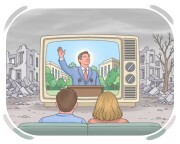
Ex: The monarchy has existed in the country for centuries, with the king serving as the head of state. 
Close
Sign in
propaganda

information and statements that are mostly biased and false and are used to promote a political cause or leader

Ex: The regime used propaganda to control the narrative and maintain public support. 
Close
Sign in
anarchy
anarchy
[noun]

the state of an organization or country that is lacking in order, authority, or control

Ex: The country descended into anarchy after the government was overthrown. 
Close
Sign in
opposition

the main political party opposed to the government
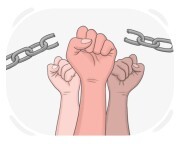
Ex: The opposition criticized the government's handling of the economic crisis. 
Close
Sign in
revolution

the fundamental change of power, government, etc. in a country by people, particularly involving violence
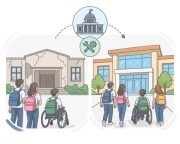
Ex: The revolution led to the overthrow of the monarchy and the establishment of a republic. 
Close
Sign in
to reform
to reform
[Verb]

to make a society, law, system, or organization better or more effective by making many changes to it

Ex: The government aims to reform the education system to ensure equal access to quality education for all students. 
Close
Sign in
LanGeek
Download LanGeek app