pattern

Cambridge IELTS 15 - Academic - Test 1 - Reading - Passage 2

Learn vocabulary from Cambridge IELTS 15 Academic, Test 1 Reading Passage 2, and review useful words and expressions from this reading text.

Review

Flashcards

Forms

Spelling

Quiz

Start learning
Cambridge IELTS 15 - Academic
automotive
automotive
[Adjective]

related to the design, development, and maintenance of cars and other vehicles

Close
Sign in
to adapt
to adapt
[Verb]

to adjust oneself to fit into a new environment or situation

Ex: After moving abroad, he had to quickly adapt to the local culture. 
Close
Sign in
automation

the use of machines and computers in a production process that was formerly operated by people

Close
Sign in
implementation

the act of accomplishing some aim or executing some order

Ex: Implementation of the safety program begins next month. 
Close
Sign in
reliability

the level to which something or someone can be counted on

Close
Sign in
flexibility

the ability to change or adjust easily or quickly to different conditions and situations

Ex: The teacher's flexibility in adapting lesson plans to meet the diverse needs of students ensured an inclusive learning environment. 
Close
Sign in
contribution

someone or something's role in achieving a specific result, particularly a positive one

Ex: Employees are rewarded based on their individual contributions to the company's success. 
Close
Sign in
assistance

a person or thing that is a resource that helps make something easier or possible to do

Close
Sign in
to gather
to gather
[Verb]

to gradually increase in speed, strength, or intensity
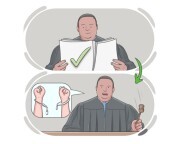
Ex: The wind began to gather strength as the storm approached. 
Close
Sign in
to cite
to cite
[Verb]

to refer to something as an example or proof

Ex: The lawyer cited similar court cases to argue for his client's innocence. 
Close
Sign in
motive
motive
[noun]

a reason or purpose behind someone's actions or behavior

Ex: Revenge was suspected as the motive for the vandalism. 
Close
Sign in
to demonstrate

to show clearly that something is true or exists by providing proof or evidence

Ex: The scientist demonstrated the effectiveness of the new drug through a series of experiments. 
Close
Sign in
collision
collision
[noun]

an accident that occurs when two or more objects, often in motion, come into violent contact with each other, resulting in damage or destruction

Ex: The collision between the two cars resulted in significant damage to both vehicles. 
Close
Sign in
incidence
incidence
[noun]

the rate or frequency at which something happens or occurs

Ex: Schools in the region reported a lower incidence of bullying after implementing new programs. 
Close
Sign in
to socialize

to interact and spend time with people

Ex: Introverts may find it challenging to socialize in large groups. 
Close
Sign in
proportion

the result obtained when one quantity considered in relation to the whole

Ex: The recipe requires a precise proportion of flour to sugar for the cake to turn out perfectly. 
Close
Sign in
institute
institute
[noun]

an organization focused on a specific field of study or training, offering programs and services related to science, technology, medicine, business, or the arts

Close
Sign in
to investigate

to examine something scientifically, typically to discover facts or evidence

Ex: The researchers will investigate the effects of climate change on marine ecosystems. 
Close
Sign in
modeling
modeling
[noun]

the practice of making something on a smaller scale
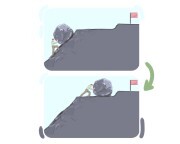
Ex: He spent hours modeling a detailed replica of an ancient Roman city for his history project. 
Close
Sign in
mileage
mileage
[noun]

distance measured in miles

Close
Sign in
intensively
intensively
[Adverb]

in a highly thorough, detailed, or forceful manner

Ex: She researched the topic intensively before writing the article. 
Close
Sign in
to prompt
to prompt
[Verb]

to make something happen

Ex: The news of the imminent hurricane prompted widespread evacuation efforts in coastal regions. 
Close
Sign in
to tend
to tend
[Verb]

to be likely to develop or occur in a certain way because that is the usual pattern

Ex: Some plants tend to thrive in direct sunlight, while others prefer shade. 
Close
Sign in
provider
provider
[noun]

a person, company, or organization that offers goods or services to customers

Ex: The company is a leading provider of software solutions. 
Close
Sign in
compromise

a middle state between two opposing situations that is reached by slightly changing both of them, so that they can coexist

Ex: They reached a compromise by agreeing to share responsibilities equally. 
Close
Sign in
unoccupied
unoccupied
[Adjective]

describing a state or condition in which a space or property is not being used, inhabited, or occupied by individuals
Close
Sign in
to boost
to boost
[Verb]

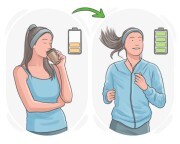
to increase or enhance the amount, level, or intensity of something

Ex: Drinking a cup of coffee in the morning can boost your energy levels. 
Close
Sign in
specialized
specialized
[Adjective]

made or designed for a specific function

Ex: The specialized equipment used by surgeons is designed for precision and accuracy during delicate procedures. 
Close
Sign in
exceptional
exceptional
[Adjective]

significantly better or greater than what is typical or expected

Ex: The pianist's performance was exceptional, leaving the audience in awe. 
Close
Sign in
hurdle
hurdle
[noun]

a difficulty or problem that must be overcome in order to achieve something
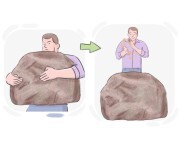
Ex: The biggest hurdle for the startup was securing enough funding to launch their product. 
Close
Sign in
to overcome

to succeed in solving, controlling, or dealing with something difficult
Ex: She overcame obstacles in her career by demonstrating resilience and determination. 
Close
Sign in
infinite
infinite
[Adjective]

without end or limits in extent, amount, or space
Ex: The universe is believed to be infinite in size, with no discernible boundaries. 
Close
Sign in
to encounter

to be faced with an unexpected difficulty during a process
Ex: The team encountered unexpected challenges while implementing the new software. 
Close
Sign in
regulatory
regulatory
[Adjective]

creating and enforcing rules or regulations to control or govern a particular activity or industry

Ex: Compliance with regulatory requirements is essential for businesses operating in the financial sector. 
Close
Sign in
liability
liability
[noun]

the state of being legally obliged and responsible

Close
Sign in
enforcement

the action of making people obey a law or regulation

Ex: The police department is responsible for the enforcement of traffic laws in the city. 
Close
Sign in
operation
operation
[noun]

the activity of operating something (a machine or business etc.)

Ex: The safe operation of the machine requires proper training. 
Close
Sign in
societal
societal
[Adjective]

related to or characteristic of society and its members as a whole

Ex: The societal norms of the time influenced people's behavior and attitudes. 
Close
Sign in
to address

to think about a problem or an issue and start to deal with it

Ex: The company needs to address the issue of employee turnover. 
Close
Sign in
robust
robust
[Adjective]

remaining strong and effective even when facing challenges or difficulties
Ex: The CEO's robust leadership style transformed the struggling company into an industry leader within a few years. 
Close
Sign in
targeted
targeted
[Adjective]

focused or directed toward a specific goal, objective, or audience

Ex: The company launched a targeted advertising campaign to reach potential customers in specific demographics. 
Close
Sign in
to conquer

to overcome a challenge or obstacle

Ex: She conquered the challenges in her career through perseverance and hard work. 
Close
Sign in
association

the mental connection or link between ideas, memories, or images

Ex: The smell of fresh bread brings an association with childhood memories. 
Close
Sign in
virtual reality

an artificial environment generated by a computer that makes the user think what they are seeing or hearing is real, by using a special headphone and a helmet that displays the generated environment

Ex: Virtual reality allows users to explore immersive 3D worlds. 
Close
Sign in
concrete
concrete
[Adjective]

according to facts instead of opinions

Ex: In scientific research, it is crucial to provide concrete evidence to support hypotheses and conclusions. 
Close
Sign in
vital
vital
[Adjective]

absolutely necessary and of great importance
Ex: Adequate hydration is vital for maintaining overall health. 
Close
Sign in
estimate
estimate
[noun]

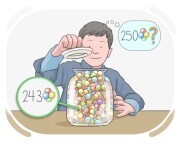
a judgment or calculation of the size, extent, value, etc. of something without knowing the exact details or numbers
Ex: The contractor provided an estimate for the cost of renovating the kitchen. 
Close
Sign in
figure
figure
[noun]

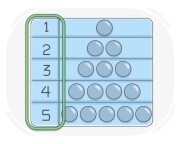
a symbol that represents any number between 0 and 9

Ex: In mathematics, figures are used to express numerical values. 
Close
Sign in
scheme
scheme
[noun]

an organized and carefully planned course of action

Ex: The company launched a scheme to expand internationally. 
Close
Sign in
according to
according to
[preposition]

in regard to what someone has said or written

Ex: According to the weather forecast, it will rain tomorrow. 
Close
Sign in
considerable
considerable
[Adjective]

large in quantity, extent, or degree

Ex: The project required a considerable amount of funding to cover all expenses and ensure its success. 
Close
Sign in
pollution
pollution
[noun]

a change in water, air, etc. that makes it harmful or dangerous

Ex: The pollution in the lake has made the water toxic to fish and plants. 
Close
Sign in
transition

the process or period of changing from one state, place, or condition to another

Ex: The transition from winter to spring is often unpredictable. 
Close
Sign in
conventional
conventional
[Adjective]

generally accepted and followed by many people

Ex: In many cultures, it is conventional for brides to wear white dresses on their wedding day. 
Close
Sign in
to compensate

to make up for losses or deficiencies by providing something of equal value or benefit

Ex: The company compensated for the delay in delivery by offering a discount to customers. 
Close
Sign in
redundant
redundant
[Adjective]

no longer employed because there is no more work available or the position is no longer necessary

Ex: They offered training programs to help redundant workers find new jobs. 
Close
Sign in
infrastructure

the physical and organizational assets, such as roads, bridges, utilities, and public services, that support economic activity and daily life

Ex: The government invested billions in rebuilding the nation's aging infrastructure. 
Close
Sign in
turnover
turnover
[noun]

the speed at which products in a store are sold and replaced within a time frame

Ex: The store has a high turnover because it sells fresh food quickly. 
Close
Sign in
landscape
landscape
[noun]

a broad or comprehensive mental perspective or view

Ex: The scholar had a wide landscape of philosophical ideas. 
Close
Sign in
telepresence

technology that allows people to control devices or join events from a distance by creating a realistic virtual experience
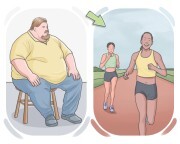
Ex: Engineers use telepresence to operate machines in dangerous places. 
Close
Sign in
mobility
mobility
[noun]

the ability to move easily or be freely moved from one place, job, etc. to another

Ex: Mobility in the workforce allows employees to find new job opportunities across industries. 
Close
Sign in
disabled
disabled
[Adjective]

completely or partial inability to use a part of one's body or mind, caused by an illness, injury, etc.

Ex: He uses a wheelchair to get around because he is disabled. 
Close
Sign in
autonomy
autonomy
[noun]

the capacity to act independently and make decisions without undue influence

Ex: She sought autonomy in organizing her daily routine. 
Close
Sign in
implication

a possible consequence that something can bring about

Ex: His decision to cut costs has serious implications for employee morale. 
Close
Sign in
initiative

the willingness to take action and start new things without being prompted or directed
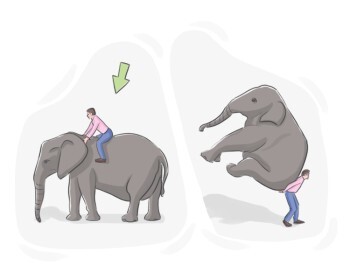
Ex: Her initiative in organizing the event impressed everyone. 
Close
Sign in
viable
viable
[Adjective]

having the ability to be executed or done successfully

Ex: Starting a small business seems viable given the current market conditions. 
Close
Sign in
LanGeek
Download LanGeek app