
Sociedad, Ley y Política - Salir o Escapar
Descubre cómo los modismos en inglés como "the bird has flown" y "do a moonlight flit" se relacionan con irse o escapar en inglés.
Revisión
Tarjetas de memoria
Cuestionario

![to [take] to {one's} heels](https://cdn.langeek.co/photo/43092/thumb/350?type=jpeg "to [take] to {one's} heels")
to begin to leave somewhere by running fast

salir corriendo, poner pies en polvorosa
Vimos al perro furioso y salimos corriendo al instante.
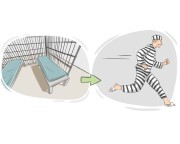
said to mean that a person that one looks for has fled or left
el pájaro voló, ya se ha largado
Fui a encararlo en la oficina, pero el pájaro ya había volado.
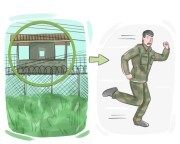
(of a soldier) having left one's military duty without being permitted to do so
ausente sin permiso, desertor temporal
La unidad pasó la mañana buscando al recluta desertor temporal.
![to [go] south](https://cdn.langeek.co/photo/44040/thumb/350?type=jpeg "to [go] south")
to depart or leave a place, often with the intention of avoiding a difficult or uncomfortable situation
irse, largarse discretamente
El político se largó inmediatamente después de que estallara el escándalo.
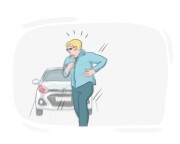
moving from one place to another in an attempt to not get caught or arrested
huyendo, intentando no ser atrapado
La policía cree que el fugitivo todavía está huyendo en la ciudad.
![to [go] to ground](https://cdn.langeek.co/photo/44042/thumb/350?type=jpeg "to [go] to ground")
to suddenly disappear from sight, particularly in order to hide from someone
desaparecer de repente, esconderse de alguien
Durante la persecución, el sospechoso desapareció de repente para evadir la captura.
![to [give] {sb} the slip](https://cdn.langeek.co/photo/43998/thumb/350?type=jpeg "to [give] {sb} the slip")
to escape in order to not get caught or not to be with someone
escaparse de alguien, desaparecer para no ser atrapado
El sospechoso trató de escaparse de los detectives en el mercado abarrotado.
![to [bust] a move](/assets/img/no-pic-700w.png "to [bust] a move")
to leave somewhere, often hastily
largarse rápido, salir pitando
En cuanto la reunión se puso incómoda, salí pitando.
![to [make] a move](https://cdn.langeek.co/photo/44016/thumb/350?type=jpeg "to [make] a move")
to start to leave a place to get to somewhere else
ponerse en marcha, ir tirando
Me iré poniendo en marcha cuando me despida de todos.
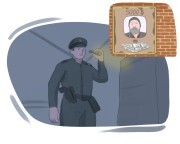
running away in an attempt not to get caught
huyendo, intentando no ser atrapado
Los rumores dicen que el coche robado está huyendo.

used to refer to a someone or something that suddenly disappears, particularly in a way that is mysterious or suspicious
como si se lo hubiera tragado la tierra, desapareció sin dejar rastro
Un momento el sospechoso estaba allí, y al siguiente se lo había tragado la tierra.
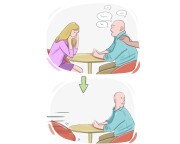
an instance of someone becoming impossible to find, particularly when they are needed, wanted, or in a difficult or unpleasant situation
desaparición repentina, hacerse humo
Tiene la costumbre de desaparecer cada vez que hay trabajo por hacer.
to leave a place secretly and as fast as one can, particularly in order to avoid paying one's debts
largarse de noche, escaparse sin pagar
El dueño de la tienda se largó de noche y dejó a los proveedores con facturas sin pagar.
to leave a group, project, or situation when things become difficult
to manage to escape from a prison
fugarse de la cárcel, escaparse de prisión
Los guardias no se dieron cuenta de que se había fugado hasta la mañana.
| Sociedad, Ley y Política | |||
|---|---|---|---|
| Según las Reglas | Desafiando las Normas | Justicia | Injusticia |
| Política | Problemas Políticos | Castigo | Sociedad |
| Clase social | Normas sociales y conformidad | Salir o Escapar | Fraude y Estafa |
