Topic-Related Verbs of Human Actions - Verbs Related to the Legal System

Here you will learn some English verbs referring to the legal system such as "sue", "formalize", and "testify".

review-disable

review

flashcard-disable

flashcard

spelling-disable

spelling

quiz-disable

quiz

start-learning
Topic-Related Verbs of Human Actions

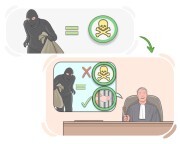
to cause someone suffering for breaking the law or having done something they should not have

Ex: Speeding drivers are often punished with fines to discourage traffic violations .

to officially state the punishment of someone found guilty in a court of law

Ex: The judge carefully considered the evidence before deciding how to sentence the defendant .

to say something is the case without providing proof for it

Ex: In a heated debate , politicians may allege misconduct by their opponents to gain an advantage .

to formally say that someone has done something wrong or illegal, often involving making specific charges against them
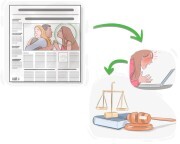
Ex: In a heated argument , one may accuse another of dishonesty without substantial evidence .
to sue [verb]

to bring a charge against an individual or organization in a law court
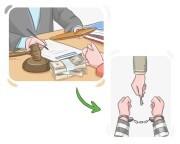
Ex: The author opted to sue the publisher for copyright infringement .
to bail [verb]

to release someone until their trial after they gave an amount of money to the court
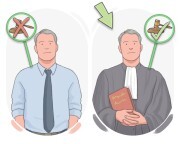
Ex: Right now , the family is bailing the defendant out of custody .

to give someone the legal right to have or do something particular

Ex: Being a citizen of the country will entitle you to certain benefits and privileges .

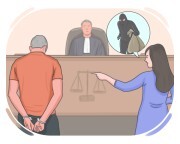
to try to charge someone officially with a crime in a court as the lawyer of the accuser
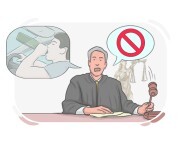
Ex: The prosecutor ’s office chose not to prosecute , citing insufficient evidence .
to enact [verb]

to approve a proposed law

Ex: The city council will convene to discuss and possibly enact a zoning ordinance .

to officially cancel a law, regulation, or policy, making it no longer valid or in effect

Ex: The parliament voted to repeal the restrictions on freedom of speech .

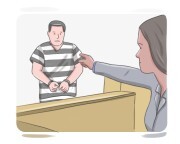
to formally charge or accuse someone of a crime or misdemeanor

Ex: After further investigation , the authorities decided to impeach him for fraud .

to officially accuse someone of an offense

Ex: The district attorney is considering whether to charge the defendant with assault .

to officially accuse a person of a crime

Ex: The district attorney may choose to indict individuals involved in public corruption .

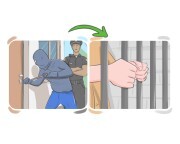
to put someone in prison or keep them somewhere and not let them go

Ex: The decision to imprison the suspect without bail was made due to the flight risk .
to jail [verb]

to put someone in a designated facility either as punishment or while waiting for legal proceedings

Ex: Authorities have the power to jail those who violate parole or probation conditions .

to restrict someone's freedom by confining them, often done for security, control, or public safety reasons

Ex: Authorities decided to intern the protestors temporarily to maintain public order .

to confine someone in prison or a similar facility due to legal reasons or as a form of punishment
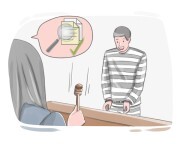
Ex: The court 's decision to incarcerate the embezzler was based on the severity of the financial fraud .

to officially decide and declare in a law court that someone is not guilty of a crime

Ex: Last month , the court acquitted the accused after a thorough trial .

to initiate legal action against another party or person

Ex: She had to litigate to protect her intellectual property .

to make a formal decision or judgment about who is right in an argument or dispute

Ex: The court will adjudicate the divorce proceedings and decide on matters of custody and assets .

to make something legally valid

Ex: The city council voted to formalize the new zoning laws with immediate effect .

to formally object or challenge a judge's participation in a case, often due to concerns about their impartiality or potential conflicts of interest

Ex: The party involved in a dispute has the right to recuse a judge if they have concerns about fairness .

to impose a punishment on someone for a wrongdoing or violation
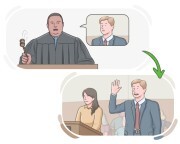
Ex: Companies may penalize employees for breaching ethical standards through disciplinary actions .

to officially summon someone to attend a court proceeding, produce evidence, or provide testimony under penalty of law
Ex: The court has the authority to subpoena individuals who may have information about a case .

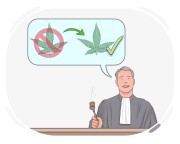
to permit something by law, granting people the right or freedom to do it
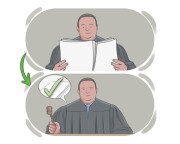
Ex: By the time I moved to that country , they had already legalized the sale of alcohol on Sundays .

to create or bring laws into effect through a formal process

Ex: In the coming years , governments around the world will need to legislate laws to address emerging technologies .

to no longer be able to access a right, property, privilege, etc. as a result of violating a law or a punishment for doing something wrong

Ex: Companies involved in environmental violations may forfeit their licenses to operate .

to make a statement as a witness in court saying something is true

Ex: Experts may be called to testify regarding their professional opinions on a case .