Cambridge IELTS 19 - Academic - Test 4 - Listening - Part 4 (2)

Here you can find the vocabulary from Test 4 - Listening - Part 4 (2) in the Cambridge IELTS 19 - Academic coursebook, to help you prepare for your IELTS exam.

review-disable

review

flashcard-disable

flashcard

spelling-disable

spelling

quiz-disable

quiz

start-learning
Cambridge IELTS 19 - Academic

to clear an area of trees, typically by cutting them down extensively

Ex: They have deforested many regions to make way for agriculture .
large-scale [adjective]

involving a significant numbers of people or a vast area
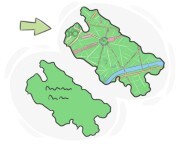
Ex: The government initiated a large-scale vaccination drive to combat the pandemic .
planning [noun]

an act of formulating a program for a definite course of action

detailed [adjective]

including many specific elements or pieces of information

Ex: Her instructions for assembling the furniture were very detailed , with step-by-step illustrations .
up-to-date [adjective]

conforming to the most recent developments, updates, or facts

Ex: The news app provides up-to-date alerts , ensuring you never miss a major event .

to find or discover something by searching for its features, characteristics, or details

Ex: She identified the song as soon as it started playing .
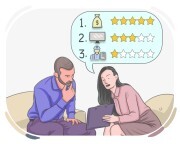
priority [noun]

the fact or condition of being regarded or treated as more important than others

Ex: The firefighter ’s first priority was to save the trapped residents .

an action, treatment, or manipulation that is introduced by researchers to test its effects on variables of interest

Ex:
drone [noun]

a flying vehicle such as an aircraft that is controlled from afar and has no pilot
Ex: The delivery company is testing drones to quickly transport packages to customers in remote areas .
tool [noun]

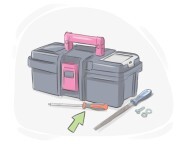
something such as a hammer, saw, etc. that is held in the hand and used for a specific job
Ex: The chef 's most important tool in the kitchen is a sharp knife .

to give a higher level of importance or urgency to a particular task, goal, or objective compared to others

Ex: He prioritized saving money for his future over spending on luxuries .

to carefully check the quality, activity, or changes of something or someone for a period of time
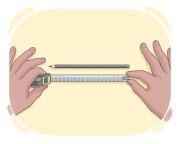
Ex: The technician is currently monitoring the system for any potential issues .

to measure or express something as a number or amount

Ex: The accountant will quantify the company 's expenses for the fiscal year .

to destroy something completely

Ex: Economic downturns can devastate small businesses that rely on steady consumer spending .
to rear [verb]

to care for and raise animals until they reach maturity
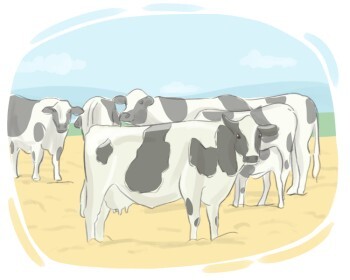
Ex: Villagers rear ducks for eggs and meat .
cattle [noun]

large farm animals, such as cows and bulls, raised for meat, milk, or labor

Ex: The ranch specializes in breeding high-quality cattle .
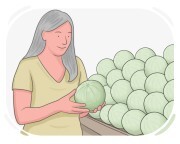
logging [noun]

the act of cutting down trees to use their wood
Ex:
to pick [verb]

to choose someone or something out of a group of people or things
Ex: Let 's pick a movie to watch from the available options .

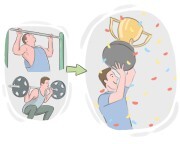
to finally accomplish a desired goal after dealing with many difficulties
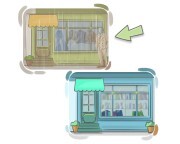
Ex: Despite facing numerous challenges , the athlete 's determination and training allowed him to achieve victory in the championship .
previously [adverb]

before the present moment or a specific time
Ex: The current system operates more efficiently than the one used previously .
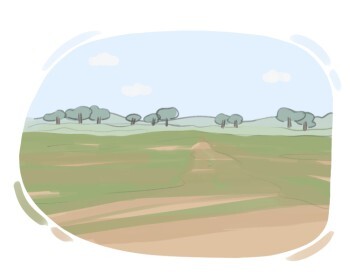
site [noun]

an area of land on which something is, was, or will be constructed

Ex:

(of human activities or natural forces) to gradually break down rocks, mountains, hills, etc.

Ex: The river has been degrading the valley ’s edges for thousands of years .
mining [noun]

the process of extracting valuable minerals or other materials from the earth

Ex: She works in mining , specifically in the extraction of rare metals .
cement [noun]

a gray powdery substance that becomes hard if it is mixed with water and sand, used for construction purposes such as sticking bricks of a wall together
Ex:
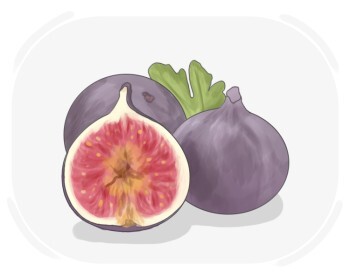
fig [noun]

a soft, sweet fruit with a thin skin and many small seeds, often eaten fresh or dried

Ex: He bought a box of figs from the local farmers ' market .
keystone [noun]

a central element or factor that provides essential support or cohesion to a system or concept

Ex: Education serves as the keystone of societal development .
role [noun]

what something is used for

to play [verb]

to actively influence or impact a situation, event, or outcome
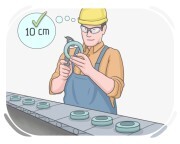
Ex: Individuals can play their part by practicing sustainable habits such as recycling and conserving energy .

to make sure that something will happen

Ex: The teacher is ensuring that students understand the new lesson .

the ability to recover from difficult situations
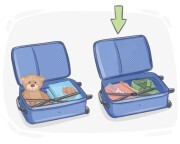
Ex: Mental resilience is crucial for athletes , helping them cope with losses and remain focused on future competitions .
vital [adjective]

absolutely necessary and of great importance
Ex: Oxygen is vital for sustaining life .
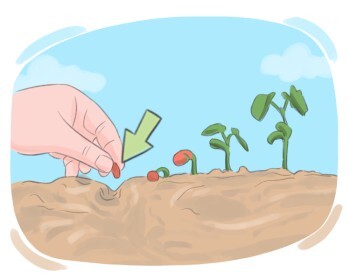
seed [noun]

a small living part of a plant that when put in the ground, grows into a new one
Ex: Some plants , like dandelions , disperse their seeds through the wind , allowing them to spread far and wide .
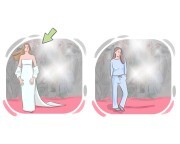
appropriate [adjective]

suitable or acceptable for a given situation or purpose

Ex: Bringing a gift is appropriate when attending a party .
genetic [adjective]

connected to the parts of the DNA in cells, called genes, that determine hereditary traits

Ex: Understanding genetic inheritance patterns is crucial for predicting the likelihood of certain traits being passed from one generation to the next .

the presence of a variety of distinct characteristics within a group
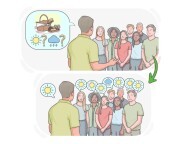
Ex: In our garden , the diversity of flowers creates a vibrant tapestry of colors and scents .

(biology) an organism that has characteristics resulting from chromosomal alteration

generally [adverb]

in a way that is true in most cases

Ex: She 's generally punctual , though today she 's late .
to adapt [verb]

to adjust oneself to fit into a new environment or situation
Ex: It takes time to adapt to the changes in your daily routine .

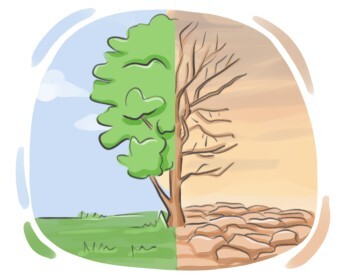
a permanent change in global or regional climate patterns, including temperature, wind, and rainfall
Ex: Droughts and floods are becoming more frequent due to climate change .
ultimately [adverb]

after doing or considering everything

Ex: The goal of the research was to understand the underlying causes , and ultimately , to find effective solutions .
formerly [adverb]

in an earlier period

Ex: The building , formerly a bank , has been converted into a trendy art gallery .

a large, open, and grass-covered area

Ex: Fires can spread quickly in dry grasslands .
savanna [noun]

a flat grassland in tropical or subtropical regions

wetland [noun]

an area of land characterized by its soil, water, and vegetation, where the water table is at or near the surface for a significant part of the year

Ex: Wetlands play a crucial role in water purification , filtering pollutants and sediments from runoff .
carbon [noun]

a nonmetal element that can be found in all organic compounds and living things

Ex: The carbon in the atmosphere plays a crucial role in the greenhouse effect .
advantageous [adjective]

providing benefits or favorable circumstances

Ex: Being organized and prepared is advantageous when facing challenging situations .
recreational [adjective]

relating to activities done for enjoyment or leisure, rather than for work or other obligations

Ex: Recreational reading offers a form of entertainment and escapism from daily routines .

to use someone or something in an unfair way, which is only advantageous to oneself

Ex: Online scammers often exploit unsuspecting individuals by tricking them into revealing sensitive information .

to take in and hold something, like an atom, molecule, or particle, during a physical, chemical, or technical process

Ex: Special materials are designed to capture particles in experiments .
Cambridge IELTS 19 - Academic
Test 1 - Listening - Part 1 Test 1 - Listening - Part 2 Test 1 - Listening - Part 3 (1) Test 1 - Listening - Part 3 (2)
Test 1 - Listening - Part 4 (1) Test 1 - Listening - Part 4 (2) Test 1 - Reading - Passage 1 (1) Test 1 - Reading - Passage 1 (2)
Test 1 - Reading - Passage 2 (1) Test 1 - Reading - Passage 2 (2) Test 1 - Reading - Passage 2 (3) Test 1 - Reading - Passage 3 (1)
Test 1 - Reading - Passage 3 (2) Test 1 - Reading - Passage 3 (3) Test 2 - Listening - Part 1 Test 2 - Listening - Part 2 (1)
Test 2 - Listening - Part 2 (2) Test 2 - Listening - Part 3 (1) Test 2 - Listening - Part 3 (2) Test 2 - Listening - Part 4 (1)
Test 2 - Listening - Part 4 (2) Test 2 - Reading - Passage 1 (1) Test 2 - Reading - Passage 1 (2) Test 2 - Reading - Passage 1 (3)
Test 2 - Reading - Passage 2 (1) Test 2 - Reading - Passage 2 (2) Test 2 - Reading - Passage 2 (3) Test 2 - Reading - Passage 3 (1)
Test 2 - Reading - Passage 3 (2) Test 2 - Reading - Passage 3 (3) Test 3 - Listening - Part 1 Test 3 - Listening - Part 2 (1)
Test 3 - Listening - Part 2 (2) Test 3 - Listening - Part 3 (1) Test 3 - Listening - Part 3 (2) Test 3 - Listening - Part 4 (1)
Test 3 - Listening - Part 4 (2) Test 3 - Reading - Passage 1 (1) Test 3 - Reading - Passage 1 (2) Test 3 - Reading - Passage 1 (3)
Test 3 - Reading - Passage 2 (1) Test 3 - Reading - Passage 2 (2) Test 3 - Reading - Passage 2 (3) Test 3 - Reading - Passage 3 (1)
Test 3 - Reading - Passage 3 (2) Test 3 - Reading - Passage 3 (3) Test 3 - Reading - Passage 3 (4) Test 4 - Listening - Part 1 (1)
Test 4 - Listening - Part 1 (2) Test 4 - Listening - Part 2 (1) Test 4 - Listening - Part 2 (2) Test 4 - Listening - Part 3 (1)
Test 4 - Listening - Part 3 (2) Test 4 - Listening - Part 4 (1) Test 4 - Listening - Part 4 (2) Test 4 - Listening - Part 4 (3)
Test 4 - Reading - Passage 1 (1) Test 4 - Reading - Passage 1 (2) Test 4 - Reading - Passage 1 (3) Test 4 - Reading - Passage 2 (1)
Test 4 - Reading - Passage 2 (2) Test 4 - Reading - Passage 2 (3) Test 4 - Reading - Passage 2 (4) Test 4 - Reading - Passage 3 (1)
Test 4 - Reading - Passage 3 (2) Test 4 - Reading - Passage 3 (3) Test 4 - Reading - Passage 3 (4)