



to belt
[动词]

打
Ex:
The
blacksmith
belted
the
red-hot
iron
with
his
hammer
,
shaping
it
into
a
horseshoe
.
铁匠用他的锤子猛击炽热的铁,将其塑造成马蹄铁。
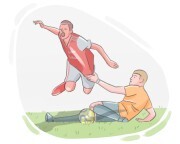
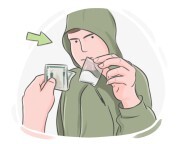
![to [shake|quake|tremble] in {one's} (boots|shoes)](https://cdn.langeek.co/photo/42054/thumb/180?type=jpeg "to [shake|quake|tremble] in {one's} (boots|shoes)")
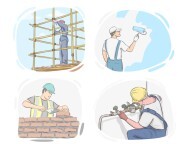
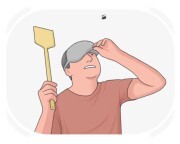
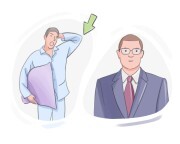
![to [treat|handle] {sb/sth} with kid gloves](https://cdn.langeek.co/photo/61308/thumb/180?type=jpeg "to [treat|handle] {sb/sth} with kid gloves")
![to [wear] (many|several) (different|) hats](https://cdn.langeek.co/photo/61834/thumb/active/180?type=jpeg "to [wear] (many|several) (different|) hats")
![to [have] ants in {one's} pants](https://cdn.langeek.co/photo/42862/thumb/180?type=jpeg "to [have] ants in {one's} pants")
![to [catch] {sb} with {one's} pants down](https://cdn.langeek.co/photo/47312/thumb/180?type=jpeg "to [catch] {sb} with {one's} pants down")
![to [charm] the pants off {sb}](https://cdn.langeek.co/photo/40151/thumb/180?type=jpeg "to [charm] the pants off {sb}")
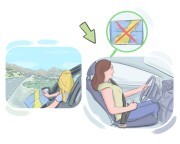
![to [sue] the pants off (of|) {sb/sth}](https://cdn.langeek.co/photo/43658/thumb/180?type=jpeg "to [sue] the pants off (of|) {sb/sth}")
![to [wear] the pants](https://cdn.langeek.co/photo/40215/thumb/180?type=jpeg "to [wear] the pants")
![to [lose] {one's} shirt](https://cdn.langeek.co/photo/41198/thumb/180?type=jpeg "to [lose] {one's} shirt")
![to [knock|blow] {one's} socks off](https://cdn.langeek.co/photo/23553/thumb/180?type=jpeg "to [knock|blow] {one's} socks off")
![to [put|stuff|stick] a sock in it](https://cdn.langeek.co/photo/44828/thumb/180?type=jpeg "to [put|stuff|stick] a sock in it")