pattern

Vocabulary for IELTS Academic (Band 8-9) - Geology

Here, you will learn some English words related to Geology that are necessary for the Academic IELTS exam.

Review

Flashcards

Forms

Spelling

Quiz

Start learning
Vocabulary for Academic IELTS (8)
plate
plate
[noun]

a large, rigid section of the Earth's lithosphere that moves, leading to geological activity like earthquakes and volcanic eruptions

Ex: The Pacific Plate and the North American Plate interact along the "Ring of Fire," resulting in seismic activity and volcanic eruptions. 
Close
Sign in
tectonics
tectonics
[noun]

the scientific study of the Earth's lithosphere and the processes that shape its structure, including the movement of tectonic plates, earthquakes, and volcanic activity
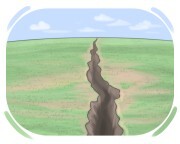
Ex: The study of tectonics helps explain the distribution of earthquakes and the seismic activity associated with plate boundaries. 
Close
Sign in
fissure
fissure
[noun]

(in geology) a narrow break or crack that partially divides a rock or surface without completely separating it

Ex: Deep fissures lined the walls of the crumbling canyon formed by erosion over centuries. 
Close
Sign in
subduction

a geological process where one tectonic plate moves under another and sinks into the Earth's mantle

Ex: The subduction of the Pacific Plate beneath the North American Plate has created the Cascadia Subduction Zone, known for its seismic activity. 
Close
Sign in
isostasy
isostasy
[noun]

the gravitational balance between Earth's rigid lithosphere and the underlying, semi-fluid asthenosphere, influencing variations in surface elevation

Ex: The rebound of land following the melting of glaciers is a classic example of isostasy, where the crust adjusts to changes in load. 
Close
Sign in
lithosphere

the Earth's rigid outer layer, made up of the crust and upper mantle, and divided into tectonic plates

Ex: The lithosphere includes the Earth's continental crust, forming the solid ground beneath our feet. 
Close
Sign in
asthenosphere

a layer of semi-fluid rock beneath the Earth's crust that allows tectonic plates to move

Ex: The asthenosphere's flow allows for the movement of tectonic plates, contributing to Earth's dynamic crustal activity. 
Close
Sign in
karst
karst
[noun]

a landscape formed from the dissolution of soluble rocks, characterized by sinkholes, caves, and underground drainage systems

Ex: Karst is a landscape formed by the dissolution of soluble rocks such as limestone, dolomite, and gypsum, characterized by features such as sinkholes, caves, and underground drainage systems. 
Close
Sign in
orogeny
orogeny
[noun]

the geological process of mountain building, usually occurring due to the collision or convergence of tectonic plates
Ex: The Himalayas are a prominent example of orogeny, resulting from the collision between the Indian and Eurasian tectonic plates. 
Close
Sign in
geode
geode
[noun]

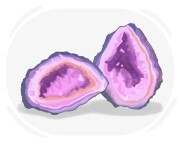
a hollow rock with a cavity inside, lined with crystals or mineral material, formed through natural processes and often valued for its aesthetic qualities

Ex: The amethyst geode on display in the museum showcases the beautiful purple crystals that line its interior. 
Close
Sign in
kimberlite

a volcanic rock that often contains diamonds, formed during explosive eruptions from the Earth's mantle, and is of particular interest in diamond exploration and mining

Ex: Diamond miners discovered a rich kimberlite deposit in the remote region, leading to increased diamond extraction. 
Close
Sign in
glaciation

the geological process involving the expansion and movement of glaciers, shaping landscapes through erosion, deposition, and the formation of distinctive glacial landforms

Ex: The Great Lakes were formed during past glaciation periods when massive ice sheets shaped the landscape. 
Close
Sign in
moraine
moraine
[noun]

a deposit of rocks, sediment, and glacial material left by a moving glacier, forming distinctive landforms along its edges or terminus

Ex: The terminal moraine marked the furthest point reached by the glacier during the last ice age. 
Close
Sign in
drumlin
drumlin
[noun]

a streamlined, elongated hill formed by glacial action, with a teardrop shape and the steeper end facing the direction of ice movement

Ex: The drumlin field in the region displayed a series of these distinctive glacial landforms. 
Close
Sign in
seismology

the scientific study of earthquakes and seismic waves, providing insights into Earth's interior, tectonic plate movement, and earthquake hazards

Ex: Seismology helps researchers monitor and understand the seismic activity along fault lines. 
Close
Sign in
caldera
caldera
[noun]

a large, basin-shaped volcanic crater formed by the collapse of a volcano after a massive eruption

Ex: The Santorini Caldera in the Aegean Sea is a stunning example of a caldera filled with seawater. 
Close
Sign in
diagenesis

the physical and chemical changes occurring in sediments between their deposition and their consolidation into sedimentary rock

Ex: Diagenesis refers to the physical, chemical, and biological changes that sediments undergo after deposition and before lithification. 
Close
Sign in
LanGeek
Download LanGeek app