pattern

Vocabulary for IELTS Academic (Band 8-9) - Landscape and Geography

Here, you will learn some English words related to Landscape and Geography that are necessary for the Academic IELTS exam.

Review

Flashcards

Forms

Spelling

Quiz

Start learning
Vocabulary for Academic IELTS (8)
strait
strait
[noun]

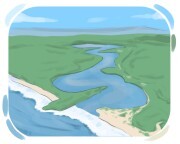
a narrow passage of water connecting two larger bodies of water, often linking two seas or an inlet with a larger expanse of water
Ex: In Southeast Asia, the Strait of Malacca is a critical maritime passage between the Indian Ocean and the Pacific Ocean.
Close
Sign in
glacier
glacier
[noun]

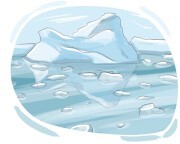
a large mass of ice that forms over long periods of time, especially in polar regions or high mountains

Ex: The farm uses renewable energy to power its operations.
Close
Sign in
savannah
savannah
[noun]

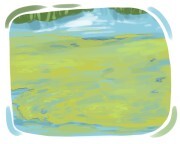
an expansive flat land covered in grass, scattered with trees, and found in tropical or subtropical areas
Ex: The Serengeti Plain in East Africa is a famous savannah known for its annual wildebeest migration .
Close
Sign in
meridian
meridian
[noun]

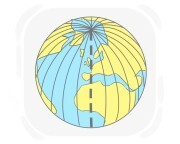
one of the imaginary lines between the North Pole and the South Pole, drawn on maps to help pinpoint a location

Ex: Geographers study meridians to analyze spatial relationships and understand how human activities are distributed across different regions of the world .
Close
Sign in
topography

the arrangement and physical features of a surface, including its natural and man-made elements

Ex: The region 's topography includes rivers , hills , and agricultural terraces .
Close
Sign in
cartography

a branch of science and art that consists of creating maps

Ex: Cartography blends science and art in map-making .
Close
Sign in
atoll
atoll
[noun]

a circular coral reef with a lagoon in the middle

Ex: The Rangiroa Atoll in French Polynesia is one of the largest atolls in the world , featuring a vast lagoon .
Close
Sign in
creek
creek
[noun]

a narrow, shallow watercourse, often flowing through a confined natural channel

Ex: Wildflowers lined the edges of the creek, adding a burst of color to the landscape .
Close
Sign in
tributary
tributary
[noun]

a watercourse that flows into a larger river or body of water
Ex: Navigating through the heart of Europe , the Danube River gains strength as it absorbs tributaries like the Inn and Drava Rivers .
Close
Sign in
marsh
marsh
[noun]

an area of soft, wet, low-lying land, typically characterized by grasses and other non-woody plants, and often found at the edges of lakes, rivers, or coastal areas

Ex: The marsh grasses played a vital role in preventing soil erosion along the edges of the riverbank.
Close
Sign in
escarpment

a steep, high slope or cliff formed by erosion

Ex: The escarpment created a dramatic backdrop for the waterfall , enhancing its scenic beauty .
Close
Sign in
butte
butte
[noun]

a hill with steep, flat sides and a flat top, often found in desert areas

Ex: Shiprock in New Mexico is an impressive volcanic butte that stands out prominently in the flat landscape .
Close
Sign in
cataract
cataract
[noun]

a large waterfall where water rushes forcefully over a height

Ex: The series of linked cataracts blocked further upstream travel along this stretch of river .
Close
Sign in
crater
crater
[noun]

the round top of a volcano

Ex: The volcanic crater was filled with lava that glowed orange at night.
Close
Sign in
estuary
estuary
[noun]

the part of a river that is wide and where it meets the sea

Ex: Environmentalists work to protect estuaries from pollution and habitat destruction .
Close
Sign in
fjord
fjord
[noun]

a steep, deep, and narrow sea inlet surrounded by tall cliffs, created by a glacier

Ex: The fjords created by the Harding Icefield in Alaska showcase unique features and diverse wildlife .
Close
Sign in
geyser
geyser
[noun]

a natural hot spring that periodically erupts with a column of boiling water and steam due to underground volcanic activity
Ex: Sol de Mañana in Bolivia is a geothermal field with various geysers, creating a surreal landscape of steam vents and bubbling pools .
Close
Sign in
isthmus
isthmus
[noun]

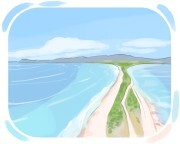
a narrow piece of land with water on each side that connects two larger areas

Ex: The narrow isthmus between the Mediterranean and Red Seas has long been a focal point of maritime commerce , influencing the development of civilizations in the region .
Close
Sign in
lagoon
lagoon
[noun]

a shallow body of water separated from a larger body of water, often by a barrier island, coral reef, or sandbar

Ex: The Okavango Delta in Botswana consists of lagoons and water channels , attracting a rich variety of wildlife .
Close
Sign in
precipice
precipice
[noun]

a steep cliff or edge of a rock face, often with a significant drop
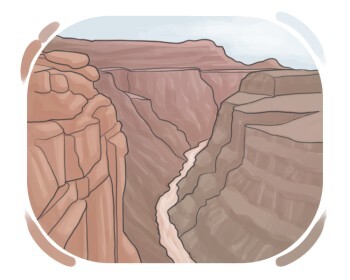
Ex: He felt a thrill standing at the precipice of the towering rock face .
Close
Sign in
ravine
ravine
[noun]

a deep narrow valley with steep sides, usually worn by a stream

Ex: Geologists study the formation of ravines to understand how water shapes the Earth 's surface over millennia .
Close
Sign in
altitude
altitude
[noun]

the distance between an object or point and sea level

Ex: Meteorologists study altitude variations to understand atmospheric pressure changes .
Close
Sign in
knoll
knoll
[noun]

a small, rounded hill or mound, often found in a grassy or wooded area

Ex: A group of friends gathered on the knoll for a sunset picnic , enjoying the warm hues of the evening sky .
Close
Sign in
terrain
terrain
[noun]

an area of land, particularly in reference to its physical or natural features

Ex: Farmers adapted their cultivation techniques to suit the varying terrain of their land , employing terracing on slopes and irrigation systems in low-lying areas to optimize agricultural productivity .
Close
Sign in
boulder
boulder
[noun]

a large rock, usually one that has been shaped by natural forces such as water or ice

Ex: The archaeologists discovered ancient petroglyphs carved into the surface of the boulder, offering insights into the beliefs of past civilizations .
Close
Sign in
shingle
shingle
[noun]

a beach or shoreline covered with small, smooth, rounded stones or pebbles, typically found along coasts or riverbanks

Ex: The river 's course shifted over time , creating a shingle bar along its newly formed bank .
Close
Sign in
cape
cape
[noun]

a large, pointed piece of land that extends into a sea, ocean, or other large body of water

Ex: Over time , the elements sculpted the cape into a dynamic landform , showcasing the forces of nature at work .
Close
Sign in
LanGeek
Download LanGeek app