pattern

Vocabulary for IELTS Academic (Band 8-9) - Internet

Here, you will learn some English words related to Internet that are necessary for the Academic IELTS exam.

Review

Flashcards

Forms

Spelling

Quiz

Start learning
Vocabulary for Academic IELTS (8)
application programming interface

a set of protocols and tools that allows different software applications to communicate with each other

Ex: The RESTful API for a weather service allows developers to retrieve current weather data and forecasts for specific locations.
Close
Sign in
IP address

(computing) a set of numbers separated by dots that a computer with an active Internet connection is identified with
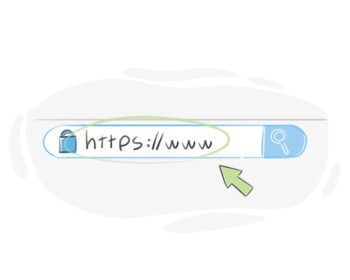
Ex: IT administrators track suspicious activities by monitoring IP addresses accessing their network.
Close
Sign in
URL
URL
[noun]

the address of a resource on the Internet

Close
Sign in
HTTP
HTTP
[noun]

the system in HTML in which data is being sent and received on World Wide Web

Ex: The developer checked the HTTP response status for errors .
Close
Sign in
bandwidth
bandwidth
[noun]

the maximum rate of data transfer of an electronic communication system

Ex: In computing, bandwidth can refer to the amount of data that can be processed or transmitted in a given amount of time, often used in the context of memory or CPU performance.
Close
Sign in
local area network

a network for communication between computers, usually within a building

Ex: Home networks, consisting of multiple devices connected to a router, are a common example of a local area network used for internet access and file sharing within a household.
Close
Sign in
to ping
to ping
[Verb]

to send a signal to a computer and wait for a reply as a way to test the connection

Ex: To troubleshoot internet connectivity , you can ping a website like google.com to check if your computer can reach it .
Close
Sign in
Domain Name System

a decentralized naming system used on the Internet to translate human-readable domain names into numerical IP addresses that computers can understand, enabling the proper routing of data between devices and servers

Ex: DNS caching improves performance by storing recent DNS lookup results locally, reducing the time required to resolve domain names.
Close
Sign in
proxy server

a server that acts as an intermediary between a user's device and the internet, forwarding requests and responses to enhance security, privacy, or performance

Ex: In a corporate environment , a proxy server can filter and block certain content to ensure a secure and compliant network .
Close
Sign in
portal
portal
[noun]

(computing) a website that serves as a point of entry to other websites, with a collection of links categorized based on topic through which the user can search

Close
Sign in
HTML
HTML
[noun]

(computing) a markup language used for the documents that are supposed to be displayed on the World Wide Web
Close
Sign in
host
host
[noun]

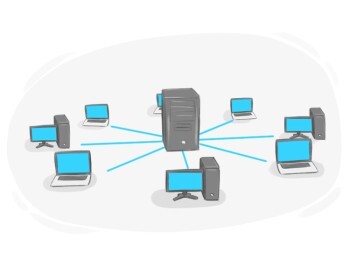
a computer or device on a network that provides services, resources, or data to other computers or devices, known as clients

Ex: Cloud hosting services provide virtual hosts where businesses can store and access data .
Close
Sign in
back end
back end
[noun]

a part of a computer responsible for storing and controlling data where users cannot easily access

Ex: When users interact with a web application , their actions trigger requests to the back end, which processes the data and generates responses visible on the front end .
Close
Sign in
front end
front end
[noun]

a part of a computer that is easily accessible and one uses constantly

Ex: When using a computer , the front end is the part that users interact with directly , such as clicking icons , typing text , or navigating menus to access applications and perform tasks .
Close
Sign in
courseware

a type of educational software or online materials designed for teaching specific subjects or skills

Ex: Teachers and instructors often customize courseware to meet the specific needs of their students , tailoring content and activities to enhance learning outcomes .
Close
Sign in
cracker
cracker
[noun]

an individual who engages in unauthorized attempts to access computer systems, networks, or software, often with malicious intent

Ex: Educational programs on cybersecurity emphasize the importance of ethical behavior and discourage individuals from becoming crackers.
Close
Sign in
trojan horse

a harmful program that pretends to be legitimate and can give unauthorized access to a device

Ex: Many trojan horse infections occur through fake downloads or links .
Close
Sign in
augmented reality

a technology that overlays computer-generated information, such as images or data, onto the real world, enhancing the user's perception and interaction with their environment

Ex: Industrial applications of augmented reality include training simulations , remote assistance , and visualizing complex machinery or architectural designs in real-world contexts .
Close
Sign in
cyberbullying

the use of electronic communication to harass, intimidate, or harm others, typically through social media, messaging apps, or online platforms

Ex: Laws and policies have been enacted to combat cyberbullying and protect individuals from online harassment and abuse.
Close
Sign in
LanGeek
Download LanGeek app