pattern

Verbs of Mental Processes - Verbs for Cognition and Perception

Here you will learn some English verbs referring to cognition and perception such as "understand", "decipher", and "realize".

Review

Flashcards

Forms

Spelling

Quiz
Start learning
Categorized English Verbs Denoting Mental Processes
to know
to know
[Verb]

to have some information about something

Ex: Do you know where the nearest gas station is? 
Close
Sign in
to understand

to know something's meaning, particularly something that someone says

Ex: Can you help me understand this equation? 
Close
Sign in
to interpret

to understand or assign meaning to something
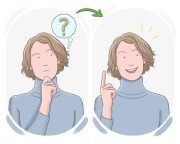
Ex: Psychologists interpret dreams to gain insights into a person's subconscious thoughts. 
Close
Sign in
to comprehend

to fully understand something, especially something complicated
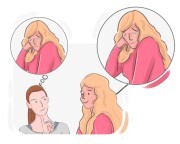
Ex: It took me a while to comprehend the complex mathematical theorem, but with practice, I finally understood it. 
Close
Sign in
to figure out

to reach an understanding of a person's actions, motives, or personality
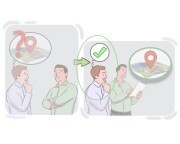
Ex: After spending time together, she began to figure out the reasons behind her friend's behavior. 
Close
Sign in
to apprehend

to mentally grasp or understand

Ex: The teacher used various examples and analogies to help the students apprehend the complex scientific theory. 
Close
Sign in
to decipher

to interpret or understand something that is difficult or unclear

Ex: Students may need to decipher complex scientific texts to grasp the concepts. 
Close
Sign in
to realize

to have a sudden or complete understanding of a fact or situation
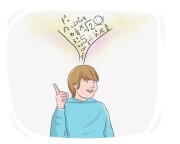
Ex: He realized his mistake at once after reviewing the report. 
Close
Sign in
to dawn on

to become clear, evident, or understood, particularly after some time

Ex: As she listened to the lecture, the significance of the scientific breakthrough began to dawn on her. 
Close
Sign in
to occur to

(of thoughts and ideas) to come to someone's mind

Ex: It often occurs to me that I should call my parents more often. 
Close
Sign in
to fathom
to fathom
[Verb]

to understand and make sense of something after giving it a lot of thought

Ex: The novel's intricate plot required readers to fathom the characters' motivations. 
Close
Sign in
to see through

to understand the true intentions of something or someone
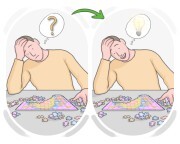
Ex: She saw through his lies and knew he was hiding something. 
Close
Sign in
to savvy
to savvy
[Verb]

to understand something

Ex: The experienced negotiator quickly savvied the subtle cues in the conversation. 
Close
Sign in
to recognize

to know who a person or what an object is, because we have heard, seen, etc. them before
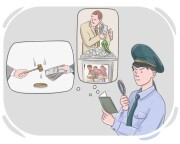
Ex: I immediately recognized her voice on the phone. 
Close
Sign in
to grok
to grok
[Verb]

to deeply understand something

Ex: As a therapist, she strives to grok her clients' emotional experiences to provide effective support. 
Close
Sign in
to discern

to understand something through thought or reasoning

Ex: After much thought, she discerned that his actions were motivated by jealousy. 
Close
Sign in
to construe

to interpret a certain meaning from something

Ex: Lawyers often construe legal documents to understand their implications. 
Close
Sign in
to identify

to be able to say who or what someone or something is

Ex: The detective easily identifies the suspect from the security footage. 
Close
Sign in
to cognize

to understand or become aware of something through thinking or consciousness

Ex: The child began to cognize the colors around them as they developed visual awareness. 
Close
Sign in
to notice
to notice
[Verb]

to pay attention and become aware of a particular thing or person
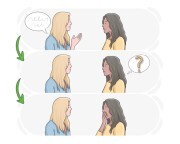
Ex: I couldn't help but notice the beautiful sunset as I walked along the beach. 
Close
Sign in
to sink in

to gradually understand a concept, often accompanied by an emotional response
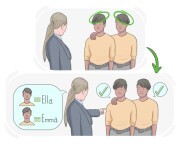
Ex: The impact of the tragedy slowly sank in as the community mourned. 
Close
Sign in
to distinguish

to recognize and mentally separate two things, people, etc.

Ex: The detective could distinguish the authentic painting from the clever forgery. 
Close
Sign in
to [know] {sth} from {sth}

to distinguish or identify between two things based on knowledge or familiarity

Ex: I know good coffee from bad just by the smell. 
Close
Sign in
to think
to think
[Verb]

to use your mind to understand something, solve a problem, make a decision, etc. or to use it to consider someone or something

Ex: He couldn't think of a good answer to the question. 
Close
Sign in
to see
to see
[Verb]

to realize or understand something

Ex: After hearing her explanation, I can see why she made that decision. 
Close
Sign in
to deduce
to deduce
[Verb]

to determine by a process of logical reasoning

Ex: From the evidence presented, the detective deduced the likely sequence of events. 
Close
Sign in
to infer
to infer
[Verb]

to reach an opinion or decision based on available evidence and one's understanding of the matter

Ex: After observing the pattern of behavior, the detective could infer that the suspect was familiar with the victim. 
Close
Sign in
to gather
to gather
[Verb]

to understand information based on what is available

Ex: Observing the subtle cues in the conversation, she could gather that her colleague was feeling uneasy about the upcoming changes in the project. 
Close
Sign in
to intuit
to intuit
[Verb]

to grasp or comprehend something instinctively and without conscious reasoning

Ex: He could intuit that something was bothering his friend based on the subtle change in his demeanor. 
Close
Sign in
to make out

to understand something, often with effort
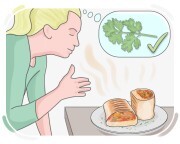
Ex: How did you make out the answer to that riddle? 
Close
Sign in
to perceive

to realize through the senses

Ex: As she touched the fabric, she perceived its softness and knew it was made of silk. 
Close
Sign in
to sense
to sense
[Verb]

to comprehend or interpret the meaning of something

Ex: He couldn’t sense the underlying message in the letter at first. 
Close
Sign in
to read
to read
[Verb]

to look at written or printed words or symbols and understand their meaning
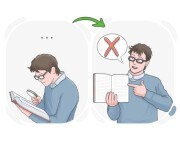
Ex: I can read this book easily. 
Close
Sign in
to read through

to carefully read something from start to finish, often with the purpose of identifying errors

Ex: She read through the manuscript, highlighting grammatical errors and suggesting improvements. 
Close
Sign in
LanGeek
Download LanGeek app