pattern

C2 Level Wordlist - Human Body

Here you will learn all the essential words for talking about Human Body, collected specifically for level C2 learners.

Review

Flashcards

Spelling

Quiz

Start learning
CEFR C2 Vocabulary
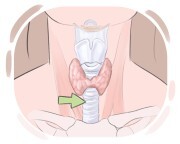
trachea
trachea
[noun]

(anatomy) the membranous tube in the body that carries air from the throat to the bronchi
Ex: The trachea, also known as the windpipe, is a tube-like structure that connects the larynx to the bronchi, allowing air to pass in and out of the lungs. 
Close
Sign in
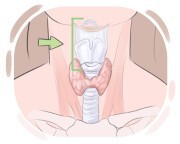
larynx
larynx
[noun]

(anatomy) the hollow organ in the throat that contains the vocal cords and provides an air passage to the lungs

Ex: The larynx, commonly known as the voice box, is located at the top of the trachea and houses the vocal cords. 
Close
Sign in
taste bud
taste bud
[noun]

any of the group of sensory cells that are mainly on the tongue, making one recognize different tastes
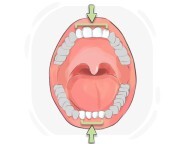
Ex: Taste buds are sensory organs located on the tongue and other parts of the mouth that allow us to perceive different tastes. 
Close
Sign in
incisor
incisor
[noun]

(anatomy) any of the eight narrow-edged teeth at the front of the mouth that are used for biting
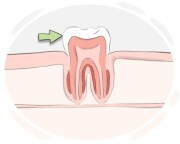
Ex: He accidentally chipped one of his incisors while playing sports. 
Close
Sign in
enamel
enamel
[noun]

the hard white external layer that covers the crown of a tooth

Ex: Enamel is the hard outer layer of the teeth that protects them from decay and damage. 
Close
Sign in
phlegm
phlegm
[noun]

the thick mucus that is formed in the nasal and throat cavities, usually secreted in excessive amounts as a result of common cold
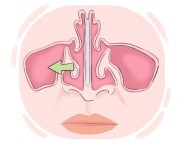
Ex: The common cold often causes an increase in phlegm production, leading to congestion and coughing. 
Close
Sign in
sinus
sinus
[noun]

an air-filled cavity, especially within the bones of the skull
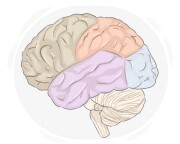
Ex: He suffered from inflammation of the maxillary sinus. 
Close
Sign in
lobe
lobe
[noun]

(anatomy) a rounded part of an organ, such as, lungs or brain that seems to be separate in some way from the rest
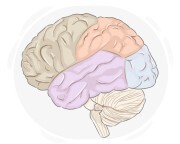
Ex: The brain is divided into different lobes, each responsible for specific functions such as sensory perception, motor control, and language processing. 
Close
Sign in
cortex
cortex
[noun]

(anatomy) the outer layer of the anterior part of the brain, called cerebrum, containing gray matter
Ex: The cerebral cortex is the outer layer of the brain responsible for higher cognitive functions such as thinking, memory, and perception. 
Close
Sign in
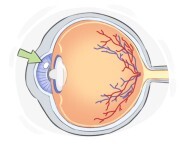
iris
iris
[noun]

(anatomy) the round colored portion of the eye around the pupil and behind the cornea
Ex: The iris is the colored part of the eye that regulates the amount of light entering the pupil. 
Close
Sign in
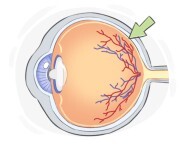
retina
retina
[noun]

(anatomy) the sensory membrane at the back of the eye that transmits light signals to the brain through optic nerves
Ex: The retina is the innermost layer of the eye that contains photoreceptor cells responsible for detecting light and initiating visual signals. 
Close
Sign in
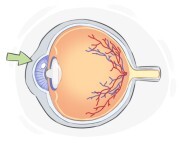
cornea
cornea
[noun]

(anatomy) the transparent layer that covers the outside of the eyeball
Ex: The cornea is the transparent, dome-shaped layer covering the front of the eye, responsible for refracting light rays to focus images onto the retina. 
Close
Sign in
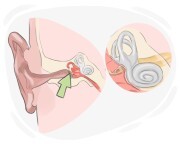
eardrum
eardrum
[noun]

a thin piece of skin in the middle ear that vibrates by sound waves and enables one to hear sounds, also known as tympanic membrane

Ex: The eardrum, also known as the tympanic membrane, vibrates in response to sound waves entering the ear canal. 
Close
Sign in
trunk
trunk
[noun]

the body of an animal or human, except the limbs and head
Ex: The trunk of the human body includes the chest, abdomen, and pelvis, housing vital organs such as the heart, lungs, liver, and intestines. 
Close
Sign in
bile
bile
[noun]

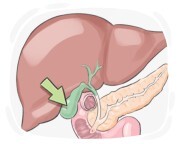
a greenish-brown alkaline fluid that is produced by the liver in order to help the body digest fats

Ex: Bile is a digestive fluid produced by the liver and stored in the gallbladder, released into the small intestine to aid in the digestion of fats. 
Close
Sign in
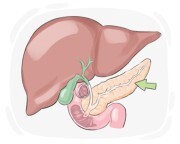
pancreas
pancreas
[noun]

a large gland in the body that produces insulin and glucagon and substances that help the body digest food
Ex: The pancreas is a gland located behind the stomach that plays a crucial role in digestion and blood sugar regulation. 
Close
Sign in
spleen
spleen
[noun]

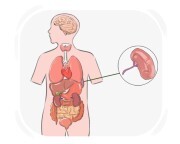
(anatomy) an abdominal organ that controls the quality of the blood cells
Ex: The spleen is an organ located in the upper left side of the abdomen, beneath the ribcage, and is part of the lymphatic system. 
Close
Sign in
colon
colon
[noun]

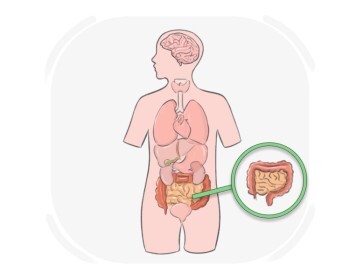
(anatomy) the main part of the large intestine, between the caecum to the rectum, where water is removed from solid waste
Ex: The colon, also known as the large intestine, is the final portion of the digestive tract responsible for absorbing water and electrolytes from undigested food matter. 
Close
Sign in
pelvis
pelvis
[noun]

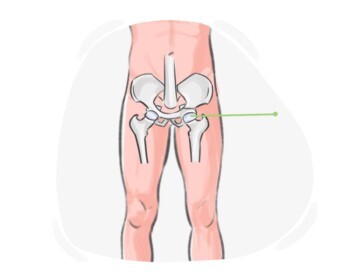
(anatomy) the large round bone structure that the limbs and the spine are joined to, which also protects the abdominal organs

Ex: The pelvis is a bony structure located at the base of the spine, consisting of the hip bones, sacrum, and coccyx. 
Close
Sign in
cervix
cervix
[noun]

(anatomy) the narrow outer opening of the womb or uterus of a female

Ex: During a pelvic examination, the doctor will inspect the cervix for any abnormalities or signs of infection. 
Close
Sign in
urethra
urethra
[noun]

(anatomy) the tube in most mammals that carries urine out of the body, which also carries sperm in males
Ex: The urethra is a tube that carries urine from the bladder to the outside of the body during urination. 
Close
Sign in
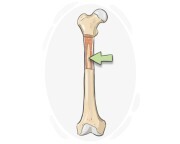
bone marrow

the soft substance that fills the cavities of bones, which is either yellowish and consists of fat cells or reddish and makes blood cells

Ex: Bone marrow is a soft, spongy tissue found within the cavities of bones, responsible for producing blood cells. 
Close
Sign in
esophagus
esophagus
[noun]

a muscular tube that connects the throat to the stomach, allowing for the passage of food and liquids during digestion

Ex: The esophagus is a muscular tube that connects the throat to the stomach, allowing food and liquids to pass from the mouth to the stomach for digestion. 
Close
Sign in
epidermis
epidermis
[noun]

(anatomy) the outer layer of the skin that overlays the dermis
Ex: The epidermis is the outermost layer of skin that provides a protective barrier for the body. 
Close
Sign in
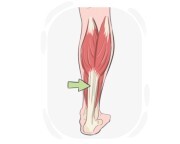
Achilles tendon

a tendon in the leg that attaches the muscles of the calf to the bone of the heel

Ex: The Achilles tendon connects the calf muscles to the heel bone, playing a crucial role in walking, running, and jumping. 
Close
Sign in
femur
femur
[noun]

(anatomy) the longest bone in the top part of the human leg between the hip and the knee
Ex: The femur is the longest and strongest bone in the human body, extending from the hip to the knee. 
Close
Sign in
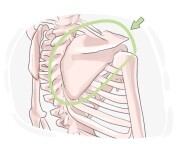
scapula
scapula
[noun]

(anatomy) each of the pair of triangular bones that connect the humerus to the clavicle
Ex: The scapula, commonly known as the shoulder blade, is a flat, triangular bone located in the upper back that connects the humerus (upper arm bone) with the clavicle (collarbone). 
Close
Sign in
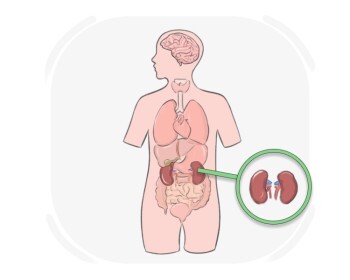
renal
renal
[Adjective]

relating to the kidneys or their function

Ex: He underwent renal testing to assess his kidney function. 
Close
Sign in
intestinal
intestinal
[Adjective]

relating to the intestines, which are part of the digestive system responsible for absorbing nutrients and removing waste from the body
Ex: Intestinal bacteria play a crucial role in digestion and nutrient absorption in the intestines. 
Close
Sign in
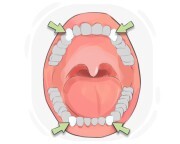
canine
canine
[noun]

(anatomy) any of the four pointed teeth that are between the incisors and premolars, used for tearing food

Ex: The canines help us tear and bite into food. 
Close
Sign in
LanGeek
Download LanGeek app