
![to [cover] for {sb}](https://cdn.langeek.co/photo/41508/thumb/350?type=jpeg "to [cover] for {sb}")
to fulfill a person's responsibilities while they are sick or on a leave

誰かの代わりをする, 一時的に担当を引き受ける
私が休暇中、代わりに入ってくれる?
![[iron] in the fire](https://cdn.langeek.co/photo/41556/thumb/350?type=jpeg "[iron] in the fire")
a project, activity, plan, business, etc. that an individual is involved in
進行中の企画, 手がけている案件
彼女はいくつかの進行中の企画を抱えていて、その中にはポッドキャストと新しい本もある。
![to [put|set] {sb} to work](https://cdn.langeek.co/photo/41638/thumb/350?type=jpeg "to [put|set] {sb} to work")
to assign a task or job to a person
仕事を任せる, 作業を割り当てる
マネージャーは新しいインターンにすぐ仕事を任せた。
![to [wear] (many|several) (different|) hats](https://cdn.langeek.co/photo/61834/thumb/active/350?type=jpeg "to [wear] (many|several) (different|) hats")
to have different roles, positions, or jobs at the same time
複数の役割を担う, いくつもの仕事を兼ねる
小さなスタートアップでは、誰もが複数の役割を担わなければならない。
![to [have] big (shoes|boots) to fill](https://cdn.langeek.co/photo/41554/thumb/350?type=jpeg "to [have] big (shoes|boots) to fill")
to have to put in a lot of effort into one's work to be on the same level as one's predecessor
大きな後任の責任を負う, 前任に負けない働きを求められる
マリアの成功の後、新しいCEOは大きな責任を背負っている。
![to [play] (hooky|hookey)](https://cdn.langeek.co/photo/41560/thumb/350?type=jpeg "to [play] (hooky|hookey)")
to not attend work, school, or other obligations without giving an explanation or getting permission
サボる, 無断で休む
彼は仕事をサボって、午後をビーチで過ごした。

during the hours that one is required to be working
勤務時間中, 仕事中
勤務時間中に私用電話をするべきではない。
![to [step] into {one's} shoes](https://cdn.langeek.co/photo/41562/thumb/350?type=jpeg "to [step] into {one's} shoes")
to be given someone's task, role, job, etc., particularly after they have left
後任になる, 役割を引き継ぐ
ディレクターが辞任した後、マリアが後任になった。
![to [pick up] the baton](https://cdn.langeek.co/photo/41558/thumb/350?type=jpeg "to [pick up] the baton")
to continue or complete a task or project that someone else began or left unfinished
引き継ぐ, 前任の仕事を続ける
マリアが去ったあと、デイビッドが引き継いでプロジェクトを完成させた。
![to [hand] over the baton to {sb}](https://cdn.langeek.co/photo/41750/thumb/350?type=jpeg "to [hand] over the baton to {sb}")
to transfer responsibility or a task from one person to another
バトンを渡す, 責任を引き継がせる
10年間ディレクターを務めた後、マリアはデイビッドにバトンを渡した。
![to [have] {sth} on {one's} hands](https://cdn.langeek.co/photo/41632/thumb/350?type=jpeg "to [have] {sth} on {one's} hands")
to need to deal with something as a part of one's responsibilities or obligations
対処すべきものを抱える, 引き受けることになる
その取引が失敗したら、私たちは深刻な問題を抱えることになる。
![to [hold] the fort](https://cdn.langeek.co/photo/41636/thumb/350?type=jpeg "to [hold] the fort")
to assume full control or responsibility of something until the actual person in charge returns, particularly in business
留守を預かる, 責任者の不在中に切り盛りする
私が会議に出ている間、留守を預かってくれる?
![to [fill] {one's} shoes](https://cdn.langeek.co/photo/41630/thumb/350?type=jpeg "to [fill] {one's} shoes")
to take on a person's position, role, or responsibility after they are gone
後を継ぐ, 代わりを務める
彼女が会社のためにしてきたことを考えると、後を継ぐのは難しいだろう。
![to [step] into the breach](https://cdn.langeek.co/photo/41640/thumb/350?type=jpeg "to [step] into the breach")
to take action or assume responsibility in a difficult or challenging situation, often when others are unable or unwilling to do so
困難な場面で引き受ける, 難局で責任を引き受ける
プロジェクトマネージャーが辞めると、リナが困難な場面で引き受けた。
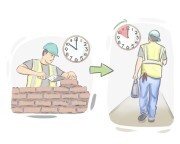
a labor strategy where employees intentionally perform their job duties strictly according to the rules and procedures, without going beyond what is explicitly required, as a means of protest or showing dissatisfaction with work conditions
規則どおりの勤務, 決められたことだけの勤務
何か月も苦情を無視された後、職員たちは規則どおりの勤務を選んだ。
![to [work] to rule](https://cdn.langeek.co/photo/41546/thumb/350?type=jpeg "to [work] to rule")
(of workers) to refrain from doing any extra work
規則どおりにしか働かない, 余計な仕事をしない
労働者たちは、経営側が話し合いに応じるまで規則どおりにしか働かないことにした。
![to [land] on {one's} plate](/assets/img/no-pic-700w.png "to [land] on {one's} plate")
to suddenly become one's responsibility or problem
to handle a major responsibility or burden
to become someone's responsibility
the hardest or most important part of the work
