
SAT Natural Sciences - Biochemistry and Cell Structure

Here you will learn some English words related to biochemistry and cell structure, such as "lipid", "enzyme", and "tissue", that you will need to ace your SATs.

review-disable

review

flashcard-disable

flashcard

spelling-disable

spelling

quiz-disable

quiz

start-learning
SAT Natural Sciences

a substance found in the cell walls of plants, providing structure and making up dietary fiber

Ex: The vegetarian burger contains cellulose as a plant-based binding agent .

fructose [noun]

a natural sugar found in fruits and honey, often used to sweeten foods and drinks

Ex:
glucose [noun]

a basic kind of sugar that is a component of carbohydrates and provides energy for many living organisms

peptide [noun]

a short chain of amino acids linked together, which can function as a building block for proteins or act as a signaling molecule in the body

Ex: The enzyme broke down the protein into smaller peptides for easier digestion .

a type of pigment found in plants, algae, and some bacteria, responsible for bright red, yellow, and orange colors and important for photosynthesis and antioxidant activity

Ex: The pink hue of flamingos ' feathers comes from carotenoids in their diet of algae and crustaceans .
enzyme [noun]

a substance that all living organisms produce that brings about a chemical reaction without being altered itself

Ex: Industrial processes often utilize enzymes to catalyze chemical reactions and improve efficiency .
proteome [noun]

the entire set of proteins expressed by a cell, tissue, or organism at a specific time under defined conditions

Ex: The study compared the proteomes of healthy and diseased tissues to pinpoint differences in protein expression .

a molecule that forms the basic building block of DNA and RNA, consisting of a sugar, a phosphate group, and a nitrogenous base

Ex: A chain of nucleotides in DNA or RNA is often referred to as a strand or sequence .

a simple sugar molecule, the most basic form of carbohydrates that cannot be further hydrolyzed

Ex: Glucose , a common monosaccharide , fuels cellular respiration .

a fundamental compound derived from glutamic acid, integral to biological functions and known for its role as a neurotransmitter in the central nervous system

Ex:

a substance, such as vitamin E, that helps clean the body of harmful substances

Ex: The blueberries were rich in antioxidants , which helped protect the body against free radicals .
lipid [noun]

any of a class of organic substances that do not dissolve in water that include many natural oils, waxes, and steroids

a specialized, membrane-bound structure within a cell that performs specific functions, contributing to the cell's overall structure and function

Ex: Golgi apparatus , an organelle with stacked membranes , modifies and packages proteins .
mitochondrial [adjective]

relating to or characteristic of mitochondria, which are organelles found in cells responsible for energy production

Ex: Mitochondrial dysfunction can lead to various health issues , including neurological disorders and muscle weakness .

the gel-like, semifluid substance within a cell that surrounds the organelles, providing a medium for cellular activities, including metabolism, transport of substances, and support for cellular structures

Ex: Cellular metabolism , including biochemical reactions , takes place in the cytoplasm .

a green pigment found in all green plants and cyanobacteria that is responsible for the absorption of the sunlight needed for the photosynthesis process

Ex: During autumn , chlorophyll breaks down in deciduous plants , revealing other pigments and causing leaves to change color .
membrane [noun]

a thin sheet of tissue that separates or covers the inner parts of an organism

Ex: The outer membrane of the bacteria helps to safeguard its contents .
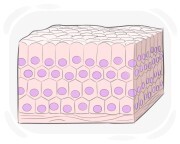
tissue [noun]

a group of cells in the body of living things, forming their different parts

Ex:

a cellular organelle involved in the processing, packaging, and distribution of proteins and lipids within the cell, consisting of a stack of flattened membrane sacs called cisternae

Ex: In nerve cells , the Golgi apparatus contributes to the formation of myelin , a fatty substance protecting nerve fibers .
ribosome [noun]

a tiny structure within cells that assembles proteins by reading the genetic instructions carried by messenger RNA

Ex:
lysosome [noun]

a small, enzyme-filled sac in a cell that breaks down waste materials and unwanted substances

Ex:
vacuole [noun]

a cell organelle in plants, fungi, and some protists that stores nutrients, manages waste, and helps maintain cell pressure

Ex: Vacuoles in yeast cells store nutrients , aiding in survival during nutrient scarcity .
nucleus [noun]

(biology) the part of a cell that contains most of the genetic information

Ex: Within the nucleus , there is a dense region called the nucleolus , where ribosomal RNA ( rRNA ) is synthesized and assembled into ribosomes .

a plant cell organelle that uses sunlight to produce energy and make glucose through photosynthesis

Ex:

a network of protein fibers in a cell that gives it shape, supports its structure, and aids in movement

Ex: The cytoskeleton is involved in intracellular transport , guiding vesicles and organelles to their destinations .

a branch of biology concerning the scientific study of the form and structure of an organism including plants and animals

cambium [noun]

a layer of actively dividing cells in plants, responsible for secondary growth by producing new xylem and phloem tissues

Ex: Cambium cells differentiate into xylem for water transport and phloem for nutrient transport throughout the plant .