pattern

SAT Natural Sciences - Land and Water

Here you will learn some English words related to land and water, such as "terrain", "estuary", "gorge", etc. that you will need to ace your SATs.

Review

Flashcards

Forms

Spelling

Quiz

Start learning
SAT Vocabulary for Natural Sciences
terrain
terrain
[noun]

an area of land, particularly in reference to its physical or natural features

Ex: The rugged terrain of the mountainous region posed a significant challenge for the hikers, requiring careful navigation and endurance. 
Close
Sign in
playa
playa
[noun]

a flat-bottomed desert basin that periodically fills with water to form a temporary lake, but remains dry for most of the year
Close
Sign in
pasture
pasture
[noun]

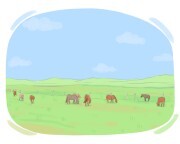
a field where animals eat grass

Ex: The cows are grazing in the green pasture. 
Close
Sign in
foothill
foothill
[noun]

a low hill at the base of a mountain or mountain range
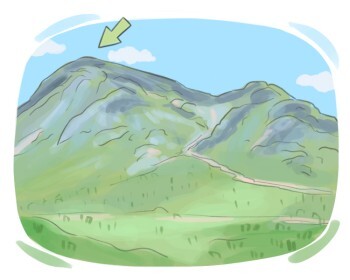
Ex: The village is nestled in the foothills of the Rockies. 
Close
Sign in
crest
crest
[noun]

the highest point or summit, especially of a mountain or hill, where the incline culminates

Ex: After a challenging hike, we finally reached the crest of the mountain, where we were greeted with a breathtaking view. 
Close
Sign in
boulder
boulder
[noun]

a large rock, usually one that has been shaped by natural forces such as water or ice

Ex: A massive boulder sat at the edge of the cliff, weathered by centuries of wind and rain. 
Close
Sign in
ridge
ridge
[noun]

a long, narrow elevated strip of land or underwater feature that stands higher than its surroundings
Ex: The mountain ridge stretched across the horizon, providing breathtaking views of the valley below. 
Close
Sign in
landslide
landslide
[noun]

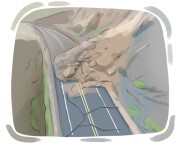
a sudden fall of a large mass of dirt or rock down a mountainside or cliff
Ex: The heavy rains triggered a landslide that blocked the main road. 
Close
Sign in
meadow
meadow
[noun]

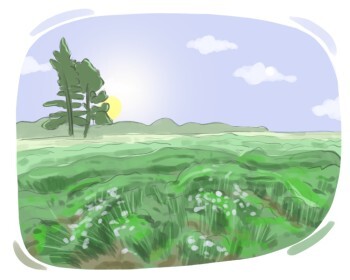
a piece of land covered in grass and sometimes wild flowers, often used for hay
Ex: The children played in the meadow. 
Close
Sign in
rainforest

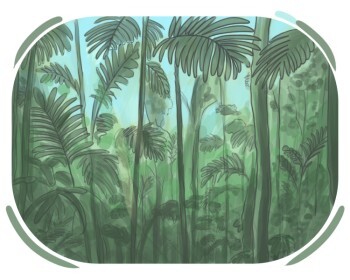
‌a thick, tropical forest with tall trees and consistently heavy rainfall
Ex: He spent his vacation hiking through the beautiful rainforest. 
Close
Sign in
landmark
landmark
[noun]

a structure or a place that is historically important

Ex: The Great Wall of China is a remarkable landmark that stretches across thousands of miles and has stood for centuries. 
Close
Sign in
mound
mound
[noun]

a small, natural hill or raised area of earth, typically formed by natural processes

Ex: The playground had a small mound where kids loved to climb. 
Close
Sign in
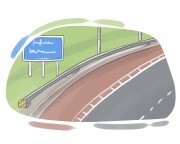
mudflat
mudflat
[noun]

a coastal wetland area that is covered by mud or silt at low tide and exposed at high tide
Close
Sign in
berm
berm
[noun]

a flat strip or ledge of land, located along the side of a road, typically used for drainage or as a barrier

Ex: The cyclists rode along the berm to stay clear of traffic. 
Close
Sign in
bluff
bluff
[noun]

a high, steep cliff or bank overlooking a body of water, often formed by erosion or geological processes
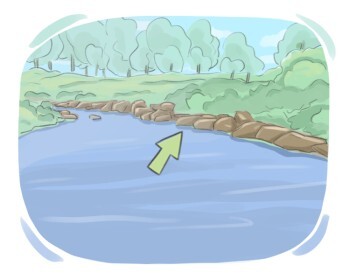
Ex: The ship sailed close to the bluff, towering above the sea. 
Close
Sign in
bank
bank
[noun]

land along the sides of a river, canal, etc.
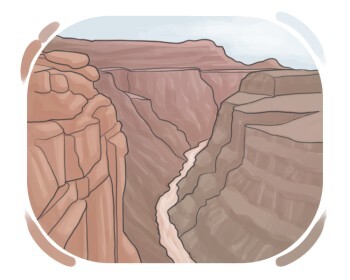
Ex: The children played on the sandy bank of the river, building sandcastles and skipping stones. 
Close
Sign in
gorge
gorge
[noun]

a steep-sided valley, often with a stream running through it

Ex: The hikers explored a gorge carved by the river. 
Close
Sign in
tundra
tundra
[noun]

the expansive flat Arctic regions, of North America, Asia, and Europe, in which no trees grow and the soil is always frozen

Ex: The Arctic tundra is characterized by its cold, treeless landscape and permafrost, making it a harsh environment for plant and animal life. 
Close
Sign in
tract
tract
[noun]

a large area of land, often defined by boundaries, used for specific purposes such as development, agriculture, or conservation

Ex: Farmers cultivated crops on a vast tract of fertile soil. 
Close
Sign in
overland
overland
[Adjective]

related to travel or transport over land, especially across long distances or difficult terrain

Ex: The explorers embarked on an overland journey through the rugged mountains. 
Close
Sign in
to erode
to erode
[Verb]

to undergo gradual wearing away or reduction in size, typically as a result of natural forces or environmental factors

Ex: The cliffs along the coast eroded slowly as the waves crashed against them. 
Close
Sign in
rapid
rapid
[noun]

a fast and turbulent part of a river with swift currents and obstacles like rocks

Ex: They navigated the river's rapids with skill and caution. 
Close
Sign in
creek
creek
[noun]

a narrow, shallow watercourse, often flowing through a confined natural channel

Ex: The children played by the creek, skipping stones and exploring the banks. 
Close
Sign in
tributary
tributary
[noun]

a watercourse that flows into a larger river or body of water

Ex: The Missouri River is a major waterway, with numerous tributaries joining its flow. 
Close
Sign in
puddle
puddle
[noun]

a small pool of water or other liquid, particularly rainwater

Ex: After the rain, a large puddle formed at the end of the driveway, making it difficult to navigate. 
Close
Sign in
eddy
eddy
[noun]

a circular current of water or air that moves against the main flow, creating a small whirlpool or whirl

Ex: The boat was briefly caught in an eddy near the river's bend. 
Close
Sign in
current
current
[noun]

the flow or movement of water or a liquid in a specific direction
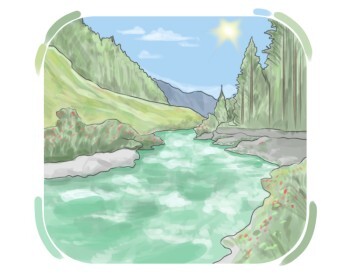
Ex: The ocean current carried the boat further out to sea than they had anticipated. 
Close
Sign in
brook
brook
[noun]

a small, natural watercourse or stream; typically characterized by a gentle and continuous flow

Ex: They enjoyed a peaceful walk along the brook. 
Close
Sign in
ripple
ripple
[noun]

a slight wave or series of waves on the water's surface caused by a breeze or a disturbance

Ex: The stone created a ripple as it skipped across the pond. 
Close
Sign in
trickle
trickle
[noun]

a small, slow flow of liquid

Ex: A trickle of water seeped from the leaky faucet. 
Close
Sign in
inlet
inlet
[noun]

a narrow body of water between islands or leading inland from a larger body of water, often serving as a passageway or channel

Ex: The boat navigated through the narrow inlet to reach the hidden bay. 
Close
Sign in
swash
swash
[noun]

the gentle, rhythmic movement and sound of water as it washes up onto the shore or against objects

Ex: The beach was filled with the soothing swash of the waves. 
Close
Sign in
runoff
runoff
[noun]

the excess liquid, typically water, that exceeds the capacity of an area to contain or absorb it

Ex: After heavy rain, the runoff from the hillsides flooded the streets below. 
Close
Sign in
lagoon
lagoon
[noun]

a shallow body of water separated from a larger body of water, often by a barrier island, coral reef, or sandbar
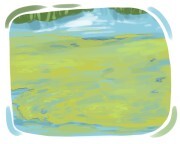
Ex: The lagoons of the Maldives are known for their turquoise waters and vibrant coral reefs. 
Close
Sign in
swamp
swamp
[noun]

an area of land that is covered with water or is always very wet
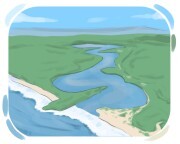
Ex: The swamp was teeming with diverse wildlife, from alligators to herons and turtles. 
Close
Sign in
estuary
estuary
[noun]

the part of a river that is wide and where it meets the sea

Ex: The estuary teemed with marine life, providing a vital habitat for many species. 
Close
Sign in
gully
gully
[noun]

a narrow channel or ravine formed by the erosion of soil, especially by running water during rainfall or storms

Ex: Heavy rains carved a deep gully through the soft earth of the hillside. 
Close
Sign in
slough
slough
[noun]

a stagnant or slow-moving channel or inlet, often connected to a larger body of water, such as a marsh, swamp, or backwater

Ex: The wildlife refuge was teeming with birds nesting along the slough. 
Close
Sign in
splatter
splatter
[noun]

the scattered droplets or particles of water or liquid that result from something being struck or dispersed forcefully

Ex: The sudden downpour created a splatter on the pavement, forming small puddles. 
Close
Sign in
fjord
fjord
[noun]

a steep, deep, and narrow sea inlet surrounded by tall cliffs, created by a glacier
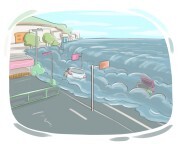
Ex: The Norwegian coast is renowned for its stunning fjords, with deep blue waters surrounded by towering cliffs. 
Close
Sign in
tsunami
tsunami
[noun]

a very high wave or series of waves caused by an undersea earthquake or volcanic eruption

Ex: The devastating tsunami in 2004 wreaked havoc across coastal regions of Southeast Asia. 
Close
Sign in
cascade
cascade
[noun]

a small steep waterfall, usually one of several others

Ex: The hikers stopped to admire the beautiful cascade in the forest. 
Close
Sign in
LanGeek
Download LanGeek app