pattern

SAT Natural Sciences - Sound and Size

Here you will learn some English words related to sound and size, such as "gurgle", "microscopic", "cadence", etc. that you will need to ace your SATs.

Review

Flashcards

Forms

Spelling

Quiz

Start learning
SAT Vocabulary for Natural Sciences
blare
blare
[noun]

a sharp and piercing sound, typically from music, a horn, or other sources, often characterized by its intensity and lack of subtlety

Ex: The blare of the emergency siren echoed through the city streets. 
Close
Sign in
rattle
rattle
[noun]

a distinct and repetitive sound characterized by rapid and sharp vibrations, often caused by objects shaking or moving loosely

Ex: The rattle of the train tracks could be heard in the distance. 
Close
Sign in
shriek
shriek
[noun]

a sudden, high-pitched cry or scream that is sharp and piercing in nature

Ex: She let out a shriek when she saw the spider on her bed. 
Close
Sign in
thrum
thrum
[noun]

a continuous, low, vibrating sound, often rhythmic or steady in nature

Ex: The bass guitar's thrum filled the concert hall with a deep, rhythmic pulse. 
Close
Sign in
gurgle
gurgle
[noun]

the gentle and rhythmic sound produced by liquid flowing or moving through a narrow passage, often with a bubbling or murmuring quality

Ex: The gurgle of water in the stream was soothing to listen to. 
Close
Sign in
clang
clang
[noun]

a sharp sound made by metal objects hitting each other or a hard surface

Ex: The clang of the church bells echoed through the village. 
Close
Sign in
crackle
crackle
[noun]

the sharp, popping sound produced by the rapid expansion or combustion of materials, often associated with fire or heating

Ex: The crackle of the bonfire added to the atmosphere of the summer night. 
Close
Sign in
bellow
bellow
[noun]

a deep, loud, and resonant sound, often produced by a human or an animal, conveying strength or intensity

Ex: The bellow of the bull echoed across the field. 
Close
Sign in
creak
creak
[noun]

a high-pitched, squeaking sound, typically produced by something wooden or metallic when under pressure or movement

Ex: The old floorboards emitted a creak with every step she took. 
Close
Sign in
ruckus
ruckus
[noun]

a noisy argument or activity

Close
Sign in
cadence
cadence
[noun]

the rhythmic emphasis or stress placed on a syllable within a metrical foot of verse

Ex: The poet adjusted the cadence to maintain the iambic rhythm. 
Close
Sign in
pitch
pitch
[noun]

the degree of highness or lowness of a tone that is determined by the frequency of waves producing it

Ex: She adjusted the pitch of her voice to match the melody of the song perfectly. 
Close
Sign in
rhythm
rhythm
[noun]

a strong repeated pattern of musical notes or sounds

Ex: She clapped along with the rhythm of the music. 
Close
Sign in
to reverberate

to resound or echo with a deep, prolonged sound, often creating a lasting impression or effect

Ex: Her laughter reverberated through the room, lifting everyone's spirits. 
Close
Sign in
to jangle
to jangle
[Verb]

to produce a discordant, harsh, and ringing sound, typically caused by the clashing or rattling of metallic objects

Ex: The keys jangled loudly as he hurried down the hallway. 
Close
Sign in
magnitude
magnitude
[noun]

the measurable size of phenomena such as distance, mass, speed, luminosity, etc. based on quantitative scale

Ex: The magnitude of the earthquake was measured at 6.7 on the Richter scale, making it a potentially dangerous seismic event. 
Close
Sign in
grandiose
grandiose
[Adjective]

overly impressive in size or appearance, often to the point of being excessive or showy in a negative way
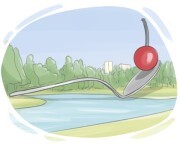
Ex: The grandiose mansion seemed out of place in the modest neighborhood. 
Close
Sign in
unimposing
unimposing
[Adjective]

not impressive, significant, or noteworthy in appearance, size, or manner

Close
Sign in
minuscule
minuscule
[Adjective]

incredibly small in size

Ex: The minuscule insects crawled along the forest floor, nearly invisible to the naked eye. 
Close
Sign in
diminutive
diminutive
[Adjective]

much smaller than what is normal

Ex: The diminutive kitten curled up in the corner, its tiny frame emitting soft purrs. 
Close
Sign in
gigantic
gigantic
[Adjective]

extremely large in size or extent

Ex: The gigantic iceberg floated ominously in the frigid waters, dwarfing the nearby ships. 
Close
Sign in
enormous
enormous
[Adjective]

extremely large in physical dimensions
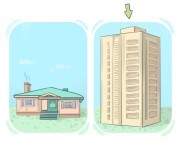
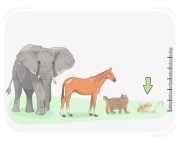
Ex: The enormous elephant towered over the other animals at the zoo. 
Close
Sign in
lofty
lofty
[Adjective]

(of a mountain, building, etc.) very tall and outstanding

Ex: The climbers reached the summit of the lofty mountain after days of trekking. 
Close
Sign in
microscopic
microscopic
[Adjective]

too small to be seen with the naked eye

Ex: The microscopic organisms in the pond water were revealed under the microscope, displaying a hidden world of tiny life forms. 
Close
Sign in
oversized
oversized
[Adjective]

larger than the standard or usual size
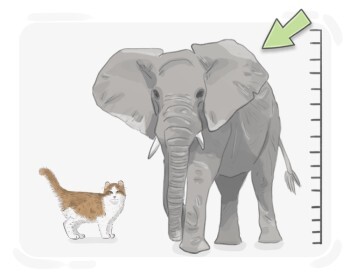
Ex: The oversized sweater enveloped her, providing extra warmth on the chilly evening. 
Close
Sign in
massive
massive
[Adjective]

extremely large or heavy

Ex: The museum displayed a massive dinosaur skeleton. 
Close
Sign in
miniature
miniature
[Adjective]

much smaller in scale or size compared to the usual form

Ex: The miniature model of the Eiffel Tower was intricately detailed, capturing the essence of the iconic landmark in a tiny form. 
Close
Sign in
to inflate

to expand or become swollen with air or gas

Ex: The balloon inflated gradually as air was pumped into it, growing larger with each passing moment. 
Close
Sign in
to deflate

to release and empty air or gas from a container, causing it to become less inflated
Ex: John had to deflate the basketball slightly because it was too bouncy for indoor play. 
Close
Sign in
to contract

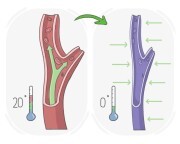
to become smaller, narrower, or tighter

Ex: When exposed to cold temperatures, blood vessels tend to contract. 
Close
Sign in
LanGeek
Download LanGeek app