SAT Natural Sciences - Mental Capacities and Failures

Here you will learn some English words related to mental capacities and failures, such as "astute", "psyche", "whim", etc. that you will need to ace your SATs.

review-disable

review

flashcard-disable

flashcard

spelling-disable

spelling

quiz-disable

quiz

start-learning
SAT Natural Sciences
ambition [noun]

the will to obtain wealth, power, success, etc.

Ex: Although her initial artistic ambitions were met with skepticism , her dedication eventually earned her critical acclaim .
whim [noun]

a sudden and impulsive decision or desire that someone has without much thought or reason behind it

Ex: On a whim , she decided to drive to the beach instead of going to work .

the ability to perform tasks effectively and efficiently, demonstrating both physical and intellectual readiness

Ex: The technician 's competence in troubleshooting equipment issues minimized downtime in production .

a sharp intelligence, able to understand things deeply and quickly

Ex: Her acuteness in planning helped the company succeed .

the willingness to take action and start new things without being prompted or directed

Ex:

the tendency or habit of exercising caution and foresight to prevent problems

Ex: The engineer 's precaution prevented an accident .
psyche [noun]

the immaterial or nonphysical aspect of a person
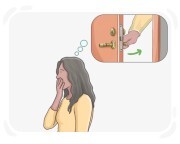
Ex: The healer focused on restoring the patient 's psyche .

to bring back something from the memory

Ex: In therapy , individuals may work to recall suppressed memories for healing .

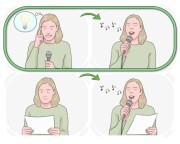
to create and perform words of a play, music, etc. on impulse and without preparation, particularly because one is forced to do so

Ex: During the comedy show , the comedian would often improvise jokes based on audience reactions .

to warn someone to be cautious of a dangerous person or thing

Ex: Beware of fraudulent emails asking for your personal information ; they could be phishing scams .

to cause someone to lose their focus or attention from something they were doing or thinking about

Ex: A loud conversation in the neighboring cubicle can distract employees trying to concentrate on their tasks .

to make someone acquainted with something

Ex: The teacher familiarized the students with the scientific method through hands-on experiments .

to predict or say in advance what will happen in the future
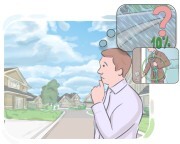
Ex: The ancient seer claimed to foretell the fate of individuals through visions .

to know or predict something before it happens
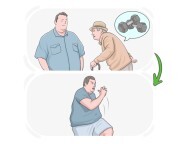
Ex: She could foresee the challenges ahead and started preparing early .
to heed [verb]

to be attentive to advice or a warning

Ex: The coach urged his players to heed his instructions if they wanted to win the game .
impressionable [adjective]

easily influenced or affected by others or external factors, especially due to a lack of experience or critical judgment

Ex: The impressionable teenager was swayed by the trendy lifestyle depicted on social media .
impervious [adjective]

resistant to being affected or damaged by something
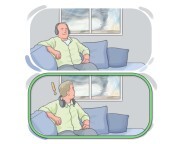
Ex: She appeared impervious to the stress of her demanding job .
cognizant [adjective]

having knowledge or awareness about something

Ex: The team was cognizant of the need for clear communication to succeed .
astute [adjective]

having a clever and practical ability to make wise and effective decisions

Ex: The professor 's astute analysis of the text revealed hidden meanings to the students .
savvy [adjective]

possessing practical knowledge, expertise, or understanding in a particular domain

Ex: The savvy entrepreneur identified a gap in the market and launched a successful startup to fill it .
sagacious [adjective]

having keen, farsighted judgment and the ability to discern deeply and wisely

Ex: The sagacious investor made decisions that consistently resulted in profitable returns .
shrewd [adjective]

having or showing good judgement, especially in business or politics

Ex: The CEO 's shrewd decision-making led to the company 's success , even during economic downturns .
sentient [adjective]

possessing the ability to experience, feel, or perceive things through the senses

Ex:
conscious [adjective]

aware of and responsive to one's surroundings

Ex: She was barely conscious after the long illness .
perceptive [adjective]

(of a person) able to quickly and accurately understand or notice things due to keen awareness and insight

Ex: The teacher was perceptive enough to recognize the student 's struggles .
imaginative [adjective]

displaying or having creativity or originality

Ex: The artist 's imaginative paintings depicted surreal landscapes and dreamlike scenes .
acumen [noun]

sharp judgment and quick decision-making, especially in practical or professional matters

Ex: The manager 's acumen was clear in how she handled the crisis .

the quality of being alert and paying close attention to things

Ex: The manager 's attentiveness to customer feedback improved service quality .

the state or quality of being watchful and attentive, especially to detect potential danger or problems

Ex: Financial vigilance helps protect against fraud and theft .

a conclusion one reaches from the existing evidence or known facts

Ex: In literature , readers often make inferences about characters ' motivations based on their actions and dialogue .

the result of a mental processing or understanding

the process of using general rules or ideas to make a specific conclusion

Ex: His deduction was that the dog had gone outside because of the muddy tracks .
facility [noun]

the quality of performing tasks or activities with ease and without difficulty

Ex: The athlete demonstrated great facility in mastering new techniques .
instinct [noun]

a natural reaction or behavior that occurs automatically, without conscious thought or reasoning

Ex: His instinct to help others kicked in when he saw the car accident on the highway .

the ability to understand or know something immediately, without conscious reasoning or evidence

Ex: Intuition can guide decision-making when data is limited .
genius [noun]

an exceptional mental ability or talent that is unique and outstanding

Ex: Her genius in math led to important discoveries .

the part of the mind that is not currently in focused awareness, but still influences thoughts, feelings, and behavior, often through automatic or involuntary processes

Ex: Dreams are often influenced by the subconscious .

a strong drive or determination to succeed or achieve excellence

Ex: Aspiration for professional growth motivates many employees .

the quality of making decisions or taking actions without considering potential risks or consequences

Ex: Imprudence in sharing personal information online can lead to identity theft .
folly [noun]

the quality of behaving in a foolish or reckless manner, often without considering the consequences

Ex:
trance [noun]

a mental state characterized by a fragile consciousness and reduced ability for voluntary action, often resembling a deep sleep

Ex: In tribal ceremonies , participants often enter a trance to connect with spiritual realms .

the fact or state of not having the necessary information, knowledge, or understanding of something

Ex: Ignorance of the law is not an excuse for breaking it , as people are expected to know the rules of society .
delusion [noun]

(psychology) a mental condition in which a person has a false belief system that is contradicted by evidence

delirium [noun]

a state of extreme mental confusion, often accompanied by confused or unclear thoughts or speech

insanity [noun]

a state of severe mental disorder affecting a person's ability to understand reality, think rationally, or behave in a socially acceptable manner

Ex: Early intervention is emphasized for symptoms associated with insanity .

the lack of intellectual or mental power to do something

Ex: The student 's learning disabilities resulted in an incapacity to grasp mathematical concepts and required additional support in the classroom .

a perceptual experience in which an individual perceives something that is not present in the external environment

Ex: Hallucinations can be associated with psychiatric disorders , such as schizophrenia , where they may contribute to altered perceptions of reality .
fallacy [noun]

a false idea or belief based on invalid arguments, often one that many people think is true

Ex: The belief that all members of a particular ethnic group are universally untrustworthy is a fallacy built on stereotypes and can lead to discrimination and prejudice .

a mistaken or inaccurate belief or understanding about something

Ex: Many people have a misconception that introverts are shy and dislike socializing .

to pay little or no attention to something or someone, often leading to issues or problems

Ex: He neglected the importance of maintaining a work-life balance , and now he 's experiencing burnout .

to intentionally ignore or act without concern for something or someone that deserves consideration
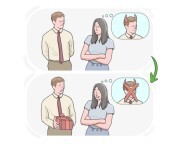
Ex: The criminal disregards the law and continues unlawful activities .

to understand or explain something incorrectly
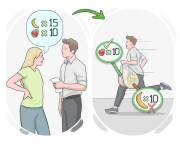
Ex: He misinterpreted the gesture , thinking it was a sign of disagreement instead of agreement .

to not notice or see something

Ex: The supervisor is currently overlooking minor discrepancies to prioritize urgent matters .
oblivious [adjective]

lacking conscious awareness of something

Ex: He was so engrossed in his book that he was oblivious to the commotion around him .
deranged [adjective]

incapable of behaving normally or thinking clearly due to mental illness

Ex: The plot of the movie follows a deranged villain who seeks revenge .
insensible [adjective]

not noticing or caring about something

Ex: The manager seemed insensible to the team 's concerns about workload .
naive [adjective]

lacking experience, wisdom, or understanding about the world, often resulting in being overly trusting or easily deceived

Ex: Their naive handling of sensitive data resulted in a breach of privacy regulations .