pattern

Media and Communication - Journalism

Here you will learn some English words related to journalism such as "news agency", "coverage", and "media bias".

Review

Flashcards

Spelling

Quiz
Start learning
Words Related to Media and Communication
news
news
[noun]

reports on recent events that are broadcast or published

Ex: The morning news provided updates on the latest developments in the election. 
Close
Sign in
news agency

an organization that gathers news stories for newspapers, TV, or radio stations

Ex: The news agency sent reporters to cover the breaking story. 
Close
Sign in
news article

an article published to report the news

Ex: The news article explained the new government policies in detail. 
Close
Sign in
news conference

a meeting during which a very important person talks to journalists and answers their questions or makes a statement

Ex: The company held a news conference to announce their new product. 
Close
Sign in
news desk
news desk
[noun]

the department of a newspaper or a TV or radio station that is in charge of collecting and reporting the news

Ex: The news desk handled all incoming reports and updates for the evening broadcast. 
Close
Sign in
newsgathering

the act of collecting news item for broadcast or publication

Ex: Newsgathering involves collecting information from various sources to report on current events accurately. 
Close
Sign in
piece
piece
[noun]

an article or segment in a broadcast or publication

Ex: The reporter prepared a piece for the evening news. 
Close
Sign in
human interest

the aspect of a story in the media that the audience can relate to because it describes people's lived experiences, feelings, etc.

Ex: The newspaper published a human interest story about a teacher who spent her entire career helping underprivileged children. 
Close
Sign in
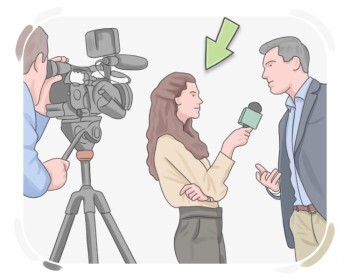
interview
interview
[noun]

a formal meeting during which a journalist asks a famous person different questions about specific subjects for publication

Ex: The magazine conducted an interview with the actor about his upcoming film. 
Close
Sign in
fourth estate

the news media or journalism profession as a societal institution that acts as a watchdog, providing independent scrutiny and holding the other three branches of government accountable

Ex: The press plays a key role as the fourth estate, ensuring that the government remains transparent. 
Close
Sign in
fifth estate

the collective power and influence of online communities, social media, and independent bloggers or citizen journalists, which serve as an additional force shaping public opinion and providing alternative perspectives outside of traditional media channels

Ex: The fifth estate often uncovers stories that traditional news outlets might overlook. 
Close
Sign in
news style

the specific writing and presentation conventions used in journalism to convey information accurately, concisely, and objectively

Ex: The newspaper follows a strict news style to ensure all reports are clear and easy to understand. 
Close
Sign in
media bias

the potential favoritism or partiality of media organizations or journalists towards certain ideologies or perspectives, which may impact the objectivity and fairness of their news reporting

Ex: The news outlet was criticized for its media bias in covering the election, favoring one candidate over the other. 
Close
Sign in
report
report
[noun]

a written or spoken description of an event, especially one that is intended to be broadcast or published

Ex: The journalist's report was featured on the evening news. 
Close
Sign in
fact-checking

the practice of independently verifying the accuracy and truthfulness of information presented in news articles or other media sources
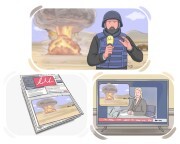
Ex: The fact-checking team found several errors in the initial article. 
Close
Sign in
coverage
coverage
[noun]

the reporting of specific news or events by the media

Ex: The news coverage of the event was extensive and detailed. 
Close
Sign in
newsroom
newsroom
[noun]

a place in radio or television stations or a newspaper office where news is reviewed and put together to be broadcast or published

Ex: The journalists in the newsroom work tirelessly to gather and verify information for the evening broadcast. 
Close
Sign in
roundup
roundup
[noun]

a summary of the most significant news

Ex: The morning news program featured a roundup of the day's top stories from around the world. 
Close
Sign in
scoop
scoop
[noun]

a piece of news reported by a news agency sooner than other media channels or newspapers

Ex: The journalist's investigative work led to a major scoop, uncovering corruption at the highest levels of government. 
Close
Sign in
Pulitzer Prize

a prestigious award given annually in the United States for exceptional achievements in journalism, literature, music, and other categories, recognizing excellence and significant contributions to their respective fields

Ex: His novel was awarded the Pulitzer Prize for fiction, cementing his reputation as a talented writer. 
Close
Sign in
inverted pyramid

a writing and storytelling technique commonly used in journalism, where the most important and essential information is presented at the beginning of a news article, followed by supporting details arranged in descending order of significance

Ex: By using the inverted pyramid, the reporter ensured readers understood the story’s key points right away. 
Close
Sign in
source
source
[noun]

a book or a document that supplies information in a research and is referred to

Ex: The historian cited an ancient manuscript as her primary source. 
Close
Sign in
news cycle

the recurring process of news creation, dissemination, and replacement within a given time frame

Ex: The news cycle moves so quickly that stories can be forgotten by the end of the day. 
Close
Sign in
censorship

the act of banning or deleting information that could be valuable to the enemy

Ex: The government imposed strict censorship on news reports to control the narrative during the crisis. 
Close
Sign in
press release

an official statement issued by an organization or company to members of the media with the aim of providing information about a specific topic or event

Ex: The company issued a press release about its new product launch. 
Close
Sign in
backstory
backstory
[noun]

background information that explains the circumstances of a news story or event

Ex: The article included a backstory of the economic crisis. 
Close
Sign in
canard
canard
[noun]

a baseless and made-up story or news report created to mislead people

Ex: The tabloid newspaper published a canard claiming that aliens had been sighted in the local park. 
Close
Sign in
city desk
city desk
[noun]

a department in a newspaper office that works on local news

Ex: The city desk is working hard to cover the latest developments in the local election. 
Close
Sign in
current events

significant events of political, or social nature that are happening now

Ex: The teacher asked us to write an essay on the current events affecting the environment. 
Close
Sign in
exclusive
exclusive
[noun]

a news story that has not been reported or published by any other news organization or agency

Ex: The journalist broke an exclusive about the company's upcoming merger. 
Close
Sign in
fake news
fake news
[noun]

a piece of news that is not true or confirmed
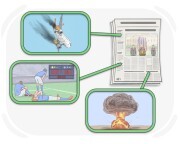
Ex: She warned her friends about the dangers of spreading fake news. 
Close
Sign in
item
item
[noun]

a distinct news piece on TV, in a newspaper, etc.

Ex: The anchor announced the top items of the day during the evening news broadcast. 
Close
Sign in
lead story

an item of news that is given the most prominence in a news broadcast, magazine, or newspaper

Ex: The scandal involving the politician was the lead story on every major news outlet. 
Close
Sign in
dateline
dateline
[noun]

the specific location and date from which a news article or report is filed or originates, indicating the place and time where the events described in the news story occurred or were witnessed

Close
Sign in
news aggregator

a service that collects and presents news articles from multiple sources in one place

Ex: I use a news aggregator app to keep up with the latest headlines from various sources. 
Close
Sign in
soft news
soft news
[noun]

news stories or content that focuses on entertainment, lifestyle, human interest, or less serious topics, rather than hard news topics such as politics, economics, or crime

Ex: The magazine published a soft news article about the latest fashion trends for the upcoming season. 
Close
Sign in
story
story
[noun]

an item of news in a broadcast or in a newspaper

Ex: The local story about the rescued dog went viral on social media. 
Close
Sign in
wire service

a news agency that provides news to newspapers, television and radio stations through wires or satellite communication

Ex: The breaking news story was distributed to media outlets via a wire service within minutes. 
Close
Sign in
hard news
hard news
[noun]

news stories or content that primarily focuses on timely and important events, typically involving topics of public interest such as politics, economics, crime, disasters, or international affairs

Ex: The newspaper's front page featured a hard news story about the mayor's resignation. 
Close
Sign in
propaganda

information and statements that are mostly biased and false and are used to promote a political cause or leader

Ex: The regime used propaganda to control the narrative and maintain public support. 
Close
Sign in
breaking news

information that has been just received by a television or radio news channel

Ex: The reporter interrupted the broadcast to deliver breaking news about the fire in the city center. 
Close
Sign in
press freedom

the liberty of journalists and media outlets to report news and express opinions without interference or restrictions

Ex: In some nations, press freedom is under threat, with journalists facing censorship and punishment. 
Close
Sign in
objectivity

the state of being affected by facts and statistics instead of personal opinions and feelings

Ex: The journalist prided herself on her objectivity, always presenting the facts without bias. 
Close
Sign in
open letter

a letter of protest published to be read by everyone, but addressed to a particular individual or group

Ex: The celebrity published an open letter apologizing to his fans for his recent behavior. 
Close
Sign in
transparency

the practice of openly sharing information, sources, and processes to maintain trust, credibility, and accountability with the audience

Close
Sign in
press kit
press kit
[noun]

a collection of promotional materials and information provided to the media to support news coverage and provide key details about a person, organization, or event

Ex: The company handed out press kits to journalists at the product launch event. 
Close
Sign in
press association

an organization or group that represents and supports the interests of journalists and the media industry, often advocating for press freedom, professional standards, and ethical journalism practices

Ex: The press association has been advocating for stronger protections for reporters. 
Close
Sign in
underground press

form of alternative media that challenges mainstream narratives and provides an outlet for grassroots reporting and activism

Ex: The underground press played a crucial role in spreading information during times of political unrest. 
Close
Sign in
commentary

a series of explanations or critiques that offer insights or interpretations on a subject or text
Ex: The historian’s commentary on the ancient manuscript provided context for its meaning. 
Close
Sign in
reportage
reportage
[noun]

the act of broadcasting the news on television or radio, or reporting them in a newspaper

Ex: The journalist's reportage on the political unrest provided a detailed account of the protests. 
Close
Sign in
news hole
news hole
[noun]

the available space or capacity within a media outlet, such as a newspaper or broadcast program, for the inclusion of news content

Ex: The news hole for the magazine was smaller this month, so only the most critical stories made it in. 
Close
Sign in
muckraking

the investigative practice of exposing corruption, scandals, or societal injustices through aggressive journalism

Ex: The investigative journalist was known for his fearless muckraking, exposing corruption and injustice in society. 
Close
Sign in
mouthpiece

a person, newspaper, or organization that represents the views of another person, a government, etc.

Ex: The press secretary serves as the mouthpiece of the administration, conveying the president's policies and positions to the public. 
Close
Sign in
hit piece
hit piece
[noun]

a report, article, etc. that aims to bring down someone by presenting forged facts

Ex: The article was nothing more than a hit piece, filled with unfounded accusations and personal attacks against the politician. 
Close
Sign in
lede
lede
[noun]

the first sentence or paragraph of a news story, presenting the most significant aspects of the story

Ex: The journalist crafted a compelling lede that drew readers into the story from the very first sentence. 
Close
Sign in
LanGeek
Download LanGeek app