
Comportement et Approche - Prévoyance et Prudence
Découvrez comment les expressions idiomatiques anglaises comme "faire le point" et "un jour de pluie" sont liées à la prévoyance et à la prudence en anglais.
Réviser
Flashcards
Quiz
![[ace|card] up {one's} sleeve](https://cdn.langeek.co/photo/45279/thumb/350?type=jpeg "[ace|card] up {one's} sleeve")
a secret advantage that a person can use when the need arises

un atout dans sa manche, une carte maîtresse cachée
L'équipe avait encore un atout dans sa manche : une nouvelle fonctionnalité inconnue des concurrents.
![to [cover] {one's} [ass]](https://cdn.langeek.co/photo/44510/thumb/350?type=jpeg "to [cover] {one's} [ass]")
to save a person from receiving criticism, punishment, blame, etc.
se couvrir, prendre ses précautions
La responsable a écrit une longue note juste pour se couvrir.
![to [cover] {one's} back](https://cdn.langeek.co/photo/27405/thumb/350?type=jpeg "to [cover] {one's} back")
to take action in order to save a person from being criticized, punished, blamed, etc.
couvrir ses arrières, protéger des reproches
Elle mettait son responsable en copie de chaque message pour se couvrir.
![to [cut] {one's} losses](https://cdn.langeek.co/photo/45281/thumb/350?type=jpeg "to [cut] {one's} losses")
to no longer partake in a failing business, activity, etc. to prevent further damage or losses
limiter la casse, arrêter les frais
Il continuait à investir dans le restaurant, mais ses amis lui ont dit d'arrêter les frais.
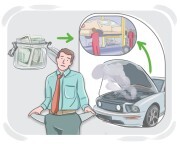
a time of financial difficulty or a period of challenge
les mauvais jours, un coup dur
Garde quelques économies pour les mauvais jours au lieu de tout dépenser maintenant.
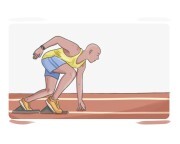
a willingness to use any given opportunity or situation to one's advantage
chercher son intérêt, avoir toujours son intérêt en tête
Elle sait toujours où est son intérêt et comment transformer une crise en tremplin professionnel.
![to [nip] {sth} in the bud](https://cdn.langeek.co/photo/21278/thumb/350?type=jpeg "to [nip] {sth} in the bud")
to immediately prevent something, particularly something problematic, before it has time to develop
tuer dans l'œuf, couper court dès le départ
Il faut couper court à ces rumeurs dès le départ avant qu'elles ne nuisent à l'entreprise.
![to [stop] the rot](https://cdn.langeek.co/photo/45283/thumb/350?type=jpeg "to [stop] the rot")
to prevent something from developing into something worse
enrayer la dégradation, stopper la spirale négative
Il nous faut des contrôles plus stricts maintenant pour enrayer la dégradation avant que les plaintes ne deviennent des procès.
![to [strike] while the iron [is] hot](https://cdn.langeek.co/photo/45315/thumb/350?type=jpeg "to [strike] while the iron [is] hot")
to take action while the opportunity exists
battre le fer tant qu'il est chaud, saisir l'occasion tant qu'elle se présente
Après la conférence, elle a reçu plusieurs offres d'emploi et a décidé de battre le fer tant qu'il était chaud.
![to [take] stock of {sth}](https://cdn.langeek.co/photo/45317/thumb/350?type=jpeg "to [take] stock of {sth}")
to carefully examine a situation before making a final decision
faire le point sur la situation, évaluer les choses
Après la fusion, le conseil a fait le point sur les finances de l'entreprise.
![[know|see|find out] which (way|direction) the wind [blow]](https://cdn.langeek.co/photo/44408/thumb/350?type=jpeg "[know|see|find out] which (way|direction) the wind [blow]")
to realize how a situation is about to develop in order to be able to properly prepare for any potential problems or changes that one might encounter
prendre la température, sentir le terrain
Les investisseurs veulent d'abord prendre la température avant de remettre de l'argent.
![to [think] twice](https://cdn.langeek.co/photo/22568/thumb/350?type=jpeg "to [think] twice")
to think about something very carefully before doing it
y réfléchir à deux fois, ne pas se précipiter
Les frais cachés nous ont fait réfléchir à deux fois avant d'acheter la maison.
![to [walk] a fine line](/assets/img/no-pic-700w.png "to [walk] a fine line")
to carefully balance between two difficult choices, behaviors, or risks
to choose carefully which problems or conflicts are worth fighting
used to warn that the buyer is responsible for checking quality before buying
to prepare carefully and make sure nothing important is missed
to focus on long-term success instead of quick results
