Cambridge English: CAE (C1 Advanced) - Chemical & Material Processes

review-disable

review

flashcard-disable

flashcard

spelling-disable

spelling

quiz-disable

quiz

start-learning
Cambridge English: CAE (C1 Advanced)

to increase the velocity of something
Ex: The electric field between charged particles can accelerate electrons .

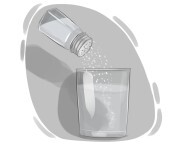
(of a solid) to become one with a liquid

Ex: The salt has completely dissolved into the soup .
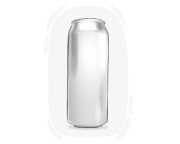
aluminum [noun]

a light silver-gray metal used primarily for making cooking equipment and aircraft parts

Ex: The soda cans are made from recycled aluminum , which helps reduce environmental waste .
copper [noun]

a metallic chemical element that has a red-brown color, primarily used as a conductor in wiring

Ex: Plumbing pipes made of copper are known for their durability and resistance to corrosion .
lead [noun]

a heavy soft metal, used in making bullets, in plumbing and roofing, especially in the past

Ex: In ancient times , lead was often used to make coins and statues due to its ease of shaping and durability .

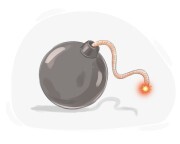
a type of powder that is explosive, used in making bullets, bombs, etc.

Ex: In fireworks displays , gunpowder is used to create colorful explosions and effects in the sky .
dynamite [noun]

an explosive that is very powerful

Ex:
laser [noun]

a device that produces a powerful and concentrated beam of light that can be used in medical procedures, for cutting metal objects, etc.

Ex:

a machine that produces electricity by converting mechanical energy into electrical energy
Ex: Diesel generators are commonly used as backup power sources in case of electrical grid failures .

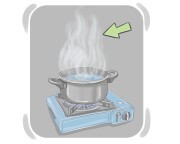
to become gas or vapor from liquid

Ex: The spilled coffee has evaporated , leaving a stain .

a substance that can cause a sudden and violent release of energy

Ex: The miners used explosives to break apart the rock underground .

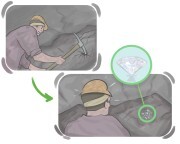
to take something out from something else, particularly when it is not easy to do

Ex: The archaeologists carefully excavated the site to extract ancient artifacts .
lining [noun]

an inner protective layer applied to the interior surface of an object to shield it from wear, moisture, or damage
Ex: The jewelry box had a soft velvet lining to protect delicate pieces from scratches .

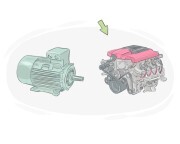
a part that combines with others to form a larger whole, often separable and functional within a system

Ex: This component is responsible for the power supply .
toxin [noun]

a poisonous substance, especially one produced by living organisms, that can cause harm or illness when introduced into a living organism

Ex: Certain plants produce toxins as a defense mechanism against herbivores .
residue [noun]

a small remaining amount or part of a thing after it has been taken, used, etc.

Ex: Despite thorough washing , a residue of coffee stains remained on the bottom of the mug .
toxicant [noun]

a chemical substance that is harmful or poisonous to living organisms

Ex: The factory emitted a toxicant with known carcinogenic properties , prompting an environmental lawsuit .

the process or state of breaking apart or losing structural integrity

Ex: The scientist examined the disintegration of organic material under heat .
Cambridge English: CAE (C1 Advanced)
Ecological Principles & Conservation Pollution, Waste & Human Impact Energy, Resources & Environmental Events Physics & States of Matter
Chemical & Material Processes Biology, Genetics & Life Processes Art Forms & Creative Processes The Art Scene
Sports Medical Practices & Treatments Illnesses, Injuries & Specific Conditions General Health & Medical Systems
Social Disadvantage & Core Issues Personal Traits & Character Societal Frameworks, Governance & Welfare Recruitment & Job Roles
Workplace Culture & Career Trade & Market Dynamics Technological Devices & Systems Telephoning & Direct Speech
Physical Appearance & Form Academic Studies & Qualifications Skills & Competencies Crime & Legal Consequences
Apparel, Cost & Styles Historical Societies & Economic Systems Work Performance & Conditions Financial Management & Economic Health
Corporate Structures & Strategic Actions Social Navigation & Behavior Patterns Perspectives, Beliefs & Navigating Challenges Traits & Self-Concept
Cognitive Processes & Memory Analysis, Judgment & Problem Solving Innovation, Development & Function Superstition & Supernatural
Media, Publishing & Information Dynamics Emotional States & Reactions Communicative Interpretation & Expression Formal Communication & Information Exchange
Social Influence & Strategies Personal Conduct & Self-Management State & Condition Relational & Abstract Qualities
Clarity, Perception & Reality Style & Atmosphere Negative Judgments & Flaws Positive Judgments & High Value
Challenging Interactions & Social Tactics Family & Social Connections Adverbs & Adverbial Phrases Manual Actions or Physical Movement
Level & Intensity Everyday Objects & Domestic Life Food, Cooking & Dining Creatures & Their Behaviors