Cambridge English: CAE (C1 Advanced) - Illnesses, Injuries & Specific Conditions

review-disable

review

flashcard-disable

flashcard

spelling-disable

spelling

quiz-disable

quiz

start-learning
Cambridge English: CAE (C1 Advanced)

(of a wound or body part) to slowly release an infectious liquid, called pus

Ex: The surgeon made an incision to allow the infected area to discharge the built-up pus .
dumb [adjective]

unable to speak

Ex: The injury to his vocal cords rendered him temporarily dumb until they healed .
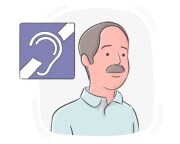
deaf [adjective]

partly or completely unable to hear

Ex: The deaf community advocates for greater accessibility and inclusion in society .
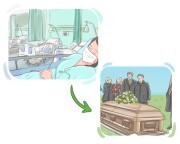
terminally [adverb]

in a manner that denotes an illness or condition that is incurable and expected to result in death
Ex: Friends gathered to say goodbye once he was judged terminally unwell .
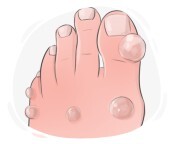
blister [noun]

a swollen area on the skin filled with liquid, caused by constant rubbing or by burning

Ex: Common causes of blisters include wearing ill-fitting shoes , repetitive friction from tools or sports equipment , or exposure to heat .

to suddenly cause a bone to move out of its normal position

Ex: After the accident , the doctor explained that the impact had dislocated several bones in his foot .

to sustain a break or crack in a bone

Ex: During the fall , his collarbone fractured upon impact with the ground .

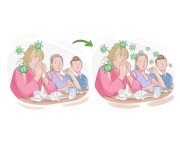
to transmit a disease to a person, animal, or plant
Ex: Healthcare workers take precautions to avoid infecting patients while providing medical care .
relief [noun]

a feeling of comfort that comes when something annoying or upsetting is gone
Ex: His pain finally subsided , giving him much-needed relief .

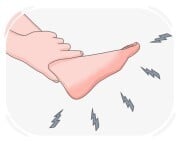
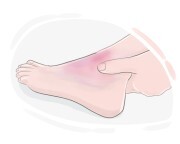
(of a ligament) to be suddenly twisted, which results in much pain

Ex: He accidentally sprained his knee while running .
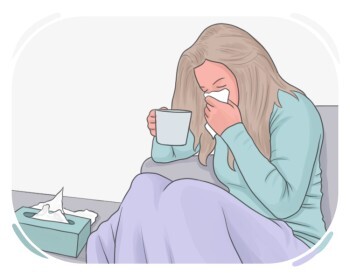
swelling [noun]

an area of one's body that has become unusually larger, caused by an injury or sickness
Ex:

feeling unwell or slightly ill

Ex: She stayed home from work because she was feeling under the weather .

damage to muscles, tendons, or other soft tissues that develops over time from repetitive movements, prolonged overuse, or sustained awkward posture during work or daily activities
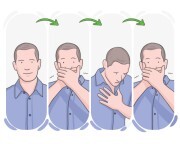
Ex: He used a wrist splint and ergonomic keyboard to manage symptoms of a repetitive strain injury .

to make a sudden, involuntary sound caused by a spasm of the diaphragm, often as a result of eating or drinking too quickly

Ex: The child hiccupped loudly after consuming the fizzy soda .

a condition where a person has trouble seeing certain colors or distinguishing between them

Ex: She found out she had color blindness after taking a vision test .
to choke [verb]

to block the throat, hinder breathing and cause suffocation

Ex: Unfortunately , the criminal chose to choke the victim , leaving them gasping for breath .
insomnia [noun]

a disorder in which one is unable to sleep or stay asleep

Ex: The doctor recommended a few relaxation techniques to help combat her insomnia and improve her sleep quality .

a chronic condition in which the force of blood against arterial walls is persistently elevated, increasing risk of heart disease, stroke, and other complications
Ex: Uncontrolled high blood pressure contributed to his hospital admission for a transient ischemic attack .
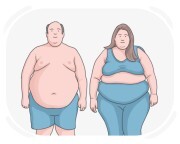
obesity [noun]

the condition of having such a high amount of body fat that it becomes very dangerous for one's health
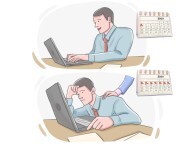
Ex: Obesity increases the risk of developing chronic diseases such as diabetes , heart disease , and certain types of cancer .

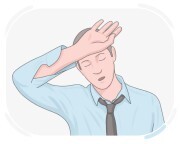
to make someone tired because of strain or stress

Ex:
malaria [noun]

a potentially fatal disease normally transmitted to humans through the bite of an infected Anopheles mosquito

Ex: Symptoms of malaria include high fever , chills , and flu-like illness .
to pinch [verb]

to cause discomfort or distress

Ex: The exam stress pinched her nerves , making it difficult to concentrate .

to make a part of the body feel a bit ticklish or have a slight, unusual sensation
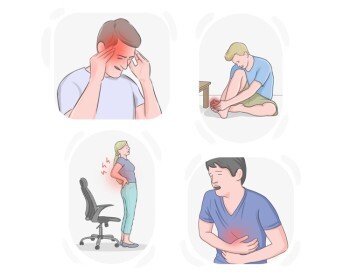
Ex: Last night , the cool breeze tingled my face during the walk .
agony [noun]

severe physical or mental pain

Ex: The agony of arthritis can make simple movements excruciating .
to flag [verb]

to lose energy, strength, and enthusiasm

Ex: As the long meeting dragged on , participants ' attention began to flag .
cavity [noun]

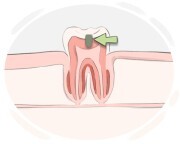
a hole in a tooth that is caused by decay

Ex: Regular fluoride toothpaste and sealants can help prevent cavities in children 's back teeth .
trauma [noun]

a medical condition of the mind caused by extreme shock, which could last for a very long time

Ex: Childhood trauma can have long-lasting effects on a person 's mental and emotional well-being .

a condition in which a person becomes so anxious or depressed that they can no longer handle their everyday life

Ex: The financial strain of mounting debts led to a psychological breakdown for the family .
amnesia [noun]

a severe medical condition that leads to partial or complete loss of memory

Ex: Cases of dissociative amnesia can follow extreme emotional trauma and sometimes resolve with psychotherapy .
neurosis [noun]

a mental condition that is not caused by organic disease in which one is constantly anxious, worried, and stressed

Ex: Cognitive-behavioral therapy ( CBT ) is a common treatment for neurosis , helping individuals reframe negative thought patterns and reduce anxiety .

an extremely anxious or nervous person

Ex: Her constant worrying and fidgeting make her seem like a bag of nerves , unable to stay calm .

a group of mental health conditions marked by persistent, excessive fear or worry, that interferes with daily functioning

Ex: Social anxiety disorder made him avoid presentations , so he began exposure therapy to rebuild confidence .
Cambridge English: CAE (C1 Advanced)
Ecological Principles & Conservation Pollution, Waste & Human Impact Energy, Resources & Environmental Events Physics & States of Matter
Chemical & Material Processes Biology, Genetics & Life Processes Art Forms & Creative Processes The Art Scene
Sports Medical Practices & Treatments Illnesses, Injuries & Specific Conditions General Health & Medical Systems
Social Disadvantage & Core Issues Personal Traits & Character Societal Frameworks, Governance & Welfare Recruitment & Job Roles
Workplace Culture & Career Trade & Market Dynamics Technological Devices & Systems Telephoning & Direct Speech
Physical Appearance & Form Academic Studies & Qualifications Skills & Competencies Crime & Legal Consequences
Apparel, Cost & Styles Historical Societies & Economic Systems Work Performance & Conditions Financial Management & Economic Health
Corporate Structures & Strategic Actions Social Navigation & Behavior Patterns Perspectives, Beliefs & Navigating Challenges Traits & Self-Concept
Cognitive Processes & Memory Analysis, Judgment & Problem Solving Innovation, Development & Function Superstition & Supernatural
Media, Publishing & Information Dynamics Emotional States & Reactions Communicative Interpretation & Expression Formal Communication & Information Exchange
Social Influence & Strategies Personal Conduct & Self-Management State & Condition Relational & Abstract Qualities
Clarity, Perception & Reality Style & Atmosphere Negative Judgments & Flaws Positive Judgments & High Value
Challenging Interactions & Social Tactics Family & Social Connections Adverbs & Adverbial Phrases Manual Actions or Physical Movement
Level & Intensity Everyday Objects & Domestic Life Food, Cooking & Dining Creatures & Their Behaviors