Vocabulary for IELTS Academic (Band 5) - Challenges

Here, you will learn some English words related to Challenges that are necessary for the Academic IELTS exam.

review-disable

review

flashcard-disable

flashcard

spelling-disable

spelling

quiz-disable

quiz

start-learning
Vocabulary for IELTS Academic (Band 5)
challenging [adjective]

difficult to accomplish, requiring skill or effort
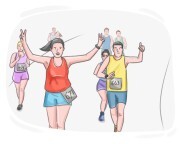
Ex:
demanding [adjective]

(of a task) needing great effort, skill, etc.

Ex:
tough [adjective]

difficult to achieve or deal with

Ex: Finding a job in a competitive market can be tough , especially without relevant experience .
trying [adjective]

hard to manage or endure

Ex:
time-consuming [adjective]

(of an activity, task, or process) taking up a significant amount of time, and therefore requiring a considerable amount of effort or patience
Ex: She found the paperwork to be time-consuming and tedious , often taking up her entire day .
overwhelming [adjective]

too intense or powerful to resist or manage effectively
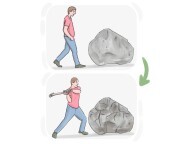
Ex: The overwhelming sense of pride filled the room as the team celebrated their victory .
to face [verb]

to deal with a given situation, especially an unpleasant one

Ex: Last year , the company faced financial difficulties but managed to recover .

to face or deal with a problem or difficult situation directly

Ex: Individuals often avoid confronting personal issues until they become too difficult to ignore .

to take the necessary action regarding someone or something specific

Ex: We must deal with these problems as soon as possible .
to meet [verb]

to be subjected to or challenged by a certain fate, circumstance, attitude, etc.

Ex: They met their end during the battle .

to think about a problem or an issue and start to deal with it

Ex: The government must address the rising unemployment rate .

to deal with a situation or problem successfully

Ex: Last week , he handled a difficult negotiation with finesse .

to put a great deal of effort to overcome difficulties or achieve a goal
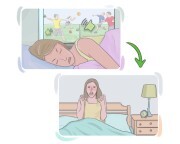
Ex: She struggled to overcome her fear of public speaking , but with practice and support , she improved .

to allow something one dislikes, especially certain behavior or conditions, without interference or complaint

Ex: Patients often need to tolerate discomfort during medical treatments for their well-being .
to solve [verb]

to find an answer or solution to a question or problem
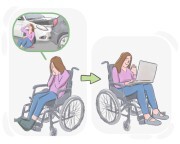
Ex: The scientist conducted experiments to solve the scientific question .
to cope [verb]

to handle a difficult situation and deal with it successfully

Ex: Employees cope with changes in the workplace by adapting to new procedures and technologies .
to adapt [verb]

to adjust oneself to fit into a new environment or situation
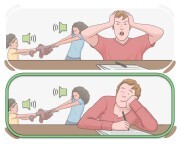
Ex: It takes time to adapt to the changes in your daily routine .
to stand [verb]

to be willing to accept or tolerate a difficult situation

Ex: The dedicated team had to stand the long hours and tight deadlines during the busy season .
to bear [verb]

to allow the presence of an unpleasant person, thing, or situation without complaining or giving up
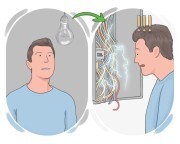
Ex: It 's challenging to bear the constant noise from the construction site next door .

to be faced with an unexpected difficulty during a process
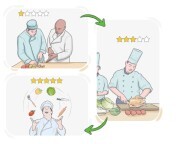
Ex: Engineers often encounter unforeseen issues during the construction phase of a project .

to get something, often with difficulty
Ex: By this time , she has already obtained a degree in computer science .

to overcome a challenge or obstacle

Ex: Leaders aim to conquer adversity by guiding their teams through difficult situations .

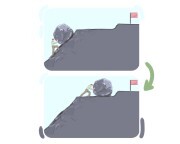
to try to deal with a difficult problem or situation in a determined manner

Ex: Teachers collaborate to find effective strategies to tackle students ' learning challenges .
manageable [adjective]

easy to be controlled or dealt with

Ex: His symptoms were manageable with regular medication and rest .
Vocabulary for IELTS Academic (Band 5)
Size and Scale Dimensions Weight and Steadiness Increase in Amount
Decrease in Amount High Intensity Low Intensity Space and Area
Shapes Speed Significance Influence and Strength
Uniqueness Complexity Value Quality
Challenges Wealth and Success Poverty and Failure Appearance
Age Body Shape Wellness Textures
Intelligence Positive Human Traits Negative Human Traits Moral Traits
Emotional Responses Emotional States Social Behaviours Tastes and Smells
Sounds Temperature Probability Relational Actions
Body Language and Gestures Postures and Positions Opinions Thoughts and Decisions
Knowledge and Information Encouragement and Discouragement Request and Suggestion Regret and Sadness
Respect and Approval Attempt and Prevention Physical Actions and Reactions Movements
Commanding and Giving Permissions Engaging in Verbal Communication Understanding and Learning Perceiving The Senses
Resting and Relaxing Touching and Holding Eating and Drinking Preparing Food
Changing and Forming Organising and Collecting Creating and Producing Science
Education Research Astronomoy Physics
Biology Chemistry Geology Psychology
Mathematics Graphs and Figures Geometry Environment
Energy and Power Landscapes and Geography Technology Computer
Internet Manufacture and Industry History Religion
Culture and Custom Language and Grammar Arts Music
Film and Theatre Literature Architecture Marketing
Finance Management Medicine Sickness and Symptoms
Law Crime Punishment Politics
War Measurement Positive Emotions Negative Emotions
Animals Weather Food and Drinks Travel and Tourism
Pollution Migration Disasters Materials
Adverbs of Manner Adverbs of Comment Adverbs of Certainty Adverbs of Frequency
Adverbs of Time Adverbs of Place Adverbs of Degree Adverbs of Emphasis
Adverbs of Purpose and Intention Conjunctive Adverbs