Vocabulary for IELTS Academic (Band 5) - Animals

Here, you will learn some English words related to Animals that are necessary for the Basic Academic IELTS exam.

review-disable

review

flashcard-disable

flashcard

spelling-disable

spelling

quiz-disable

quiz

start-learning
Vocabulary for IELTS Academic (Band 5)
mammal [noun]

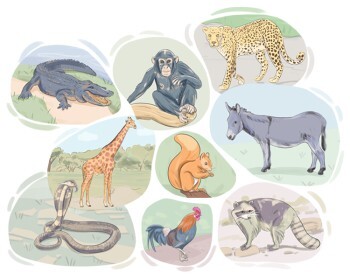
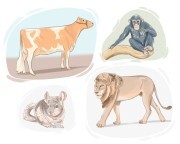
a class of animals to which humans, cows, lions, etc. belong, have warm blood, fur or hair and typically produce milk to feed their young
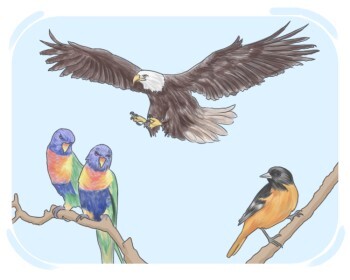
Ex: Elephants , with their distinctive trunks and large ears , are among the most iconic mammals found in Africa and Asia .
bird [noun]

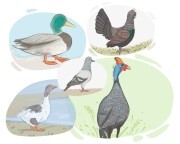
an animal with a beak, wings, and feathers that is usually capable of flying
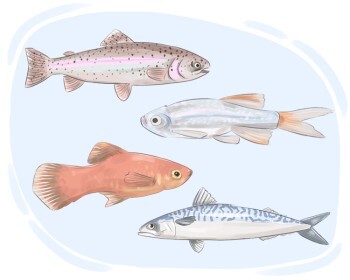
Ex: The bird had bright feathers and a long beak .
fish [noun]

an animal with a tail, gills and fins that lives in water
Ex: The colorful fish in the aquarium captured my attention .
insect [noun]

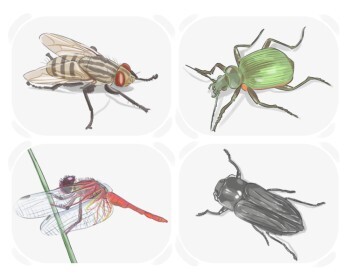
a small creature such as a bee or ant that has six legs, and generally one or two pairs of wings
Ex: Mark used a magnifying glass to examine the intricate details of the insect .
prey [noun]

an animal that is hunted and eaten by another animal
Ex: The spider spun a web to catch its prey .
species [noun]

a group that animals, plants, etc. of the same type which are capable of producing healthy offspring with each other are divided into
Ex: The red wolf is a species of wolf that is native to the southeastern United States .
breed [noun]

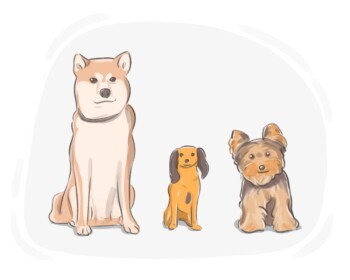
a particular type of animal or plant that has typically been domesticated by people in a certain way
Ex: The Siamese cat breed is recognized for its striking blue eyes and vocal nature .
nest [noun]

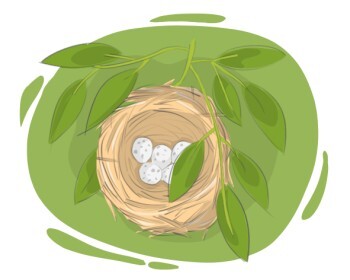
a structure that a bird makes for laying eggs or keeping the hatchlings in
Ex: The mother bird fiercely protected her nest from curious squirrels .
feather [noun]

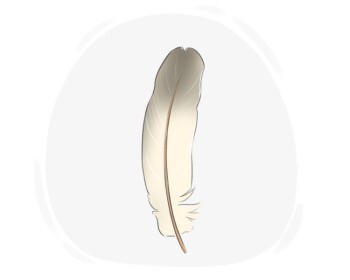
any of the light and soft parts covering the body of a bird
Ex: The pillow was filled with soft goose feathers , providing a comfortable place to rest .
fur [noun]

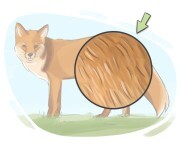
the thick, soft hair that grows on the body of some animals such as cats, dogs, etc.
Ex: She brushed the rabbit 's fur gently to remove any loose hairs .
claw [noun]

a sharp and curved nail on the toe of an animal or a bird
Ex: A claw on the lobster is strong enough to break shells .
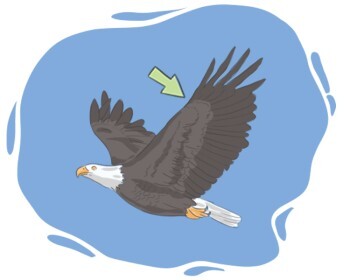
wing [noun]

any of the two parts of the body of a bird, insect, etc. used for flying
Ex:
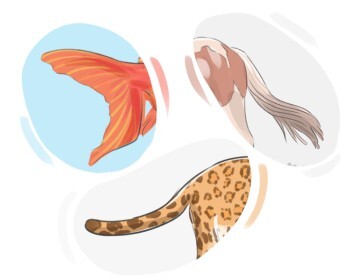
tail [noun]

the part of the body of an animal, a bird or a fish that sticks out at the back, which can move
Ex: The kangaroo uses its tail for balance while hopping .
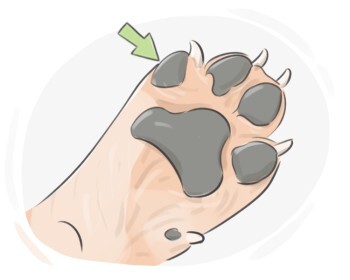
paw [noun]

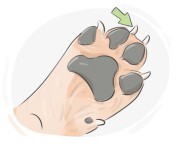
an animal's foot that typically has a combination of nails, claws, fur, and pads
Ex: With gentle strokes , the veterinarian examined the cat 's paw for any signs of injury or infection .
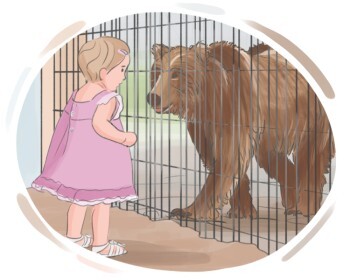
zoo [noun]

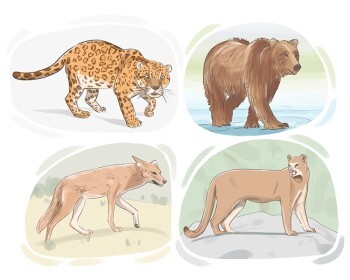
a place where many kinds of animals are kept for exhibition, breeding, and protection
Ex: I love going to the zoo because I can see lions , tigers , and bears up close .
aquarium [noun]

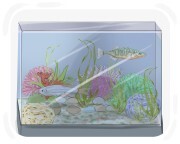
a large container usually made of glass that is filled with water in which fish and other sea creatures are kept
Ex: She spends hours watching the angelfish swim in her bedroom aquarium .
wild [adjective]

(of an animal or plant) living or growing in a natural state, without any human interference
Ex: The dense jungle provides shelter for many wild creatures .
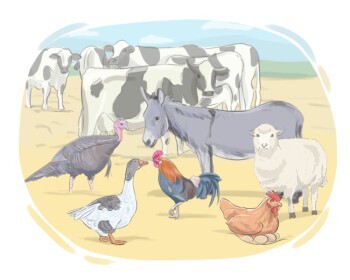
domestic [adjective]

(of an animal) capable of living with humans, either on a farm or as a pet in a house

Ex: Domestic horses have been integral to human civilization for centuries , serving as transportation and companionship .
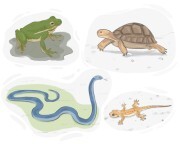
endangered [adjective]

(of an animal, plant, etc.) being at risk of extinction
Ex:
cold-blooded [adjective]

describing an animal that its body temperature changes depending on the temperature of its surroundings
Ex: Motionless on riverbanks , crocodiles , cold-blooded reptiles , absorb heat from the sun .
warm-blooded [adjective]

describing an animal that is able to maintain a higher body temperature than its surroundings

Ex: Humans , being warm-blooded mammals , have evolved sophisticated mechanisms for temperature regulation .
Vocabulary for IELTS Academic (Band 5)
Size and Scale Dimensions Weight and Steadiness Increase in Amount
Decrease in Amount High Intensity Low Intensity Space and Area
Shapes Speed Significance Influence and Strength
Uniqueness Complexity Value Quality
Challenges Wealth and Success Poverty and Failure Appearance
Age Body Shape Wellness Textures
Intelligence Positive Human Traits Negative Human Traits Moral Traits
Emotional Responses Emotional States Social Behaviours Tastes and Smells
Sounds Temperature Probability Relational Actions
Body Language and Gestures Postures and Positions Opinions Thoughts and Decisions
Knowledge and Information Encouragement and Discouragement Request and Suggestion Regret and Sadness
Respect and Approval Attempt and Prevention Physical Actions and Reactions Movements
Commanding and Giving Permissions Engaging in Verbal Communication Understanding and Learning Perceiving The Senses
Resting and Relaxing Touching and Holding Eating and Drinking Preparing Food
Changing and Forming Organising and Collecting Creating and Producing Science
Education Research Astronomoy Physics
Biology Chemistry Geology Psychology
Mathematics Graphs and Figures Geometry Environment
Energy and Power Landscapes and Geography Technology Computer
Internet Manufacture and Industry History Religion
Culture and Custom Language and Grammar Arts Music
Film and Theatre Literature Architecture Marketing
Finance Management Medicine Sickness and Symptoms
Law Crime Punishment Politics
War Measurement Positive Emotions Negative Emotions
Animals Weather Food and Drinks Travel and Tourism
Pollution Migration Disasters Materials
Adverbs of Manner Adverbs of Comment Adverbs of Certainty Adverbs of Frequency
Adverbs of Time Adverbs of Place Adverbs of Degree Adverbs of Emphasis
Adverbs of Purpose and Intention Conjunctive Adverbs