B2 Level Wordlist - Money

Here you will learn some English words about money, such as "credit", "economy", "accounting", etc. prepared for B2 learners.

review-disable

review

flashcard-disable

flashcard

spelling-disable

spelling

quiz-disable

quiz

start-learning
B2 Level Wordlist

to add a sum of money to a bank account

Ex: The landlord credited the tenant 's account with the security deposit refund after the lease term ended .
economy [noun]

the system in which money, goods, and services are produced or distributed within a country or region
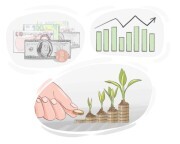
Ex: A diversified economy is less susceptible to economic downturns in specific industries .
economic [adjective]

relating to the production, distribution, and management of wealth and resources within a society or country

Ex: They studied the economic impact of tourism in the region .

a systematic process of recording, summarizing, analyzing, and reporting financial transactions and information of an organization or individual

Ex: Managerial accounting focuses on providing internal stakeholders with data and analysis to support operational decisions and strategic planning .
asset [noun]

a valuable resource or quality owned by an individual, organization, or entity, typically with economic value and the potential to provide future benefits

Ex:
budget [noun]

a specific amount of money set aside for a particular use

Ex: The travel budget covered flights and lodging .
capital [noun]

assets used to generate more assets, especially in business or production

Ex: Lack of capital stalled the project .
debit [noun]

an entry indicating an increase in assets or an expense, and a decrease in debts or income

Ex: The bank statement showed a debit for the transaction .
finance [noun]

the act of managing large sums of money, especially by governments or corporations

Ex: Public finance deals with government revenue , expenditures , and fiscal policies aimed at achieving economic stability and growth .

the act or process of putting money into something to gain profit
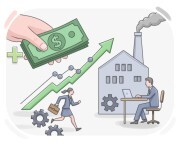
Ex: The company 's investment in new technology has already started to pay off with increased productivity .

the act of providing a sum of money for running a business, activity, project, or individual needs, typically through loans, investments, etc.

Ex: Homebuyers rely on mortgage financing to purchase property , spreading payments over several years .

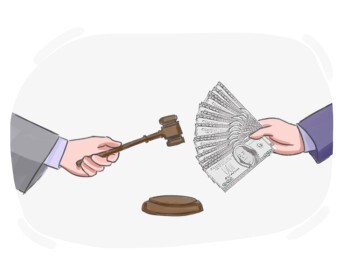
the act of getting money from a person or an organization with the agreement to repay the borrowed amount along with any related interest or fees within a specified period

Ex:
debt [noun]

the condition or state of owing money

Ex: Many students graduate with debt from loans .
grant [noun]

an amount of money given by the government or another organization for a specific purpose
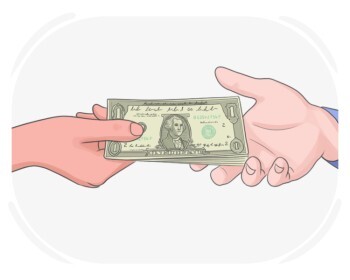
Ex: The nonprofit organization was awarded a grant to expand its community outreach programs .
loan [noun]

a sum of money that is borrowed from a bank which should be returned with a certain rate of interest

Ex: The bank offers different types of loans , including personal , auto , and home loans .

to have something as one's own

Ex: The wealthy businessman is known to possess a fleet of luxury cars and a private jet .

the process of supplying shops and other businesses with products to be sold

Ex: The distribution of vaccines was a major logistical challenge during the pandemic .

the ongoing increase in the general price level of goods and services in an economy over a period of time

Ex: Rising inflation led to higher food and fuel prices .
welfare [noun]

a financial aid provided by the government for people who are sick, unemployed, etc.
Ex: Welfare programs are designed to help vulnerable populations meet basic needs .
profit [noun]

the sum of money that is gained after all expenses and taxes are paid

Ex: Last year ’s profit was reinvested into expanding the company .

the level of wealth, welfare, comfort, and necessities available to an individual, group, country, etc.

Ex: Many people seek job opportunities abroad to achieve a higher standard of living for their families .
balance [noun]

a state in an account where the total credits exactly equal the total debits, leaving no difference

Ex: When the credits and debits match , the account is said to be in balance .

a document given by a bank to an account holder, providing a summary of all financial transactions within a specified period

Ex: Bank statements are essential for tracking spending habits and managing personal finances effectively .
collapse [noun]

a sudden decrease in something's value, such as a price or stock
Ex: They lost millions due to the sudden collapse in the value of their investments .

(of prices, shares, etc.) to suddenly decrease in terms of amount or value

Ex: The company 's shares collapsed following the announcement of poor quarterly results .
decrease [noun]

the quantity or amount by which something is reduced

Ex: He noted the decrease in stock prices .
loss [noun]

money that is lost by a company, organization, or individual

Ex: He suffered a loss on his investment when the stock price plummeted .
analyst [noun]

a trained individual who evaluates information and data to provide insights and make informed decisions in various fields such as finance, economics, business, technology, etc.

Ex:
banker [noun]

a person who possesses or has a high rank in a bank or any other financial institution

Ex: Bankers play a crucial role in facilitating economic growth by providing capital to businesses and individuals .
to price [verb]

to set an amount that is needed as payment for a product or a service

Ex: The store is currently pricing new inventory for the upcoming sale .

to get goods or services in exchange for money or other forms of payment
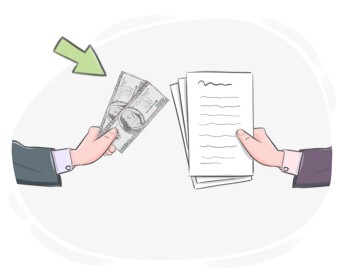
Ex: The company decided to purchase new equipment to improve its manufacturing processes .
rate [noun]

a specified amount of money charged or paid for something

Ex: The rate for renting the hall was too high for their budget .

to take advantage of someone by charging them too much money or selling them a defective product
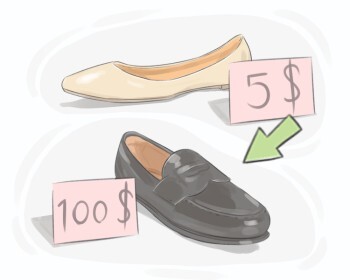
Ex:
rip-off [noun]

something that costs a lot more than its real value

Ex: They charged $ 50 for parking , which felt like a total rip-off .
bull [noun]

someone who buys or holds a certain asset or market expecting that their prices will increase, allowing them to sell at a profit

Ex: As a bull , she looks for undervalued companies with strong growth potential to maximize her returns .
bear [noun]

someone who sells financial instruments expecting that their prices will fall, allowing them to repurchase them later at a lower price and make a profit

Ex: Many bears thrive in bear markets by short-selling stocks .

to use the available supply of something, leaving too little or none

Ex:

a machine that allows customers to perform financial transactions such as withdrawals, deposits, transfers, etc.

Ex:
refund [noun]

an amount of money that is paid back because of returning goods to a store or one is not satisfied with the goods or services

Ex: After returning the damaged item , he got a refund to his credit card .