English File - Advanced - Lesson 5B

Here you will find the vocabulary from Lesson 5B in the English File Advanced coursebook, such as "deposit", "budget", "inflation", etc.

review-disable

review

flashcard-disable

flashcard

spelling-disable

spelling

quiz-disable

quiz

start-learning
English File - Advanced
money [noun]

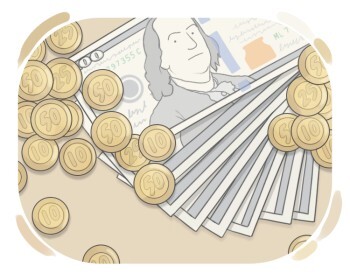
something that we use to buy and sell goods and services, can be in the form of coins or paper bills

Ex: Saving money for the future is really important .

used to imply that money is not easily obtained or available, and one should not waste it unnecessarily

Ex: The manager emphasized to the employees that money does not grow on trees , so cost-cutting measures were necessary .
tight-fisted [adjective]

spending or giving money reluctantly

Ex: She ’s known for being tight-fisted , so do n’t expect her to chip in for the gift .

a large sum of money

Ex: The luxury car he bought cost him an arm and a leg , but he considered it a status symbol .

to make enough money to pay for one's basic needs
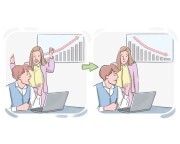
Ex: She is working extra hours to make both ends meet while she looks for a better-paying job .

in debt due to spending more than one's earnings

Ex: The company 's financial statements showed that they were consistently in the red due to declining sales .

used to refer to something, particularly a bank account, that is providing one with a considerable amount of profit
Ex: The organization has been in the black for several quarters now , thanks to a successful cost-cutting initiative .
rip-off [noun]

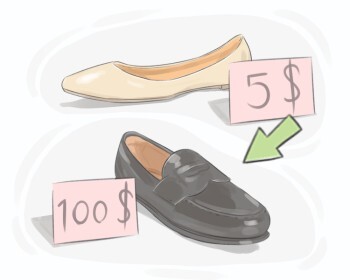
something that costs a lot more than its real value

Ex: They charged $ 50 for parking , which felt like a total rip-off .

to lessen the amount of money or resources one uses compared to before, particularly due to having less available

Ex:

to spend in a way that exceeds one's income

Ex: The couple took frequent extravagant vacations , leading to significant debt as they were living beyond their means .
budget [noun]

a specific amount of money set aside for a particular use

Ex: The travel budget covered flights and lodging .
deposit [noun]

a sum of money that is paid before paying a total amount, particularly when buying something that is expensive
Ex: She placed a deposit on the new smartphone to reserve it until the official release date .
donation [noun]

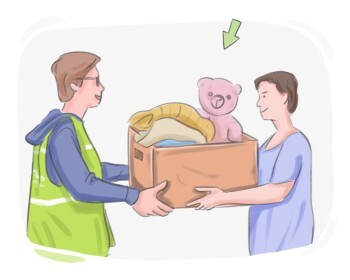
something that is voluntarily given to someone or an organization to help them, such as money, food, etc.

Ex: The charity relies on donations to continue its work .
fare [noun]

the amount of money we pay to travel with a bus, taxi, plane, etc.

Ex: The airline offers lower fares for early morning flights .
fee [noun]

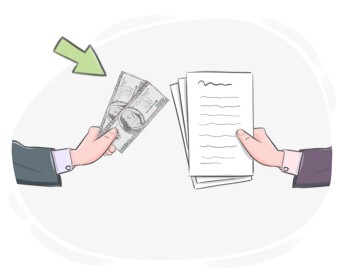
the money that is paid to a professional or an organization for their services
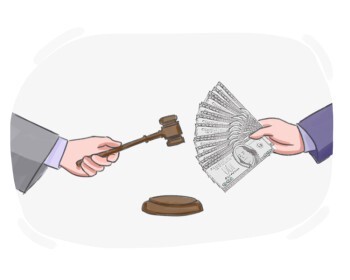
Ex: The gym membership fee is due at the beginning of each month .
fine [noun]

an amount of money that must be paid as a legal punishment

Ex: The fine for parking in a disabled parking spot without a permit is significant .
grant [noun]

an amount of money given by the government or another organization for a specific purpose
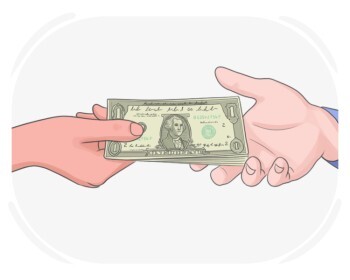
Ex: The nonprofit organization was awarded a grant to expand its community outreach programs .
loan [noun]

a sum of money that is borrowed from a bank which should be returned with a certain rate of interest

Ex: The bank offers different types of loans , including personal , auto , and home loans .
lump sum [noun]

a single, large payment made in full, instead of smaller payments made over time

Ex: Instead of monthly pension payments , retirees sometimes opt for a lump sum payout , allowing them more flexibility in managing their finances .
quote [noun]

(plural) another way of saying quotation marks

Ex: When writing academic papers , it 's important to cite sources correctly with quotes around the borrowed text .
will [noun]

a person's intention or desire, especially one that is strong or persistent

Ex: The team 's collective will to win kept them motivated throughout the grueling tournament .
society [noun]

people in general, considered as an extensive and organized group sharing the same laws

Ex: Sociologists study how norms and values shape behavior within a given society .
consumer [noun]

someone who buys and uses services or goods

Ex: The new smartphone model received positive reviews from consumers .

the level of wealth, welfare, comfort, and necessities available to an individual, group, country, etc.

Ex: Many people seek job opportunities abroad to achieve a higher standard of living for their families .
income [noun]

the money that is regularly earned from a job or through an investment

Ex: The government 's new tax policy will impact individuals with higher incomes more significantly .

the ongoing increase in the general price level of goods and services in an economy over a period of time

Ex: Rising inflation led to higher food and fuel prices .

the amount of money required to maintain basic needs and expenses in a particular place or location

Ex: Students struggle to manage expenses due to the increasing cost of living .

to be able to pay the cost of something

Ex: Individuals are affording education through various financial planning strategies .

to deal with someone, something, or a situation in a way that keeps it under control
Ex: The teacher knows how to manage a classroom full of students .
account [noun]

an arrangement according to which a bank keeps and protects someone's money that can be taken out or added to

Ex: The company 's accountant meticulously balanced the accounts to ensure accuracy in financial records .
balance [noun]

a state in an account where the total credits exactly equal the total debits, leaving no difference
Ex: When the credits and debits match , the account is said to be in balance .
transfer [noun]

the act of moving someone or something from one place, person, or situation to another

Ex: His transfer to the new department was finalized last week .
payment [noun]

an amount of money that is paid for something

Ex: The payment for our meal was $ 25 .

the amount that a lender charges a borrower for the use of money, typically calculated based on the amount of the loan and the length of the borrowing period
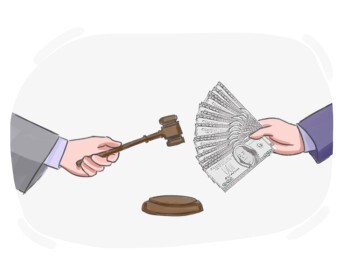
Ex: Investors closely monitor changes in the interest rate set by the central bank as it impacts the economy .
debt [noun]

an amount of money or a favor that is owed
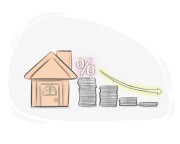
Ex: She felt a deep sense of debt to her mentor , who had guided her throughout her career .
mortgage [noun]

an official contract or arrangement by which a bank gives money to someone as a loan to buy a house and the person agrees to repay the loan over a specified period, usually with interest

Ex: The monthly mortgage payments include principal and interest , as well as property taxes and insurance .
share [noun]

the act of dividing or distributing something among a group of people

Ex: They each took a share of the workload to ensure the project would be completed on time .

the business of trading and exchanging shares of different companies

Ex: News of the company 's breakthrough product led to a surge in its stock market value .
currency [noun]

the type or system of money that is used by a country

Ex: Using a stable currency is crucial for maintaining economic stability .

the value of a country's currency compared to another country's currency

Ex: The favorable exchange rate made it an excellent time for investors to buy foreign stocks .
bankrupt [adjective]

(of organizations or people) legally declared as unable to pay their debts to creditors

Ex: The once-thriving neighborhood became desolate after the major employer went bankrupt .

a hard time in a country's economy characterized by a reduction in employment, production, and trade

Ex: Families had to tighten their budgets and cut back on spending due to the recession .
rich [adjective]

owning a great amount of money or things that cost a lot

Ex: The rich family owned a private jet .
affluent [adjective]

possessing a great amount of riches and material goods

Ex: She grew up in an affluent family , attending private schools and traveling abroad frequently .
loaded [adjective]

having a lot of money or financial resources

Ex:
wealthy [adjective]

having a large amount of money or valuable possessions

Ex: The wealthy philanthropist donated millions of dollars to charity every year .
well-off [adjective]

having enough money to cover one's expenses and maintain a desirable lifestyle

Ex: He considered himself well-off after securing a stable job with a decent income .
poor [adjective]

owning a very small amount of money or a very small number of things

Ex: The poor family lived in a small , rundown house .
broke [adjective]

having little or no financial resources

Ex:
hard up [adjective]

experiencing financial difficulties, often lacking money to cover basic expenses

Ex: The recent economic downturn left many families hard up and unable to afford even basic necessities .
penniless [adjective]

having no money or financial resources

Ex: After losing his job , he became penniless and struggled to afford even basic necessities .
grand [noun]

a thousand units of a currency

Ex: She saved up a grand to take a trip to Europe .
buck [noun]

one dollar

Ex: She only had ten bucks left in her wallet after paying for groceries .
quid [noun]

the currency of the United Kingdom, equivalent to one hundred pence

Ex: She found a vintage book at the market for just a few quid .
fiver [noun]

a piece of paper money worth five dollars that you can use to buy things
Ex: The street performer thanked the generous passerby for dropping a fiver into his hat .
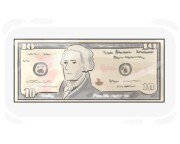
tenner [noun]

a banknote with a value of ten units of a currency, typically ten pounds or ten dollars

Ex: Finding an old tenner in his wallet , he decided to buy a small treat for himself .

a part of a larger sum of money that is paid in a scheduled series of payments over a specified period of time

Ex: He was relieved to know that he could pay for the expensive course in installments rather than all at once .