ACT Humanities - Social Sciences

Here you will learn some English words related to social sciences, such as "caste", "militant", "activism", etc. that will help you ace your ACTs.

review-disable

review

flashcard-disable

flashcard

spelling-disable

spelling

quiz-disable

quiz

start-learning
ACT Humanities

a social system or practice that keeps minority groups separate from the majority, often through separate facilities or services

Ex: Segregation in housing contributed to unequal opportunities .

the understanding that others have thoughts, feelings, and perspectives that are different from one's own

Ex: Theory of mind allows individuals to predict and interpret the actions of others based on their inferred mental states .

an organizational structure characterized by strict procedures, rules, and regulations designed to manage complex tasks or activities efficiently

Ex: The school 's bureaucracy ensures that all faculty members adhere to standardized teaching guidelines .
activism [noun]

the action of striving to bring about social or political reform, especially as a member of an organization with specific objectives

Ex: Social media has become a powerful tool for activism , allowing campaigns to reach a global audience .
agency [noun]

the capacity or power of an individual or entity to take action, make decisions, and influence or control their environment or circumstances

Ex: Social movements aim to empower individuals to assert their agency and advocate for change .
clan [noun]

a large group of people who are related to each other

Ex: Each summer , the clan traveled to their ancestral homeland to reconnect with their roots and heritage .
chiefdom [noun]

a form of sociopolitical organization in which a centralized authority governs a community or a collection of communities

Ex: The chiefdom relied on the chief 's ability to mediate disputes , distribute land , and coordinate communal projects .

a cooperative or united group of individuals, entities, or elements working together for a common purpose or interest

Ex: The cooperative is a business model where a collective of farmers jointly owns and manages the agricultural production .

to systematically collect and record demographic data about a population

Ex: Next month , the organization will census the community to assess healthcare needs .

the statistical characteristics of a population, such as age, gender, and ethnicity

Ex:

the situation or condition that is currently at hand

Ex: They challenged the status quo with their innovative approach to the problem .

the process of developing and expanding industries within a region or country, involving the increased production of goods through the use of advanced machinery, technology, and organized labor

Ex: Industrialization in the 20th century saw the widespread adoption of assembly line production techniques .
militant [adjective]

displaying violent acts for the sake of a social or political aim

Ex: The militant faction was responsible for the kidnapping of several diplomats in the region .

the behavior or attitude that does not follow established norms, conventions, or expectations within a society or group

Ex: Nonconformity can lead to social ostracism but also fosters innovation and creativity .
progressive [adjective]

supporting and encouraging positive change and advancement

Ex: The progressive approach to education focuses on adapting to the needs of each student .

the process through which individuals within a society or group learn and internalize behavior patterns, norms, values, and customs through interactions, education, and social experiences

Ex: Workplace socialization helps new employees integrate into the organizational culture and understand company policies .

a society that has developed its own culture and institutions in a particular period of time or place
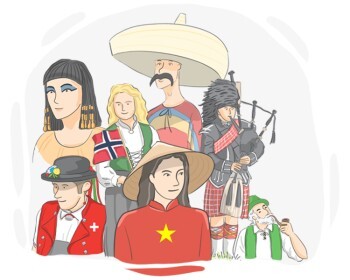
Ex: Many aspects of Greek civilization influence contemporary philosophy and art .

the state of belonging to a certain ethnic group

Ex: The school 's diversity program celebrates students of every ethnicity .

any of the basic freedoms or rights that protect individuals from unfair treatment and ensure equality under the law, regardless of race, gender, religion, disability, or other characteristics

Ex:
socioeconomic [adjective]

referring to factors or conditions that involve both social and economic aspects

Ex: Government policies aim to address socioeconomic inequalities and promote social mobility .

the process of people moving from rural areas to urban areas, resulting in the growth of cities and the expansion of urban areas

Ex: Urbanization creates both opportunities and challenges .
suburban [adjective]

characteristic of or relating to a residential area outside a city or town

Ex:

to treat a person, group, or concept as insignificant or of secondary or minor importance
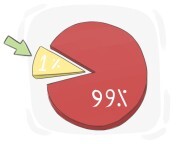
Ex: The company 's policies inadvertently marginalized employees with disabilities , making it difficult for them to fully participate in the workplace .
minority [noun]

a small group of people who differ in race, religion, etc. and are often mistreated by the society

Ex: The report highlighted the struggles of the minority in accessing resources .

people in the highest class of society who have a lot of power and wealth and usually high ranks and titles

Ex: The aristocracy often lived in grand estates and manors .
royalty [noun]

kings and queens and any member of their families

Ex: The charity gala was graced by members of royalty , who helped raise significant funds for the cause .

a large, important city that serves as a significant economic, political, or cultural center for a region or country

the physical and organizational assets, such as roads, bridges, utilities, and public services, that support economic activity and daily life

Ex: The city 's infrastructure includes highways , water systems , and public transit .
utopian [adjective]

referring to a vision of an ideal society, where everything is flawless or nearly perfect

Ex: Socialists proposed the creation of self-sufficient utopian communities where people lived and worked cooperatively .

the deliberate and nonviolent refusal to obey certain laws, demands, or commands of a government or authority, typically as a form of protest

Ex: Environmental activists engaged in civil disobedience to protest against government policies that endanger wildlife habitats .

to unfairly treat a person or group of people based on their sex, race, etc.

Ex: Discriminating against someone because of their race is a form of racism .

to help someone to restore to a healthy and independent state after a period of imprisonment, addiction, illness, etc.

Ex: Physical therapists worked tirelessly to rehabilitate the patient 's injured leg , focusing on restoring mobility and strength .
outcast [noun]

a person who has been rejected or excluded from a social group or society, often due to their behavior, beliefs, or social status
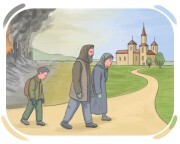
Ex: The novel portrays the struggles of an outcast trying to find acceptance in a new environment .
refugee [noun]

a person who is forced to leave their own country because of war, natural disaster, etc.

Ex: The international community mobilized to support refugees displaced by the conflict .
indigenous [adjective]

relating to the original inhabitants of a particular region or country, who have distinct cultural, social, and historical ties to that land

Ex: The festival celebrated the rich cultural heritage of the indigenous people , featuring traditional music , dance , and crafts .
patriarchal [adjective]

relating to a social system where men hold primary power and authority over women and families

Ex: The patriarchal norms of the time restricted women 's access to education and employment .
humble [adjective]

having a low social rank or position, often characterized by modesty

Ex: His humble station in life did not deter him from pursuing higher education and better opportunities .

to integrate into a new environment, often by adopting its language, norms, values, and practices

Ex: The children of expatriates easily assimilated into the local school system , learning the language fluently within a year .
commune [noun]

a local administrative unit in certain countries, functioning as the smallest division of government

Ex: The budget for the commune was approved after a thorough review by the local council .

the outer areas or parts of a city or town

Ex: As the city expanded , the outskirts became increasingly populated , leading to the development of new schools and parks to accommodate the growing community .
parish [noun]

an area with a church of its own that is under the care of a priest

Ex: The parish hosted a festival to celebrate its patron saint , drawing attendees from neighboring communities .
cosmopolitan [adjective]

including a wide range of people with different nationalities and cultures

Ex: The hotel offered a cosmopolitan experience with guests from around the world .
humanitarian [adjective]

showing concern for the well-being of people and acting to improve human welfare

Ex: His efforts reflect a strong humanitarian spirit .
classist [adjective]

marked by discrimination against or prejudice toward individuals or groups based on their social class

Ex:
caste [noun]

a system that divides the people of a society into different social classes based on their wealth, privilage, or profession

Ex:
echelon [noun]

a level or rank in an organization, profession, or society, indicating a person's status or authority within that hierarchy

Ex: Her influential family belonged to the upper echelon of social circles in the city .
station [noun]

a person's social rank or position within a structured hierarchy or society

Ex: The military officer 's station required him to uphold the highest standards of discipline and conduct .
rat race [noun]

a draining and stressful lifestyle that consists of constantly competing with others for success, wealth, power, etc. and so leaving no room for rest and pleasure

Ex: Many people feel trapped in the rat race of their jobs and long for more meaningful work .